Month: November 2010

EduLinks – Partying, Promises & Performance

Time for some more EduLinks. Want to see links on a particular topic? Have some links that may be of interest to readers?  Let me know in the comments, or get in touch!

On with the links…

Grad Recruiter – CV Structure and Format Checklist

Get your CV looking and feeling great with these simple tips.  Not a ‘how to’ guide to work from scratch, but how to tweak your CV so it flows better.

Chronicle – Tweeting Students Earn Higher Grades Than Others in Classroom Experiment

It’s all about engagement.

Guardian – Innovation is born when art meets science

Art and science need to mix better. I always said they should be friends.

On focus:

Who’d have thought that daydreaming made you *less* happy?

Seems like we need deeper focus more often than we tend to allow ourselves.

MakeUseOf – 10 Online Synonym Dictionaries That Help You Find A Similar Word

A thesaurus gives you many words to express a similar sentiment.  This post gives you many websites with a similar function…

Impact Magazine – Weapons of Lash Destruction

A history of drinking games.  “Since when did our drinking habits become so organised?”

The Boar – The Price of a Promise

Lib Dem MPs signed a pledge before this year’s general election to say that they would vote against any increase in tuition fees.  Some are due to go back on that pledge and Nick Clegg said he regretted signing the pledge.

The Boar examines what a promise is and explains why MPs going back on a pledge damages the public’s confidence in politics.

Cognition & the Arts – Does background music aid or impair reading comprehension?

Do you work better when listening to music, or would you prefer silence?

A study has found that people work better in silence.  However, so many questions are left unanswered, as this post explains, that you needn’t switch the iPod off yet.

My advice has always been, if you’re finding concentration tough, do the opposite of what you’re currently doing.  When you’re in silence, try listening to music.  Also, try listening to different types of music, or opt for a bit of noise.

Ben Casnocha – How to Draw An Owl

A short post that says so much…and leaves so much more to the imagination.

Providing information, advice and guidance to students

My previous post asked if you were taking too many study risks.

Arthur made a great point in the comments:

“The focus on your education should be increasing your capabilities, not getting through a series of assessment tasks. If you bought a car that did not have wheels, you would feel ripped off. So why buy an education without capabilities?”

No matter how aware you are of increasing capabilities, how can universities help you increase them further in a changing world?

image by rild

image by rild

Yesterday, Aaron Porter, President of NUS, spoke about the type of information, advice and guidance students need in order to develop talent and make the most of their time at university.  Speaking at the Graduate Talent conference on Innovation and Skills for Competitiveness, he gave a similar analogy to Arthur’s.

Porter said that if you buy a bike and the chain falls off after five minutes, you’d get a refund because the goods are faulty.  While he understood the massive difference between high street transactions and entering higher education, he still saw the need for an increasing recognition of how students perceive HE and the need for those students to have the right tools throughout their education.

That, he explained, is why information, advice and guidance needs to be properly targeted at the point of application, and that individuals are made aware of the differences in curriculum and community in different institutions.

You may be in the position to assess risk in terms of study, but what about ongoing?  What can a university do to help you minimise risks after you graduate?  And how can they help you minimise risks in terms of what you study and how you use your time at uni?

Porter covered a lot of ground in today’s talk and made a number of important points.  Here are the main details covered in his talk:

  • Students will begin to change the way they engage with institutions. More students will actively ask “What can I do to guarantee employment?”
  • So much information is available, but it’s hard to navigate through it all.  How can the relevant information be provided to students in an easy to digest fashion?
  • Student background makes a difference in how easily individuals can navigate information.  Must address a diverse community, so nobody is left behind or left wanting.
  • League tables are used to choose where to study, but not always with real understanding of what those tables mean & how to see the big differences between institutions.
  • Students won’t dust down a strategic report on what employers want from graduates.  As good as the advice may be, there is still a need to put the detail forward in a way that students *will* access it.
  • How often during induction are students actually asked what the purpose of HE is, told how it is different to what learning has come before, and asked what they personally want out of HE?  Helping students to focus on these critical issues will make a huge difference to their experience and understanding.  Ask critical questions at the start to earlier allow students to prepare better.
  • Need to think about better integrating employability and careers into curriculum and teaching.  Students now expect this, so let’s deliver.
  • Higher Education Achievement Report (HEAR) needs rolling out quickly to make a level playing field for students.  Beef up academic achievement and its detail, while also highlighting achievement outside the classroom.
  • Drawing out this information through HEAR will help graduates articulate their achievements and skills.  In turn, job applications can be better targeted by graduates, as they can sell themselves more accurately.
  • All students should feel able to participate in extra-curricular activities, whatever their background.
  • Work exp. & internships need to become almost an entitlement, especially with fees about to climb.
  • Way in which we communicate information needs to be more innovative in terms of social media.  On campus and off campus, are institutions operating in the same environments as students?  Careers information is perfect territory to take on social media, because it’s not likely to be seen as a personal intrusion.
  • National measure of employment needs to go beyond a 6-month view.  1 year, 3 years, 5 years, etc.  Students need to know, because education costs are growing and employability is a big deal.
  • There is a danger that learning for its own sake may be lost.  Could be an adverse impact on which skills students learn before graduation.
  • Browne didn’t crack the problem of getting an entirely flexible HE system.  The opportunity was there, but hasn’t been addressed.  We must, therefore, still think about how we can address the issues.  This is critical in allowing students to get the employment skills they need.
WikipediaWictionaryChambers (UK)Google imagesGoogle defineThe Free DictionaryJoin exampleWordNetGoogleUrban DictionaryAnswers.comrhymezone.comMerriam-Webster<>0
wvcidfjoguarm

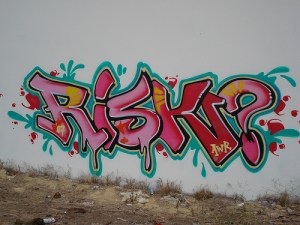
Risk or Responsibility?

Do you take risks when faced with important decisions?  Do you push things to one side and let random excitement take hold and stress you out?

Perhaps you think you only take an occasional gamble. But you may be more of a risk taker than you think.

photo by anarchosyn

photo by anarchosyn

It doesn’t sound like much, but think how tempting it is to leave an essay until the last minute.  Rather than prepare in advance, there’s a want to bash everything out in the last minute.  You may not really *want* to do everything in the last minute, but the beast of procrastination rears its ugly head and that’s what happens anyway.

What of study plans?  Before the work starts, a plan can seem so structured and restricting.  Surely you’ll get the work done eventually.  You’ve done it before that way.  Much better to work when you feel like it, eh?

Keep those fingers crossed that you’ll get that feeling every time.

Of course, you will feel like it, because you’ll have no choice. Time will have run out. Panic is often a big driver of decisions.

Shame those decisions aren’t likely to be the best ones.

Many choices may not feel risky, but there’s a real chance they will make a negative impact.

Making plans straight away does involve taking responsibility.  But this is a low risk, positive action.  Responsibility sounds like a hassle, because you know you have to start.  And the end is so, so far away.  At least, it’s so far away until there’s not enough time.  Then the game changes and it’s out of your control…

The sooner you start, the sooner you can finish in your own sweet time.  No rushing, no major panic, no second rate attempt that you know could have been better.

You don’t have to jump on tasks the moment you get them, but neither should they be left to linger.

Advice like this isn’t unusual.  That doesn’t make it any easier to action.  Not until you give it a context.  As I see it, that context is risk.  The longer you leave it, the bigger the chance you’re taking.  Risks don’t have to sound risky before they become dangerous.

Are you willing to gamble with grades?

EduLinks – A Mixed Bag

My apologies, it’s been a while. Please have some weekend linkageness to make up for it…

Dangerously Irrelevant – Struggling with your dissertation?

I like the first thought, “You’re not going to save the world with your dissertation”.  No need for grand ideas that can’t be built in time (or at all).

Ones to Watch – National news journalism graduate trainee schemes

The Guardian, FT, Telegraph & Sky are looking for graduates to take up paid internships.  Be warned, you’ve only got this weekend before Sky’s deadline arrives. So be quick if you’re interested!

Lifehacker – Adopt the 30/30 Minute Work Cycle to Increase Focus

One of many ways to use your time productively. 30 minutes working and 30 minutes relaxing.  There are worse methods.  Will this technique work for you?

Open Culture – Ways of Seeing… Art

A 1972 BBC series. I started watching this and it was enough to get me ready to watch more. Bizarre. Compelling…

Speak Schmeak – Speaking from a script doesn’t have to sound scripted

Advice on making your presentations appear natural.

From Wired Campus – Students Lack Basic Research Skills, Study Finds:

“…college students approach research as a hunt for the right answer instead of a process of evaluating different arguments and coming up with their own interpretation.

“‘Not being aware of the diverse resources that exist or the different ways knowledge is created and shared is dangerous,’ she said. ‘College is a time to find information and learn about multiple arguments, and exploring gets sacrificed if you conduct research in this way.'”

The Boar – Union warns against finding houses early

A problem that’s been with us for years.  Students panic about renting a place long before they even need to think about it:

“Every year the same myths come up, that there will be a lack of housing, that the good houses go early. There’s a horrible trend for students to rush into a group of friends for a house for the next year. People can end up with worse houses than if they had waited.”

Calm Growth – Other People’s Opinions and Your Actions

Your good news won’t sound positive to everyone.  Marko says that shouldn’t put you off, recommending you “Do what is right for you!”

Other people can advise you in things you hadn’t considered, but the final choice needs to land with you.  Just because a similar thing didn’t work out for one person, your own circumstances will be very different.  It’s up to you to take advice on board and work out if you need to think about things more.

WorkFlowy

Need something quick, easy and online to handle your to-do lists and workflow organisation?  WorkFlowy is as simple as it comes.  And being online, you can login wherever you can get reach the Web.