Writing

Make your work rock and get your creative juices flowing!

Whether you’ve got a few days or a few months to hand something in, there’s always enough time to get creative and produce quality work.

photo by h.koppdelaney

photo by h.koppdelaney

But it’s often so difficult to shine?  Life gets in the way, there’s so much other stuff to distract you, simply starting a project is a pain, the little perfectionist in you has niggling doubts, etc., etc.

Let’s check out some of the ways you can shove those distractions and problems out of the way:

  • Focus on the work in hand – It’s a willpower thing (or Inner Slacker thing).  There’s so much going on around you that it’s insanely difficult to ignore it.  But when you clear nearby distractions, get others out of the way, and isolate yourself from interruption and noise, it doesn’t take long before the work gets a lot easier to deal with. Honest! 🙂
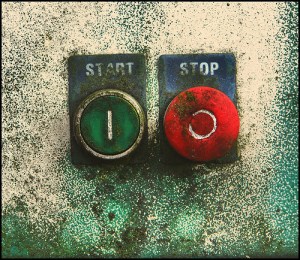
  • Remember that the hardest part is the start – When it feels like hell even starting the work, you then wonder how horrible it’s going to be when you actually get on with it.  Rest assured, once you have the courage to get on with it, everything else comes naturally.  The first hurdle is the biggest one.  The rest of the way isn’t so bad.
  • Move on when you’re stuck – You’re bound to face difficulties in your study.  There are times when something doesn’t sound right, or you struggle to find a way of backing up a point.  Don’t let it hold you up!  When you face a block, make a note of it and come back to it later.  Much better to get everything else out of the way and work on the annoyances later.  You’ll be more focused on those aspects in isolation anyway.
  • Don’t let your Internal Editor get in the way – Another thing that holds us up is our wish to get it right FIRST TIME.  It’s like our brain hasn’t heard of ‘rough drafts’!  The editing process should come later, after you’ve got everything else out in the open.  The longer you agonise over a word or the structure of the coursework, the further away you get from getting the work done.  Edit later.  Piece everything together later.  Your Internal Editor can wait!
  • Don’t do it all in one session – Students who leave an essay to the last minute end up having to do everything in one go.  It’s one of the worst ways of working, but last-minute essay writing is common.  Start as soon as possible on your coursework and complete it over time.  Short sessions are less daunting and help you target specific areas of your work each time.  If you genuinely work better in much longer sessions, remember to take regular breaks from the study.  And do the work as soon as you can…don’t leave it until the day before, when it’s stressful and when you’re in danger of running out of time.
  • Mix it up! – Nobody else can tell you how to put your work together.  Do you like to write the Conclusion first?  If so, do it first!  Does the Introduction come naturally to you when it’s the last part of the creative process?  Is so, do it last!  Work to the order that works best for you.
  • If in doubt, get help – Don’t feel bad when you don’t understand what’s required.  If a question doesn’t make sense or if you can’t get your head around a concept, your tutors should be happy to help.  Make sure you know what you want to ask and what help you’re looking for and, armed with this information, ask away.
  • Your answer is not ‘right’ or ‘wrong’ – Move away from thinking about the ‘right’ answer.  What you’re trying to do is support an argument, explain a function, analyse a concept, and so on.  Critical thinking is not black or white.  It’s all about the shades of grey.
  • Stop fearing the worst – The work you do is private at first.  Nobody is looking over your shoulder.  Well, they shouldn’t be anyway.  So it doesn’t matter what you write down and it doesn’t need to be perfect.  There’s no need to panic about it; just get all your thoughts and quotes and ideas and workings and illustrations out in the open.  Even if loads of the output is rubbish, you’ll have all the good stuff sorted too.  Take the good stuff and shape it into something big.  You don’t have to tell anyone else about the other rubbish you put out.  That’s your own little secret.  It’s the quality stuff that makes you the hero…

These are just some ideas to get the creative juices flowing.  What do YOU do to get those ideas from your head to the page?

photo by SashaW

photo by SashaW

Student journalism with or without ink

I’m not sure what to make of the news that some student newspapers are cutting print runs or cancelling issues altogether.

photo by lusi

The newspaper industry is struggling across the board.  An increasing number of people are getting  their fix of news online (or not at all).  Many who once read a daily paper now visit the website to get exactly the same news, albeit on a screen.

It’s no surprise that student papers are suffering too.  However, the spring to online content can only be a good thing, surely?

Imagine a student newspaper running in the North of  England.  With an online version, the content is thrown out to the South of England.  Better, it’s thrown out to the whole world.  Trainee journalists  and budding young writers could get a big break after being picked up from somewhere other than on their own campus.

There needs to be a way to claw back costs, but I believe there should be enough inspired ideas to get some money coming in.  And considering that a reduced (or perhaps nonexistent) print run would save a lot of money, the amount of cash that needs clawing back should be greatly reduced.

I understand that some lucrative advertising deals are not allowed under current rules, which is a blow.   But that shouldn’t mean the end of the world for published student journalism.

The game has been changing for a while now.  Hard copy newspaper content has been suffering.  However, there may come a point when a lot of free online content becomes premium.  New choices may then need to be made.

Then again, the abundance of free content may continue and we could enjoy the ride for a while to come, as new forms of income are found.  Everyone would be a winner…

While there is still uncertainty about the future (both online and off), it’s necessary to keep publishing one way or another, even if print runs aren’t available for now.  A fresh approach can cover the ground that’s currently being lost.  It’s not just about maintaining a website.  There’s a chance to have pages on Facebook, connect through Twitter,  put up video on YouTube and Vimeo, showcase local bands through podcasts and MP3 downloads, allow  reader comments on articles, publish up-to-date opinion through blogs, and so on.  It’s all to play for right now.

There are some fantastic student newspapers online right now.  I hope that we see more universities putting their newspaper and magazine content firmly online to let the world see just how talented some of  the future names in journalism truly are.

The Guardian Student Media Awards have a Website of the Year award, so there’s respect to be had.  Past winners include Imperial [http://live.cgcu.net/], Southampton [http://www.wessexscene.co.uk], and Cardiff  [http://www.gairrhydd.com/].  Worthy runner-up prizes have gone to the likes of York  [http://www.nouse.co.uk/], University College Falmouth [http://www.bloc-online.com/], and Lancaster  [http://scan.lusu.co.uk].

photo by lusi

Photos by lusi

Stop so you can start…

Even if newspapers, magazines and the Internet didn’t exist, you’d still have a job keeping up with reading all the books out there.  In your entire life, you’ll read fewer books than the number of books that get published this year alone.

Point is, you can never grab all the information out there and you can never be 100% prepared for a new venture.  Whether it’s an essay or an entire change of lifestyle, you can’t hope to have access to absolutely everything written on the subject.

Set a limit on your research.  Don’t blindly reach out forever, otherwise you’ll never start the actual work.  Reading all your life won’t write your essays for you, so there must be a time to move on.

Photo by Compound Eye

Photo by Compound Eye

A Journal Journey – 10 Benefits of an Academic Journal

Keeping some sort of diary or journal isn’t restricted to your personal thoughts on how a hot date was, what you think of the stupid trick played on you by your so-called mates, and how amazing that low-key gig was last night.  Just look at the range of output you get from all the blogs out there.

One powerful way to whip yourself into great study shape is to start writing an academic journal.  The process can be as quick as you like and the benefits far outweigh the time you need to spend on it.

photo by lusi

photo by lusi

An academic journal doesn’t need to follow any particular structure, but you should take it seriously.  It only requires a few bullet points each day to show how you’re solving a problem, how you intend to find your voice, or what you’re doing to shape your future.  Feel free to write in whatever way you feel comfortable with.  It may take a few days to find a style or setup you’re happy with, but once you work through that, you’ll gain access to the bigger picture and take hold of a new perspective on your working:

  1. You can learn about yourself on a more engaging level;
  2. You can learn from your mistakes;
  3. You’re more likely to pick up on the ideas that work best for you;
  4. Your focus will remain pin-sharp;
  5. What was just a nugget of an idea, merely throwaway at the time, can expand into an elaborate vision when you revisit that thought;
  6. You can plan ahead with greater ease and pick up on flaws and overlaps;
  7. It helps you with the creative and written process;
  8. It helps you analyse at a deeper level;
  9. Your journal is a document of past moments that may be valuable to a great future;
  10. You should gain greater confidence through a journal, compared with just your thoughts.

I didn’t keep a journal while at university.  But I now see the value in making the effort.  I still don’t write a regular daily journal, but who needs to sit down with a ‘Dear Diary’ nowadays anyway?  All I do is fire open a journal on the computer and get down ideas for the day, respond to what’s on my mind and allow the creative juices to flow.  Often, it helps me ignore any Internal Editor sneaking around my head too.  It means my ‘journal’ is often subject to change.  But as it’s a personal document, it makes absolutely no difference.

In time, you’ll end up enjoying the process and realise how beneficial it’s become.  And it shouldn’t take up much of your time at all.  Bonus!

photo by dinny

photo by dinny