Author: Martin

Celebrating university life in all its diversity. Helping to achieve a full, entertaining, productive, and successful experience.

Sleeping on a Busy Student Lifestyle

Returning, once more, to sleep. This might seem familiar to you:

“A lot of their tips for a better night’s sleep probably sound fairly obvious; keep to a regular schedule, take time to relax before going to sleep, avoid food and caffeine after a certain time of day. How easily these things can be slotted into an average student’s timetable is another question.” [Cherwell]

This has long been a fascination of mine. How do you balance a busy schedule with late nights and different hours, with a quality sleep each night? For so many students, sensible advice on sleep doesn’t help because you’re too busy doing less sensible stuff.

That’s not to say you aren’t able to act sensibly, but how many of you will stick to the same bedtime every single day of the year? I certainly don’t.

The BBC reports on a study at Boston College, which found high levels of sleep deprivation in school students. I wouldn’t be surprised if lack of sleep continues on at university too. And beyond!

(photo by BrittneyBush)

Sleep doesn’t have to be a nightmare (photo by BrittneyBush)

How do you keep up the lifestyle you want and get a better dose of sleep? Try these five things:

  1. Give it your best shot – When you know you’re tired and should be in bed, make a move toward getting the zeds. The number of times I hear stuff like, “I’m so tired, but I need to stay a bit longer” and “I’ve got important work in the morning, but I can’t miss this” is amazing. Nobody wants to miss out, but how often is it worth it in the long run? Make a choice and pay the price based on what you choose. Don’t try to fit everything in.
  2. Focus on the worst habit – All that advice may be hard to swallow, but just think how much you could benefit from tackling just one major sleep issue. Christie Mims says, “make one change that will make you feel better and will have a positive impact on your day”. If, for example, you go heavy on the energy drinks at the end of a night out, find a way to lay off them. That one sacrifice may be enough to improve your sleep in a big way.
  3. Deal with the easiest issues – Instead of dealing with the worst habit straight away, try the other way around. Get the small stuff out of the way. Anything that makes for a quick win can still help the cause for better sleep. Take baby steps and you may find that it only takes a few before you’ve improved your circumstances a lot.
  4. Be brutal when it counts – Perfect sleep over the whole year may seem to much to ask. Instead, try for a few better nights when you’ve got essays to write and exams to revise for. Check in advance when the big study events are scheduled and commit to hardcore sleep tactics during that time. No question.
    You may be tempted to stay out late, but don’t. You’d love that last pint, but don’t. You’d rather stay up late to get more revision done, but don’t. Remind yourself that this isn’t going to last forever and that you have good reason for what you’re doing.
  5. Listen to your body – Rather than get more hours of sleep, change the quality of the hours you’re already getting.

How do you bridge the gap between student life and awesome sleep? Let us know in the comments.

An Update

Over the past two years, my family has faced many ups and downs. The first major shock to us was when our dear friend, Toni, passed away. She regularly made me banana loaf on a whim just because she knew I liked it. She would pass on books she thought we’d enjoy…slipping a tenner inside as a bookmark to thank us for giving her the occasional lift. Her kindness went on and on. I still miss Toni every day.

Toni

Not long after, my wife suffered two miscarriages and subsequent complications that were traumatic and affecting.

Fortunately, we stayed strong and we now have a very happy three month old with us. Yay! This single up amongst all the downs makes life feel sparkly. Especially when he gives me a beaming smile. Thanks, Linden!

Linden

Despite the various difficulties, we battled on. You may have noticed some gaps now and then on TheUniversityBlog and the other social spaces I use. It was the best thing to do. I could have found the time, but our choices are complicated beasts that require more than a casual thought. It is important to consider perspective, context, and how it impacts upon yourself and others.

I do miss the ride while I’m away, though. Behind the scenes, I’m thankful to those of you who supported me when times were tough. You know who you are. I don’t often make a fuss about these things in public, but many DMs and private conversations were shared. I appreciate hugely everything that you offered in help, even when it was just listening to what was happening.

And it is never *just* listening. The act of truly listening to another person should never be taken for granted. I am deeply thankful, however small you feel your contribution was. Your actions have been a big deal for me.

Three weeks after my son’s birth, I received a surprise through the post. My family was given notice on the rental property we had only just moved to. The rental agreement had a get-out which gave us no choice but to move again, with a newborn baby in the mix.

Sad as we were, we had to nip things in the bud and find somewhere new.

We imagined it would be simple enough…

A very (very) long story cut short, we faced one complication after another and feared that we might be homeless. No matter what we tried, something wanted to go wrong. From agreeing a place only to get brushed off at the last minute, to finding minor problems with insurance that put everyone in a major stalemate position. The number and consistency of problems that arose was exhausting as much as it was terrifying.

In the end, we only secured a property in the late afternoon one Monday, when we were due out of the old property on the Wednesday. It was *that* close. After weeks of hell, we managed to keep a roof over our heads at the last minute. I can’t stress how amazing our new landlord was in making sure everything would work out. Above and beyond.

Now we’ve moved–and now I’ve got an Internet connection again…well, an intermittent one anyway–it’s great to head back online. As for offline, I look forward to meeting up with loads of you again. I’ve missed a lot of your faces in recent months!

This post isn’t so much a ‘sorry I’ve been away’ piece. It’s more a way to get things off my chest. Thanks for listening. Again. 🙂

And in true #loveHE style, I’m so excited to get back in the swing of things that the first task on my to-do list after writing this post is to devour not one, but two new important higher education policy books:

If that doesn’t propel me back into thinking about all things HE-related, then all hope is lost.

I’m confident it’ll work though…I mean, there probably aren’t many of us who think stuff like, “I CAN’T WAIT to read that book on HE policy”.

But I’m not completely alone in thinking that type of thing, am I?

Anyone?

Hello?

When Transferable Skills…Aren’t

My last post looked at transferable skills and telling your story. But are transferable skills what they’re cracked up to be? Are they truly transferable? Are they actually skills?

When employers look for these common traits, does that mean everyone is looking for the same thing? Nope.

Can things like customer service, motivation, and self-awareness really be classed as skills? These ‘skills’ are generic, thus problematic.

Maze (photo by MarcelGermain) CC BY-NC-ND 2.0

Which direction to turn? Where is the context? (photo by MarcelGermain) CC BY-NC-ND 2.0

When it’s hard to identify your transferable skills, how they came about, and what they have helped you to achieve, does that make them less than transferable? Creative Studies lecturer, Mimi Thebo, sums it up neatly:

“So where does it all go wrong? Well, the problem with transferable skills, is that they don’t. Transfer, that is. People tend to associate a skill with the context in which it was learned. Take the Creative Writing workshop as an example. Many of the skills and abilities mentioned above are learned in workshop. But this is a very restricted setting, and students may feel these skills are uniquely valuable in this setting. Indeed, they may not be aware of the skills and attributes they have acquired.” [SOURCE] [My emphasis]

Moving from one context to another is a challenge in itself. You’re telling a different story each time. Where you place yourself in the context is just as important as considering where other people might place you. That takes more than transferring a skill.

Multiple contexts are even more confusing. Take customer service. Who is the customer? What is your aim?

I have used so-called customer service skills in so many ways over the years that I know how different each situation is. One size does not fit all. Whether it’s answering queries from household-name clients, dealing with questions from library customers, sorting out issues with students I’m responsible for, or helping an individual with a request via a phone call I wasn’t expecting, these situations require different approaches and cannot be boiled down to a single ‘customer service skill’.

While there is overlap, there is also a lot of subjectivity. We are dealing with constructs.

Skills are particular abilities and often measurable in one way or another. There is still subjectivity in skills, but not to the same extent as more generic terms. Take what I said yesterday:

“So much potential, so much choice, so many stories to tell.”

“You can highlight your strengths and transferable skills in numerous ways. You have so many stories to tell. Which stories are you telling?”

Transferable skills are ‘soft’. The stories you tell make a difference, the way those stories are interpreted by others make a difference, what people are looking for in you makes a difference…Everything makes a difference.

Therefore, nothing is directly transferable either for you or for those you are communicating with. By the same token, this highlights a problem with the term ‘skill’.

Identifying what you can do, what you have achieved, and how you are developing all require skill, but not a wholesale reliance on a particular set of criteria as if they form a bunch of boxes that can be easily ticked off, one by one.

Go back to where I quoted Prospects at the beginning of my last post:

“Every vacancy requires a unique set of competencies but some transferable skills are commonly requested”

These traits may be commonly requested, but that doesn’t mean an employer has a common view of those traits. Their view of these skills is no less unique than the set of more specific competencies they have listed.

When you don’t take this into account, you risk relying on a false understanding of ‘transferable skills’.

When you do take this into account, you are in a better place to define yourself through both using transferable skills and rejecting their existence at the very same time.

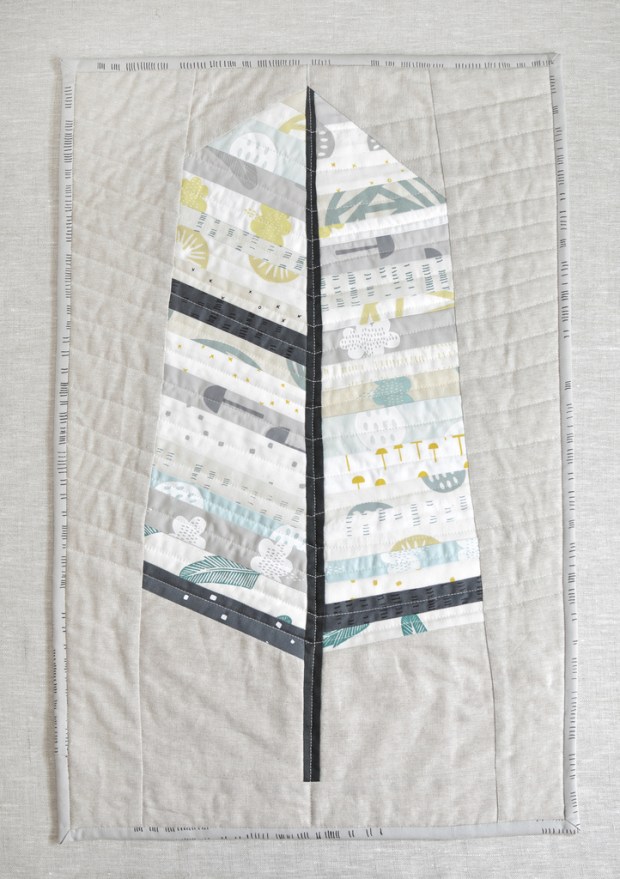
Patchwork (photo by leslie.keating) CC BY-NC-ND 2.0

Create your own patchwork (photo by leslie.keating) CC BY-NC-ND 2.0

Find and Highlight Your Transferable Skills

You develop at uni in so many ways. It just happens. You won’t notice it the whole time.

Not being aware of all the skills you’re acquiring makes it difficult to talk about those skills. But these are important for the future, especially when you’re looking for work. As Prospects explains, “Every vacancy requires a unique set of competencies but some transferable skills are commonly requested”.

Paintbrushes (photo by Viewminder) CC BY-NC-ND 2.0

So much potential, so much choice, so many stories to tell. (photo by Viewminder)

To get you thinking about what you have already achieved and what else you might achieve over these years, here are a few thoughts on those common transferable skills and how you can point them out:

Willingness to learn

You’re working off your own back. The more you put in, the more you’re likely to get out. There’s more to uni than grades. What other activities did you invest time in to learn and develop from? How did you go about discovering new things?

Initiative

University offers so much in one place. But it doesn’t come to you. Think of it as a bunch of opt-in stuff, not opt-out. No matter what some people might say, students aren’t spoon-fed. That’s nonsense. The most successful students are generally the ones who take their actions into their own hands and seek out new things. Take time to point out what you opted in for at uni, what drove you to it, and how you achieved in that guise. This required initiative.

Communication

Words, gestures, and listening. Yes, even listening is communication.

Words: Your coursework, presentations, and exams improve your relationship with words. Blog posts and articles in the student newspaper are useful too. The more you read and write, the better you will communicate.

Gestures: How you present yourself at uni (and on social networks) is important. How people see you interact with others makes a difference.

Listening: The world doesn’t revolve around you. University is a place of debate, discovery, getting involved, and having fun. That requires a population of more than one. Be ready to ask questions, and also to stay quiet and let others do the talking. Your voice needs to be heard, so long as you show an interest in hearing other voices in the mix.

Self-awareness

Spending all that time on study off your own back requires a teeny tiny bit of self-awareness. You need to understand what makes you tick, how to push yourself harder, and where you fit in within the grand scheme of things. A lack of self-awareness means you can’t separate your ‘super powers’ from your ‘kryptonite’.

Teamwork

The big bad ‘real world’ requires a lot of working with other people. And, believe it or not, people are brilliant and helpful and kind and necessary. When you gel with people, from a simple smile to some complicated coursework, you go places. Positive places. Whenever you have worked with other people and achieved something, highlight how your team was awesome and how you were awesome within the team.

Leadership

A successful leader does not act like a leader. Your uni years aren’t about managing people, but you have many opportunities to lead the way through teamwork, as mentioned above, and through the projects you get involved with. Be proud of this; it’s not boastful, it’s identifying your ability to follow and be followed. A useful two-way process.

Interpersonal skills

Living with others, communicating with others, involving yourself in the plans of others, welcoming others into your own plans… It’s hard to go through uni without dealing with other people. If you ignore everyone else as you study, you’re missing out on a lot, even if you come out with a shiny First Class Honours. A degree isn’t personal. People are.

Customer service

All this working with other people means you get to know what other people want and how other people act. Hopefully!

We’re all different. We all like to be treated in a particular way and to be listened to in an appropriate way. Give people the feeling that you have their interests at heart and not just your own.

Trampling over others may show a type of strength. But holding them up with you is a sign of both strength and support. Again, make it two-way. Show that you’re looking for win/win situations.

Flexibility

Things don’t always go our way. That shouldn’t be the end of the world. Hectic plans and last minute changes require a willingness to adapt. University is a great place to find out just how much you need to adapt, because you don’t know what’s coming around the corner.

Housemate problems, low grades, conflicting schedules, surprise tests, illness, too much partying… There’s no end to the stuff that can bite you on the bum. You can take charge of difficult situations, but you cannot control them.

When you take charge, you take change in your stride. Not because you know what happens next, but because you’re being flexible. Think of a time when you were faced with a dilemma that altered the direction you thought you were headed. How did you deal with it? What helped you shine, despite the problems you faced?

Commitment/motivation

Three or more years of study shouldn’t be taken lightly. Your involvement in clubs and societies should be taken seriously (even the fun groups!). The links you make within Students’ Union activities and with university staff need constant nurturing. Your part-time job can be more than just a way of making a few quid.

When you’re not motivated by what you do, it shows. Enthusiasm is hard to fake.

Most of the stuff you do at uni should be because you want to do it. That way, even the tough stuff has a purpose. You’re willing to see it through. This level of commitment will put a spring in your step and a sparkle in your eyes. When people see that you take pride in what you do, your value shines through too.

When it comes to careers, your commitment will be clear by what you have done in the run up to your applications and introductions. Don’t just say you love what you do, prove it!

Problem solving

Where do I begin with this one? How much of your life at uni DOESN’T require problem solving? Lateral thinking is a big deal. Creative ways of getting from one place to another are just as helpful as the practical ways. Check out these links for more information:

You can highlight your strengths and transferable skills in numerous ways. You have so many stories to tell. Which stories are you telling?