
EduLinks – Open Minds, Open Hearts, Open Legs (oh, and productivity tips…)

EduLinkz 

1. Goldsmiths College – Problem solved: just keep an ‘open mind’…

[An open mind seems to help you find clues and make good use of them.  So let’s see no more negative mind-blocks please!]

2. Hack Your Day – Correcting bad habits

[The article’s right, we do all have bad habits.  So the first step to getting rid of as many as possible is to read this article!]

3. Independent – Against the Grain: ‘Students need to feel valued and trusted’

[Amen to this.  If a tutor can show an emotional drive toward their subject, it can draw students in more.  Interacting with students and showing enthusiasm toward questions make the experience so much better.  I hope you’ve got at least one lecturer who fits this box.  I was lucky enough to experience some better tutors and it certainly makes a big difference when they engage with students.]

4. BBC News – Graduate vacancies up, says study

[Good news for those graduating this year.]

5. Dumb Little Man – Improve Your ‘Hunched over the PC’ Posture

[While I always try to sit correctly, I was very happy to find this article.  Stretching is necessary and I look forward to doing some of these.  If other people are around at the time, it might give them a laugh too.]

6. Studenthacks.org – How to Conclude an Essay Exam in 5 Minutes

[I never liked the final paragraph stating “In conclusion,” either.  Here’s to stronger endings to all!]

7. Times Higher Education – Champion of students back to set agenda

[Maeve Sherlock, heading up the new National Student Forum, didn’t worry too much about getting a good degree.  That was back in 1981 and she realises that things are different now.  She does have a point, but I still say there’s a lot in the extra-curricular activities at uni that can overshadow whether you get a 2:2 or a First.  It’s about that B-word again…Balance.]

8. GearFire: Tips for Students – 4 tips for reading better and retaining more

[I love the tip “Read with a purpose”.  If you don’t have a reason beyond “I was told to read it,” it’s unlikely the reading will be wonderfully productive.]

9. Daily Mail – Students with more sexual partners get worst results, reveals Cambridge study

[A bit silly, because it doesn’t explain why the worse results occur.  One person commenting below the article thinks it could have something to do with going out more (finding more partners) and drinking more (less inhibitions).  Still, it’s very difficult to read your textbooks or write essays when you’re in the middle of sex.]

10. Telegraph – Just what kind of lover are you?

[And while we’re on the subject (kind of), here’s news of an online relationship test.  How and why do we love?  Are men or women more romantic?  Take part at www.mi-id.com and results should be announced by Valentine’s Day.  Ahhh!]
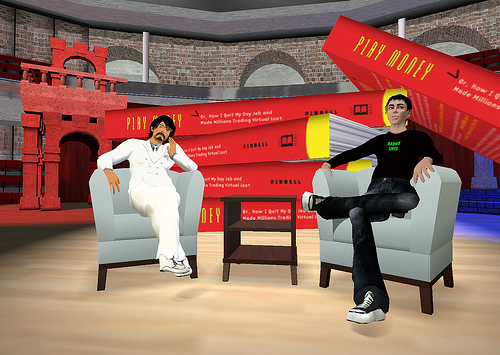
Recruiting in Other Worlds: Are You Prepared For Virtual Interviews?

Earlier today, I received a comment on a previous post about jobs and CVs.  LJ asked an interesting question:

“I wonder what advice you would give someone facing a virtual interview?”

Virtual interviews are a recent development to recruitment.  They’ve been used more as a taste of the future, but the results have resulted in possible job offers.  Some people are already out there, developing their virtual interview skills.  After you graduate, who’s to say you will be more likely to undergo interviews over the Internet?

And should you treat these virtual interviews any different to a phone interview or a face-to-face one?

In some ways you’ll have to.  In other ways it’s much like any other interview.  You certainly shouldn’t take it less seriously.

photo by pathfinderlinden

Here are 10 tips to help give you a fighting chance at a virtual interview…because you won’t get a Second Life at this one:

1. Remember it’s an interview – Chances are you’re applying for a job in the real world, so be yourself.  You’ll be meeting face-to-face soon if they like you here.  No point playing some big shot if you hate that kind of exposure in real life…

2. Concentrate on the facts – This is a virtual interview.  Interviewers are unlikely to be checking out your personality.  They want to know what you’ve achieved.  They want to hear stories about what has brought you here today.  They’re looking for a demonstrable ability to perform well, write succinctly, and give clear examples.

3. Don’t try and show off – You might know some impressive tricks in the virtual world.  They won’t be impressive halfway through an interview.  Leave the tricks for your friends unless it’s part of the interview process.

4. Remain courteous – You wouldn’t rush away from an interview the moment the final question had been answered, so be sure to make an impression from the moment you’re visible to the moment you’re shaking virtual hands after a successful meeting.  If the interviewer can still see you, make sure your behaviour is impeccable.

5. Keep the interviewer informed – If you aren’t sure about an answer, ask the virtual interviewer for a little time to compose yourself.  If you need clarification on a question, don’t be afraid to ask for it.  If your virtual self is just sitting there doing nothing for a couple of minutes without explanation, it won’t look too good.

6. If you’d feel stupid doing it in the real world, it’ll be stupid to do in a virtual interview – It might seem clever while looking at the screen, but always ask yourself, “Would I dare to do this if I was sitting in the interview myself?”

7. Prepare yourself in the real world – Performing a virtual interview at your computer, in your pajamas, 30 minutes after crawling out of bed, is a bad idea.  Just because you can do it, doesn’t mean you should.  Get yourself dressed and looking smart.  It will boost your positivity and help you play your virtual part a lot better.

8. Do your homework – A virtual interview will be no less difficult than a face-to-face interview.  You still need to prepare and be ready for any questions thrown at you.  If an interviewer asks you, “Is a Jaffa Cake a cake or a biscuit?” it’s no good ignoring the question, or simply laughing.  By all means, react to the general atmosphere if it’s light hearted, but don’t overdo it.  Oh, and a Jaffa Cake is definitely a biscuit, because I’d feel very greedy if I was eating 12 cakes in 10 minutes…

9. Showcase your online talent, if applicable to the job – In a normal interview, you can give the recruiter your web address.  In a virtual interview, you can send the link over at the right time and all view it within an interactive discussion.

10. Tell the truth – Both recruiters and interviewees have championed previous virtual interviews because of the honesty involved.  There’s a tendency to get to the point and give a more confident reply to a question.  So if you think a virtual interview gives more chance to fib, you might be doing yourself out of a job.

——-

It might be early days, but have any of you already taken part in a virtual interview?  Would you give any other advice regarding interviews (real world, or otherwise!)?

Students in England: Watching the English

I buy lots of books and then don’t read them for years.  One such book is ‘Watching the English’ by Kate Fox (Hodder & Stoughton, 2004).  I bought it when it first came out, but I’ve only just read it.

It’s a quick and amusing read.  Full of generalisations, but good fun nonetheless.

‘Watching the English’ has a lot of commentary on how to tell a person’s class.  You’re bound to enjoy working out what social class you seem to be.  It’s not necessarily accurate…I appear to be in the realms of the Upper Class.

Anyone who knows me would laugh if they heard that.  And they’d continue laughing.  And then laugh some more.

People can be so cruel.

Anyway, I gave so many procrastination links out yesterday, that I’ve decided to leave the EduLinks alone today.  We’ll see how it goes.  Hopefully I won’t end up simply providing double the number of EduLinks on Thursday…

Today, I thought I’d point out what Kate Fox has to say about English university students and exams.  See if you can pick up a copy of the book if you can.  It’s not a serious social examination or madly scientific commentary.  It’s just a good read.

Kate Fox is a co-director of the Social Issues Research Centre (SIRC) in Oxford.  According to the SIRC website, her next book is about Shopping.  I hope it details student shopping too.

From ‘WATCHING THE ENGLISH’ by KATE FOX (HODDER & STOUGHTON, 2004):

“University effectively postpones true adulthood for an extra three years. As limbo states go, this is quite a pleasant one: students have almost all of the privileges of full adult members of society, but few of the responsibilities. English students moan and whine constantly to each other about their ‘impossible’ workload, and are always having what they call ‘an essay crisis’ (meaning they have to write an essay) – but the demands of most degree courses are not very onerous compared to those of an average full-time job.

“The ordeal of final exams provides an excuse for even more therapeutic moaning-rituals, with their own unwritten rules. The modesty rule is important: even if you are feeling reasonably calm and confident about an exam, it is not done to say so – you must pretend to be full of anxiety and self-doubt, convinced that you are going to fail, because it goes without saying (although you say it repeatedly) that you have not done anywhere near enough work. Only the most arrogant, pompous and socially insensitive students will ever admit to having done enough revision for their exams; such people are rare, and usually heartily disliked.

“If you have clearly swotted like mad, you can admit this only in a self-deprecatory context: ‘I’ve worked my butt off, but I’m still completely pants at genetics – I just know I’m going to screw up – and anyway there’s bound to be a question on the one thing I haven’t revised properly. Just Sod’s law, isn’t it?’ Any expression of confidence must be counterbalanced by an expression of insecurity: ‘I think I’m OK on the sociology paper, but statistics is just totally doing my head in…’

“The superstition element, or the risk of making a fool of oneself, may be an important factor before the exam, but the modest demeanour is maintained even after the desired result has been achieved. Those who do well must always appear surprised by their success, even if they secretly feel it was well deserved. Cries of ‘Oh my God! I don’t believe it!’ are the norm when such students receive their results, and while elation is expected, success should be attributed to good fortune (‘I was lucky – all the right questions came up’) rather than talent or hard work. An Oxford medical student who had got a First, and was being congratulated by friends and relatives at a celebratory lunch, kept ducking her head, shrugging and insisting that ‘It’s not really such a big deal in science subjects – you don’t have to be clever or anything, it’s all factual – you just memorize the stuff and give the right answers. It’s just parrot-learning’.”

Are we, as students in England, really like that?  Shocking! 🙂

What’s it’s like elsewhere in the world?

Get it Done: 20 Tips & 20 Links to Eliminate Procrastination

There are many writers out there who write about productivity.

But how many readers are there who know when to stop reading about productivity and start being productive?

Photo by Plusverde

Get rid of the cracks on the road to productivity… – photos by Plusverde

I did a (very) brief search for recent blog posts about procrastination. There’s so much written about it that the mind boggles. You could spend a lifetime wasting time reading about the many ways you can stop wasting time!

So here’s a post with lots of tips and loads of links on the subject, which means you needn’t realistically look elsewhere.  After you’ve read this lot, it’s time to DO.

Below, I present 20 quick tips to help you break out of the annoying habit of putting things off.  They form an introduction to the next part of the post…

…Which consists of links to 20 posts related to banishing procrastination. The short tips provide a taster, the posts provide an in-depth guide to getting it done.

A vast amount of reading.  Yes, they are good articles, but don’t read them just to put off what you should be doing!  The tips and links only bring you closer to where you want to be. If you actually want to reach your destination, get into the driving seat and DRIVE! Good luck.

20 Tips to Get Rid of Procrastination

  1. Don’t try to do all your work in one go – you’ll get bored and cranky and you’ll want to find other things to spend your time on;
  2. Make a time plan;
  3. Listen to yourself;
  4. Be honest with yourself…
  5. …and NO excuses!
  6. Get the initial research/workings/readings out of the way first;
  7. Focus on chunks, rather than the whole thing;
  8. Prioritise;
  9. Don’t look at the end point at the beginning – If you hope to be finished as soon as you’ve started, you’ll only become overwhelmed and tired;
  10. Work in frequent bursts, taking frequent breaks too;
  11. Eliminate distractions;
  12. Stay energised;
  13. Don’t wait until there’s not enough time…start when there’s plenty;
  14. Many distractions are psychological – they wouldn’t be distractions if you didn’t have a more important task at hand;
  15. When overwhelmed by tasks, leave anything that can wait until tomorrow…until tomorrow;
  16. Set specifics – define your activities, don’t leave them vague;
  17. Link your work and play. Bring everything together (i.e. planning isn’t just for one task, and it’s not just limited to work with deadlines);
  18. Start a ritual to your day to keep you focused by default;
  19. Understand your reasons for completing a task and ask why it’s important;
  20. Stop looking for a wand to make everything finish by magic…you’re not Harry Potter!

20 Links to Stamp Down Procrastination

shoeprint

1. Scott H Young – How to Stop Making Excuses

2. Zen Habits – 7 Powerful Steps to Overcoming Resistance and Actually Getting Stuff Done

3. Study Hacks – The Science of Procrastination

4. My Mind Expert – Dealing With Procrastination

5. TheUniversityBlog – Learn to want it

6. Lifehack.org – The Power of Ritual: Conquer Procrastination, Time Wasters and Laziness

7. Lifehack.org – 50 Simple Ways To Stay Productive

8. Litemind – 15 Time Boxing Strategies to Get Things Done

9. Personal Development Blog – 3 Rules to Help You Fight Procrastination

10. Martha Beck – Death to procrastination: Use the 4-day win to get your goals moving

11. CollegeStudentsRule – Don’t Interrupt Me, I’m Procrastinating!

12. Lifemuncher – Do It Tomorrow

13. Achieve IT! – Discover the Reasons for the Distractions That are Killing Your Progress and Become Free From Them for Good

14. Your best just got better – Are you procrastinating?

15. PickTheBrain – 5 Reasons You Procrastinate and How to Overcome Them

16. Dumb Little Man – 6 Simple Steps to Achieve Laser-Like Focus

17. Alex Shalman – From Slacker to Productivity Monster in 23 Days

18. Slacker Manager – How to be a Productive Slacker

19. Lifedev – Keeping Focus While Beating Back Distractions

20. Ian’s Messy Desk – Inside the mind of a procrastinator