Study

Find the right reasons to read ahead

You might think that reading ahead can only be positive. By knowing in advance what you’re meant to read, why shouldn’t you just read it now?
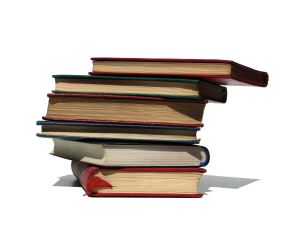
photo by lusiErin E. Templeton writes in ProfHacker, “the act of reading ahead is often exceptionally damaging to our work together in the classroom”.

Templeton, an English professor, notes that many students read ahead just to get it out of the way. Instead of engaging academically, the aim is to finish the task of reading as if that’s what matters.

What are your reasons for reading ahead? If it’s just another box ticking exercise to get another activity off your to-do list, you may be doing yourself a disservice. More than that, Templeton argues, you may be doing the whole class a disservice.

Your reasons are important. I loved reading ahead, even before I went to university. I wanted to get the initial reading and course texts understood in advance, because I knew there’d be so much more to deal with upon hitting campus.

Anyone who has been through their first year at uni will know what I mean. Overwhelm isn’t exactly difficult as a Fresher. Due to this, I would always suggest that future students swot up in advance, even if they continue to remain in the dark over most of the concepts and arguments.

I loved reading ahead. I worried less about confusing content, because I knew that lectures, seminars and tutorials would deliver clarity where I needed it. I would come armed with questions and specific goals. I was prepared to revisit the text and discover more.

This type of reading ahead is not what concerns Templeton. Unfortunately, this type of reading ahead isn’t common in Templeton’s experience. What she sees is a type of reading that severely limits critical engagement with the text:

“The study of literature is…not only reading a certain selection of texts in a particular order.  Instead, a good class takes the book list as a foundation and collaboratively generates an extended conversation through discussion and debate, analysis and critique. The themes and issues which emerge from our collective experience and conversation are not always (or even often) ones that can be predicted ahead of time.  In fact, the best of these are ones that cannot be anticipated precisely because they arise organically from the confluence of time, place and participants.”

Reading ahead is clearly not a problem in itself. However, you must be prepared to ‘read again’ to give close and careful reading of the text.

Without a critical eye, you might as well be reading for enjoyment.

Enjoying what you read is fantastic. I always preferred reading something I could appreciate beyond cold and critical study.

Perhaps reading ahead is crucial, then. It may be the only effective way to bridge that gap between enjoyment and engagement when studying subjects like English. Consume the texts in advance for your own fun, then read again with deeper focus.

How do you tackle your mountain of reading?

When Facebook and Academics (Almost) Collide

Have you ever thought of Facebook as a learning community? I’m guessing it’s not crossed your mind that much…

What if a tutor started using Facebook for some of your academic work? Would you feel comfortable letting the professor in to your profile? Maybe not.

Anouk Lang undertook a project to find a way to build a learning community within a social networking situation, but without infringing on students’ more personal space.

Lang wanted to overcome the barrier whereby students were negative about using Facebook to study. Even those who weren’t so daunted, they usually got uncomfortable past minor administrative and timetabling communications.

Lang chose to experiment with a set of peer mentors, who formed a distance between the student and tutor. Final year students would talk with second years and pass on their own experiences and knowledge, acting as a bridge between the student and the academic.

Conversation was able to grow academically because “those giving this input and doing this moderation were still peers and therefore not sufficiently different or forbiddingly unknown to the extent that their difference would stand in the way of other students participating”.

Even better, Lang’s experiment didn’t bother with annoying applications. This stuck with the basics, like posting on walls and sending private messages.

Peer mentors started conversations informally, with friendly chatter; something Lang highlights as important for the process to work effectively:

“…getting this right can be a powerful tool in increasing the attractiveness of the group by strengthening its relational interests.”

Students were happy to ask questions. In turn, the final year student mentors were equipped to give answers, because they had been in a similar position in the past.

Better still, anxieties were quickly tempered by mentors. Situations wouldn’t have necessarily been addressed so quickly and effectively using other methods. Facebook win.

But what if Facebook got overtaken by another service? It wasn’t that long ago when Myspace was dish of the day

Lang explains that proper mentoring requires understanding of online social worlds in general. Methods of communication are key, rather than being an expert in Facebook or any particular service:

“The peer mentoring model is, then, a way of ‘futureproofing’ the resource, as students will be more likely than academic staff to know which technologies are most popular with their peers, and once a framework for online mentoring is established, the SNS can if necessary be migrated in future years to different sites or applications as students’ usage patterns change.”

Can social networking sites benefit learning and student support? Lang argues that they can, “if such sites are conceptualised not as virtual versions of classrooms but rather as places where individuals come to participate in communities of practice”.

Online services are simply tools. They can be used in a number of ways. You can’t effortlessly blend social life and academic work without feeling a bit uncomfortable. But, as Lang demonstrates, it is possible to keep enough distance to enable the social and academic to operate on the same platform without muddling together.

If you didn’t have to sacrifice your informal digital identity, would you be happy to be a part of a social networking learning community? And if you are already, how is it working out for you?

Why rewriting brings you closer to essay heaven

There’s no such thing as writing; only rewriting. Inger (aka The Thesis Whisperer) explains:

“…everyone writes badly in the first draft…I never rewrote anything as an undergrad and just assumed I was crap at writing academic papers.”

In my mind, lack of rewriting is one of the biggest issues in the essay writing process. Ask yourself, “Have I left enough time to properly edit and rewrite my essay before it is due in?”

The relationship between time and rewriting/editing is important. Do you respect that relationship?

photo by stuartpilbrow

photo by stuartpilbrow

Writing the bulk of an essay just before the deadline is a common technique. Failure to make the grade often boils down to this and it’s a more difficult method to employ all round. The temptation of a short-term, temporary gain is so great that we’re willing to pull the wool over our own eyes. When it’s too late, the heat is on to find someone else — anyone else — to blame for the shortfall.

With enough of a reality check, it becomes clear that you’re awesome enough to improve on your own terms. What looks like hard work and real discipline is actually more a habit and a willingness not to give in to temptation.

Write rubbish and keep rewriting until it’s treasure. Start right away. You won’t even notice short bursts, but we’ve all experienced the pain of last-minute essay hell…

How willing are you to cast aside temptation and ascend to essay heaven?

Another way to write 1000 words a day? – The Thesis Whisperer

photo by Samantha Decker

photo by Samantha Decker

Get to grips with academic writing

Does essay writing trip you up? Do you struggle to know how you’re meant to write? Are you annoyed by gaps in your understanding?

The Guardian says that the change from A-levels to a university degree is too much for many students. Essay requirements are overwhelming.

photo by katiew
photo by katiew

Echoing many people I’ve spoken to in the past, Daphne Elliston told the Guardian:

“…putting my own words into academic language was hard. And it was difficult to believe I was entitled to my own opinion or to disagree with all these academics who’d done years of research.”

You don’t have to write insanely academic language. Rather, you’re meant to create an argument. Your job is to research, assess and reach your own conclusions.

But how? Where do you start? Here are some considerations for tackling essays:

  • Write in whatever order you like – It’s not a linear process. Kate Brooks at UWE says the process is more cyclical: “do some research, draft a bit, read some more, think, consider what you’ve written, redraft.”
    You can write before you research, you can build a conclusion before an introduction, and you can make random points as you go along and reorder those points at a later stage. Your writing route is flexible. Nobody needs to know how you put it together. The end result is all they’ll look at. And all they care about!
  • Consider your opinion throughout – From start to finish, be aware of what you think. Take the essay question the moment you’re given the assignment and ask yourself how you would answer it. Write a paragraph straight away, before you do any further reading. After some research, has your opinion changed? When you’ve finished writing, has your opinion changed? Keep asking yourself what *your* opinion is.
  • Feel free to stop reading – Academic research can go on and on. And on. As an undergraduate, you don’t need to obsess forever. With a load of ideas and a grip of core texts on reading lists, there’s no need to relentlessly search for every last scrap of data and every opinion ever made. That’s impossible. And you’re not expected to mention all this stuff anyway. There’s no science in knowing when to stop. However, if you’re starting to feel overwhelmed with information and don’t have any of your own writing to show for it, you can probably stop reading…
  • Select the best examples – With all this research done and a trillion ways to say the same thing, pick the clearest, most relevant references to make your point. Leave the others to your references only. The simple act of referencing shows you are aware of it.
  • Don’t feel offended – Some departments introduced compulsory modules on writing at degree level. However, some students found this offensive, according to the Guardian piece.
    After completing A-levels and getting good grades, it may feel strange to start all over again. While some students sense an overwhelm from the beginning, others think the process is just a continuation. By stubbornly refusing to discover more about the academic writing process, some students will miss out.
    Be open to learning. Even if you were entirely comfortable all along, give yourself a pat on the back for being so awesome. Not many people reach that level of awesome so quickly. 🙂
  • Discuss the writing as you go along – If possible, grab some time with your tutor (either virtually or physically) to discuss your draft essay. It shouldn’t take long to find out where you’re headed. There’s no need to be specific. Your job is to make sure you’re on the right track before you commit more time.
  • Work in small bursts, over a long period of time – The difference between a First and a fail may come about solely because of the way you use your time. There has long been a tendency to leave essays until a day or two before they are due in. A risky move.
    By waiting until the deadline, you have no option but to write in a linear fashion. Research also goes out of the window. We’ve not even got on to the amount of stress you’ll feel with nothing written and only a short space of time left. This is one of the most common methods of writing essays, but also one of the craziest. Do you really want to take that risk?
  • Think critically – As Daphne Elliston says, it’s hard to accept you have any right to an opinion worth anything compared to acclaimed academics and prolific authors. But you do. On top of that, you are able to disagree with what these published writers have said. So long as you back up the argument with reason and other references, you can argue however you like. I find that one of the most enjoyable parts of the writing process. 😉
  • Use your own voice – YOU are the author of this essay, not someone else. An overactive vocabulary is pointless. Sounding clever and being clever are two different things. Simple language can be just as powerful when you have a solid argument.
  • List the points you want to make – Plan as simply as you can. Get some bullet points down with 4, 40 or 400 things you want to discuss in the essay. The number doesn’t matter; it’s the active consideration that’s crucial. This basic plan will get you thinking right away and will even help shape how you research. The search for references and quotations is much easier when you have an idea of what you’re looking for.

If you want to explore the academic and essay writing process even further, here are some other things you can do:

Your writing will improve as you go along. When you encounter a problem, make an active effort to overcome it. Gaps in your understanding are not weaknesses, they are merely challenges. We all face these challenges every day. Even academics with years of research have to overcome gaps in understanding. That’s why they are academics. If those gaps didn’t exist, there would be nothing left to learn!