lifeskills

Make the most of your £9,000 year at university

I’ve argued before that fees themselves don’t act as a deterrent to university, since higher education is seen by many as the only feasible route to career success. There is much more to higher education, but it’s hard to deny that a large number of people take the HE path in the hope of improving future prospects.

The Independent asked students and graduates if they would have paid £9k per year. That question isn’t so important right now, but some of the answers given are definitely worth exploring.

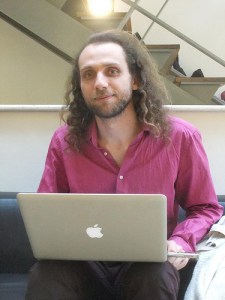
photo by mattwi1s0n
£9k fees? What say you? – photo by mattwi1s0n

Nottingham graduate Luke Martin puts the student experience into perspective:

“The ‘university life’ is a deeply individual one and it’s a shame to imagine it simply as a (very expensive) commodity, when for most it’s an all encompassing and enjoyable lived experience.”

You have a wealth of opportunity at university. It’s easy to imagine that a degree is the most important end product of your study. In reality, many other actions over the years can surpass that seemingly crucial grade.

Qualifications are certainly important, but they’re no replacement for other achievement and personal experience.

Luke Martin adds, “I suspect that I took a lot out of it that can’t be measured in pounds”. While you can’t put a monetary value on everything you do, you should attempt to translate as many of your actions into meaningful examples that others can understand.

Build upon your long-term plan. How far have you looking into the future? You don’t know what’s awaiting you around the corner, but that’s not an excuse to abandon forward planning.

It’s all too easy to see graduation as a million miles away. Even if you think it’s approaching fast, it’s just as easy to think the job search starts when you’ve finished studying. But it doesn’t.

Your search has already started. If you’re at uni to improve your prospects, every minute is potential time to be winning. Some ideas that are quick to start, quick to implement, but require a long time to make a mark:

  • Start a blog: Blogs almost never achieve overnight success. Three posts do not make a must-read blog. A consistent effort, however, can yield results. There is no sure-fire way of reaching a huge audience and/or huge respect, but you’re guaranteed not to reach it if you don’t try at all.
  • Build online network profiles aimed at your chosen career/job route: Twitter, LinkedIn, and the like aren’t overnight success stories (unless you’re Charlie Sheen). Thankfully, you only need short, committed bursts of activity to make a difference over time. But do commit to it, otherwise you’re profile risks going stale.
  • Get working on a career RIGHT NOW: Ask yourself, “What can I do straight away to move closer to a role in X industry?” If you had a free reign to work on whatever project you wanted, what would you choose? If you aren’t already doing that now, what’s stopping you? Take your unexecuted ideas and start bringing them to life.
  • Volunteer: There are plenty opportunities to volunteer. It doesn’t have to be charity work and it needn’t be in a formal job situation. Giving up your time to support a cause and to enhance your own experience will look great ongoing. However, there’s no point in volunteering simply to look good on paper. It doesn’t work. Your aim is to provide value and enthusiasm. You may even build some amazing contacts, memories and future opportunities in the process.
  • Seek out a mentor: We learn from the actions of others from birth. You may already know someone who you respect and could learn a lot from. If you do, why not tell them how you feel they could help you with a bit of guidance. They will likely feel flattered and be delighted to spend some time with you. And the worst they can do is say no!
    If you don’t know anyone personally, Forbes has an 8-step plan to find a mentor and a slideshow with the steps too.

After you graduate, your overall experience is worth more than just the degree. One graduate suggests: “We’re left in a world where a degree is just an expensive, bog-standard qualification.”

While I don’t agree in such harsh tones, it’s true that a degree, in isolation, is no longer enough to secure the employment of your choosing. You must put the legwork in to use your degree and the skills you developed, because the piece of paper isn’t going to make a big noise on your behalf.

An increasing number of graduates find it insanely difficult to secure suitable employment. However, it is no reason to wash your hands of higher education. In a world of ‘quick fixes’ and ‘instant access‘, you’ve still got to play the slow game for some things, frustrating as that may be.

I’ll leave the last words to KCL graduate, Daniel Smith. No matter what the cost, we’re all different and it’s in your own interests to make your experience worthwhile, amazing, and relevant to who you want to be:

“Each student will have a different experience to the next and just because everyone has a degree does not mean there is an equal starting point when looking to start a career after university. In a fundamental sense though, a degree is worth any amount of money, if it’s something you’ve always wanted to aspire to.”

The answer is unanswerable

You need answers. The solution, you may think, is to look for answers. After all, you need them.

Or do you?

An ‘answer’ is like finding a solution, or developing a set of guaranteed instructions. Your search for the answer is usually a search for step by step detail to get from one place to another.

However, it’s hard to find answers when there are only possibilities. A to B is hardly ever restricted to a single route. Worse still, the route is constantly changing.

photo by Crystal Writer

When nothing simple presents itself, the search is often intensified. But you’re just spending more time on a fruitless exercise. Rather than attempt to beat the game, expand your vision beyond objectives. With trillions of ever-moving variables, it’s easier to temper chaos, rather than control it.

For too long, qualifications have been seen as the route to bigger and better things. But it should only be one aspect of a wider aim:

“…anything less than top grades has become tantamount to failure. This leaves little room for experimentation, creativity, or mistakes. Inquisitive learning that is driven by an interest in knowledge and learning for its own sake is squeezed out by consumer-driven demand for acquisitive learning. It involves learning what is necessary to pass examinations or motivated by a need to impress employers with one’s range of extracurricular activities and achievements. It is based on a model of individual rational calculation where the wider purpose of learning has been lost.” [p145 – The Global Auction]

You shouldn’t simply stop studying. I’ve mentioned before that qualifications are still a useful part of the bigger picture when you know why you’re working toward them. I’ve also explained why it’s crucial to make mistakes.

But you’ll never get true, unarguable answers.

Searching for progress and new discoveries should still be undertaken. The search should never stop.

Forget answers. Your search should be a more open-ended type of enquiry. It’s okay to be vague. Not everything requires an absolute, drilled-down focus to the last speck of detail.

You do need a basic plan of some kind (but it’s flexible), you do need awareness of the general direction you’re trying to take (but it’s bound to change), and you do need conviction in what you’re doing (but that doesn’t mean you’re unmovable & stubborn).

This works for smaller goals, not just grand plans. Writing an essay, for instance, usually involves a search for different views and arguments, proving that there’s no absolute answer. Yet you reach your own conclusion and demonstrate your own results.

If certainty and clear answers ruled the world, higher learning wouldn’t be as important as it is today. Learning can solve problems, but only when it sets out to improve and discover, not when it sets out to staunchly answer.

Choosing Bombardment

If life today had to be summed up in one word, a suitable choice of word would be ‘bombardment‘.

Bombardment means actions come before questions.  Bombardment means overwhelming detail overtakes information filtering.  Bombardment means that a rush to be first appears more important than sustained concentration and focus.

photo by underminingme

photo by underminingme

Our ability to be connected to so much all the time is both a blessing and a curse. Information overload isn’t a new thing, but it’s becoming a standard for most of us. The bombardment only increases, fuelling an even greater sense of now, Now, NOW. We try to find more time in the day to consume as much as possible. If we can speed up this and gloss over that, we’ll have even more detail to play with. Or that’s the thought, anyway.

Alain de Botton sums up how it’s easy to believe that more and now is best:

“The obsession with current events is relentless. We are made to feel that at any point, somewhere on the globe, something may occur to sweep away old certainties. Something that if we failed to learn about it instantaneously, could leave us wholly unable to comprehend ourselves or our fellow human beings.” [Source]

This simply isn’t true. But we’re blinded by the panic that we might miss something game-changing.

No matter how much we immerse ourselves, we’ll never catch everything. The game is changing all the time. You don’t need to be a part of everything in order to cope. You don’t even need to be a part of everything in order to make a difference.

I don’t particularly subscribe to the idea that things like the Internet rewire our brains in a scary way. But a lot of what Nicholas Carr says still makes sense.

Carr is author of “The Shallows“, a book which suggests that we’re losing our ability to concentrate and reflect. We’re training ourselves to skim over detail and accept interruption when we should be focused.

Carr explains why constant bombardment isn’t useful:

“The development of a well-rounded mind requires both an ability to find and quickly parse a wide range of information and a capacity for open-ended reflection. There needs to be time for efficient data collection and time for inefficient contemplation, time to operate the machine and time to sit idly in the garden. We need to work in Google’s “world of numbers,” but we also need to be able to retreat to Sleepy Hollow. The problem today is that we’re losing our ability to strike a balance between those two very different states of mind. Mentally, we’re in perpetual locomotion.”

Carr’s blog, Rough Type, is also a great resource. Recent posts include those on moderating abundance and how short is the new long.

I believe the ‘always on’ attitude is more a choice (perhaps unconscious) than a dangerous assault on the evolution of our brain. By recognising that it’s okay to switch off the noise, it only takes a bit of getting used to before you can once again distance yourself from bombardment and distraction.

If you’re used to realtime feeds and never-ending information beating at your door, the move away from it won’t be easy. But that’s based on habits, rather than an altered brain that is now unable to deal in any other way.

Steven Connor’s description of the present is a good explanation to why these habits aren’t easy to break:

“The present has become impossible not because it has become more ungraspable or fugitive than ever before, but because it has become more than ever available to itself, just as it has proportionately made other times available to it.” [From “Literature and the Contemporary“, p.15]

The subtitle of Nicholas Carr’s book is “How the Internet is Changing the Way We Think, Read and Remember“. But I wouldn’t like to blame the Internet. Steven Connor’s description of the present seems more fitting, because all aspects of now are implicated.

This morning, as I was writing this piece, I had my Twitter feed rumbling past my eyes with regular updates. But I ignored it because I’m used to ignoring it when I’m concentrating on other tasks.

But I did suffer other distractions. Distractions that weren’t Internet related. But they did involve the present. And one distraction, ironically, involved Nicholas Carr.

Typing away, I heard the thud of post as it came through the letterbox. Among the post was the latest copy of the London Review of Books. I decided to have a flick through before continuing to write this piece.

When I got to page 9, imagine my surprise when I spotted a review of “The Shallows”.

My very first thought upon seeing the review was, “Thank goodness I’ve seen this now, before publishing anything. I may find something new that’ll change my point of view.”

My second thought came soon after: “Don’t be daft, Martin. This is exactly the type of distraction that shouldn’t matter. Let it go. Deal with it later. Don’t be distracted by it.”

I was distracted, not by the Internet, but by something posted through my letterbox. By the printed word. By a desire to consume something new, just because I knew it was there and had access to it.

The point is, the book review is bound to bring me new information, even if it doesn’t change my overall opinions. Everything we consume can have that effect.

Life is distracting. But it’s still within your power to reign in your concentration. You have the choice.

And now, if you don’t mind, I’m going to read a book review. 🙂

10 inspirational tips by the man from MONGOOSE

I want to be wrong.

Do you?

We should all long to be wrong. So says the man from MONGOOSE. Otherwise known as Dougald Hine.

Dougald Hine (photo by squircle)

Dougald Hine (photo by squircle)

Dougald is on a mission to bring people together and to generally help make the world a little bit more awesome for us all:

“It all starts from a desire to understand how we change things – and how things change, with or without us.” [Source]

Dougald recently gave a speech on universities and transition. Speaking in the slot that was originally meant for the “man at the ministry”, Dougald decided to put his MONGOOSE hat on. In other words, the ‘Ministry Of Non-Governmental Organisations Or Similar Entities’, which is “For when the state is failing to deal with major ongoing crises”.

So, Dougald is serious about helping make change happen. He’s happy to be light-hearted along the way. And, if you prefer, not so light-hearted.

The path to change is never smooth, but our attitude makes a big difference to how we tackle that path. Along the way, we make many mistakes. Luckily, mistakes are important — and necessary — stepping stones.

This is just one piece of advice Dougald gave when he spoke. Here are some more gems I took away from his talk:

(more…)