EduLinks

Google vs libraries? Do we face an information dream or nightmare?

sunset_directions-photo-by-saavem

sunset_directions (photo by saavem)

I was an early adapter to the Internet.  I was dialling up to Bulletin Boards and sending off for underground magazines on floppy disc before the internet as we know it was around.  And in the infancy of ‘the Web’, when it meant little more than something spiders created, I was telling everyone at school how amazing the Internet was.  You could chat to people around the world, find information on your favourite band, get detailed information to help with homework, look up the most amazing jokes, and a million other things!

None of my friends really cared at the time.  But in a flash, the Internet was THE big thing.  Fast forward to today and now it’s simply the norm.  We take it for granted, despite its relative newness.

As we have speedily adapted to this new way of life, has the internet replaced more traditional sources in terms of ease and accuracy?  The 5th June edition of Times Higher Education discussed ‘the Google generation’, wondering if we have become too dependent (and Google-eyed) on the online search beast.  Has the ease of finding information led to less critical thought and innovation, at a time when you’d rather expect the free flow of data to open up new possibilities?

I recently found a fantastic article from the site Publishing 2.0:

What newspapers still don’t understand about the web

After reading, I thought it’s no wonder most of us use Google as the first (and often only) port of call for information.

And in terms of academic research, going as far as Google Scholar (still Google!) and Wikipedia isn’t exactly breaking out into a secret world of exclusive information.

Google clearly does have a huge scope.  You’d be mad not to use it.  I do so frequently on a daily basis.

The problem is when we rely almost solely on just one resource.

(more…)

Do you want Web 2.0 help for your educational development?

Brian Kelly, of the great blog UK Web Focus, has recently been reflecting on the different approaches that universities have in using Web 2.0 tools (I’ve commented on the matter there too).

Institutions obviously want to know how they can reach out to students effectively and maintain quality contact.  They want to make sure that the right information and help is there for each and every student.  They would like to succeed in making their lives a little clearer and a little easier.  In the process, they hope that your lives will also become a little easier.

In recent years, it’s obvious that the end-user (i.e. YOU) calls a lot of the shots.  If you’re not publishing blog posts, you’re updating your Facebook profile.  If you’re not Tweeting, you’re sharing photos for the world to view (and possibly even reuse).

No longer is the Internet just a bunch of static views and specific functions.  Now you can create mashups, specialise on YOUR terms, and personalise to your unique and individual brand.

For us as ‘Generation Y’ (as it’s known), we’ve grown up with the Web and all the exciting developments that we take for granted.  It’s led to this:

  1. Students don’t want specifics imposed upon them (who wants – or needs – that now?);
  2. Students don’t appreciate the changes from what they see as a platform for personal and social interaction, to a platform that’s been hijacked by educators and officials as a method of contact and coming closer.

It doesn’t matter that your uni is developing new tools to make your life easier.  Firstly, you may disagree that it helps your individual circumstances.  Secondly, it clouds the boundaries between personal/social life and educational/study life.

With so many Web 2.0 tools out there, the point is that you can pick and choose the services you want/need. It’s mainly up to you, as an individual, to decide what’s important.  That’s an essential component of the Web 2.0 idea.  It’s a fluid, changing space.  To an extent, you help to create the rules.  Once the fluidity is taken away, much of the ‘Web 2.0’ badge may as well be gone.

So the big question is, in what ways can universities achieve a solid base that you – as users – can embrace, but then further develop yourself?

Has your uni helped to give you more control of your educational pursuits online?  Do you make use of social networking and Web 2.0 tools to further your education/career, or do you see these functions as purely a tool for entertainment purposes?

[Update: I’ve found that new research by JISC has found that nearly three quarters of those students who use social networking sites (which is almost every student) use the sites to discuss coursework with others.  Over a quarter do this frequently.  But does this mean that students want a social networking connection to their tutors, or is it better to keep the discussion between peers as another way to do group work…?]

60 years of digital computers…what would we do without them?

Today is Digital 60 Day, celebrating 60 years since the birth of the world’s first stored program digital computer.  The computer was designed and built at The University of Manchester and it executed its first program on June 21st, 1948.

The computer was called ‘The Baby’ and was the forerunner of the technological computer advances that we take for granted in gadgets today.

In Manchester, a live demonstration of ‘The Baby’ will take place and is being broadcast over the Internet.

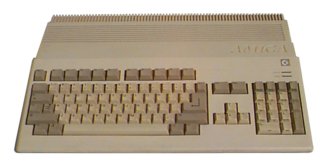
I might not have been around for ‘The Baby’, 60 years ago, but I do have fond memories of the computers I used as a kid (photos of the ZX Spectrum 48K and Amiga 500 are below).  Those were the days.  And all those games consoles too.  Good times.  Thanks Manchester.

Digital 60 Day links:

ZX Spectrum (photo by BlogDeManu)


Amiga 500 (photo by Ian Nock)

Which uni is best for sport? You may be surprised…

Those of you who want to be at a university with great results in competitive sports…step right up!

The Complete University Guide has released tables for those institutions with best results in competitive sport.  The Independent also gives the lowdown.  The top 10 universities are:

  1. Loughborough
  2. Bath
  3. Birmingham
  4. Edinburgh
  5. Nottingham
  6. Durham
  7. University of Wales Institute, Cardiff
  8. Oxford
  9. Newcastle
  10. Exeter

Those universities not listed here may still have good sporting facilities.  For instance, the Indpendent’s report does give the University of East Anglia a mention for having a splendid reputation in providing all students with fantastic sports facilities.  So if you’re more of a casual sporty-type, you’ll have plenty to get your teeth into at UEA.

Sport is never the only reason for going to university, obviously…but if it’s a passion or a strength, the better facilities and competitive practices may be worth a lot to you.  After all, you’re planning on being there for several years!

A table like this just adds to the billions of other tables out there, but I’m happy to point this one out to prospective students, because it may be the ‘make-or-break’ table for those of you unable to decide between two or three equally appetising institutions.