EduLinks

Put Your Subject Before Your Grades (and How to Do It the Right Way)

When Clearing got underway for another year, the Telegraph reported that rising tuition fees had caused a sharp increase in demand for ‘jobs-based’ degrees.

This kind of story is becoming more commonplace. Students taking up vocational degrees and job-related learning rather than studying more ‘traditional’ subjects.
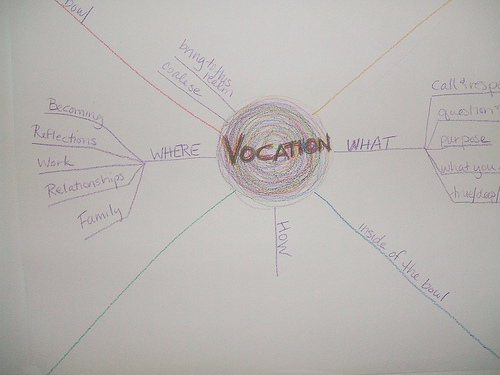
Vocation (photo by Ninth Raven)

Photo by Ninth Raven – CC BY-NC-SA 2.0

The key passage comes at the end of the article:

“But Prof Alan Smithers, director of the Centre for Education and Employment Research at Buckingham University, said the shift in applications may be ‘short-sighted’.

“‘Fees are causing students to think a lot more seriously about the part that going to university is going to play in their future lives and whether they will get a good return for their investment,’ he said.

“‘But it is a little bit short-sighted to simply concentrate on a career above all else at the age of 18. Studying a subject you love, such as the humanities or English literature, will enhance your life and could throw up future employment opportunities that you’re not yet aware of.'”

If fees and the future are making such an impact, how much does subject matter in the long run? Students risk moving away from a subject they enjoy just because it doesn’t visibly link up with a certain career.

Interests and Passions

Research from YouthSight suggests that students still pick subjects based on their interests. However, I wonder how those interests are defined now. What compromise is made when choosing a subject?

The YouthSight data also suggests that business students are far less likely to be studying due to a love for the subject. This is a concern. Why would you choose to study something you weren’t that keen on learning about?

Perhaps it’s expected of you. Perhaps you like the salary prospects. Perhaps your friends are doing it.

These aren’t reasons for choosing a degree or a subsequent career. Same for following a passion. You need to put in work that you’re not so keen on to allow the passion to come to fruition. And passion is overrated anyway. The situation is far more compicated. Don’t take my word for it, check out Cal Newport’s extensive back catalogue of posts on the subject. Here’s a selection to get you started:

Regardless of where you stand on passion, and whether or not you claim to have found yours, now could be the worst time to shy away from a course you want to do.

Fees force a rethink, but that doesn’t always mean you end up seeing things differently. Imagine having to put in some unenjoyable work for a subject you really like. Annoying, but usually manageable. Now imagine doing the unenjoyable work for a subject you were never that keen on in the first place. Double whammy. There’s no motivation to get you motivated.

And the reward in the distant future is still based on that vocational subject you’re already not that keen on. If that’s not being set up for a fall, I don’t know what is.

Do you make the choice or is the choice made for you?

A recent study of humanities graduates at Oxford between 1960 and 1989 found that degree subject was not a barrier to most careers. This study only covers Oxford (one university is hardly indicative of the entire HE sector) and doesn’t take into account almost a quarter of a century of growing student numbers since 1989. Nevertheless, the report provides a hint that what you study doesn’t need to be linked to a direct career path. Choosing History doesn’t penalise you from a wide range of jobs, for instance.

Does a more ‘traditional’ course hold less weight than it used to? Are we stuck with making a choice between a degree that will get you a job and a degree that will get you enthused?

I doubt it. Learning and discovery comes more naturally when you appreciate your course. You have room to find out what makes you tick. Studying won’t feel so forced.

In other words, you gear yourself up for a fall when you’re only on a course for what takes place after you graduate.

Your attitude matters. Although it sounds wrong, the course is more important than the grade. It sounds wrong because we generally focus on what an employer wants to see. In reality, you need to focus more on yourself. Who is this mythical employer in your mind?

Study a subject you respect and enjoy. I know that’s far too simplistic, but so is slogging through a course in the hope that it’ll be worth it for the massive wodge of cash or better prospects at the end. It’s a false trail, because you’re concentrating more on the content than your own ability.

So when I say the course is more important than the grade, it’s based on your choice and focus on developing your abilities. From my perspective, that’s all the more reason to choose a degree that you want to spend three or more years of your life poring over.

In my next post, I’ll look at ways you can focus on your career no matter what you’re studying.

Books, emotions, and paying attention

Stories about the future have long portrayed the things we know today in emotional terms. Books get used a lot of the time. Imagine a world with hardly any physical books. When a movie presents you with a world in which books are off-limits or scarce, you’re prompted to stop and think about what you take for granted.

Could you do without books?

So how important are books? Over 5 years’ ago, I wrote a piece that challenged the idea that ebooks will become a dominant force. We have seen an explosion in reading via tablets and eReaders, but books are still hanging around.

And not in a ‘bad smell’ way. Books are not unpopular, despite sales of ebooks catching up. In fact, ebook sales are slowing down. Is that because books are still a draw, or are all lengthy texts suffering?

After all, the sheer amount of information being pumped out on a daily basis is phenomenal. Reading a book from cover to cover can be a challenge for some. That challenge gets even harder as we’re primed for more snippets of information more of the time. More more more.

The emotional pull of lost books is no longer quite as disorientating. In part, because it’s a cliché. But not only that. We’re also used to the idea of reading in other ways. Desktops, tablets, eReaders, phones, you name it. Screens are everywhere. Words are everywhere.

The book may look impressive on a shelf, but we own other things. Collections of stuff vary so much that we’re hardly limited to books.

The luxury tag has waned. So has the desire to keep every book you have ever read. Yes, there will always be some people who are drawn to owning a massive library of books. But is that feeling becoming more rare as the years go by?

Could you live without books?

Use Wikipedia by going beyond Wikipedia

Adam Coomer asks on The Guardian, “Should university students use Wikipedia?

No, if you want to cite directly from it or get all your sources from the article’s references and nowhere else.

Yes, if you want a starting point or if you want to familiarise yourself with general concepts.

Of course, there is a proviso: always expect mistakes, controversy, and vandalism. Just in case.

The subject matter may look like a boring source to add jokes, false information, and opinion, but it happens all over the place. Take everything with a pinch of salt.

By the time you’re at the stage of writing essays and completing coursework, Wikipedia shouldn’t be top of your list. But it’s a great place to start when you’re researching and gathering notes.

libri8 (photo by rezdora70)

Here are three major reasons Wikipedia will work for you:

  1. Off to a Great Start – A wiki entry isn’t good enough for gathering references, because it only skirts the surface. Even an in-depth article won’t cover everything to the extent you’re expected to dive into. You are expected to look at academic articles and books from many sources. But Wikipedia is great to use at the beginning. Get stuck in when you start out, not when you finish up.
  2. Convenience – A quick look online is easier than taking out the textbooks. You may even want a simple outline of a topic. Enter Simple Wikipedia. Brief explanations when even the original Wikipedia article is too much hassle. A great way to remind you of the core information.
  3. Jumping Off Point – Don’t think of the Wiki footnotes as a set of articles to add to your own references. Go further and read the references within those referenced articles. Also, find key words that the Wikipedia piece makes a big deal of and look them up in recent scholarly articles. That way, you get the important older papers, plus a look at more up to date stuff. And all off the back of a Wikipedia page.

Talking of jumping off points, there are others close to home. Use your textbooks in the same way. Yes, Wikipedia is convenient, but you probably have your textbooks close to hand much of the time. You don’t have to do much to get the treasure. Grab the books, find the topic you’re researching, and look at the references given in the book (usually at the end of the chapter, or at the back of the book). Voila! More books and academic papers for you to dig out to study and reference. And not the same ones that everyone else looking at Wikipedia will dish out either. Win!

The point of all this is that Wikipedia has a place. As the Guardian piece states, “the default response of academics to simply advise against using the site is unlikely to have much effect”. After all, why not use the site?

I say go ahead and use it. But use it wisely. The key is to use Wikipedia to your advantage and not merely for shortcuts. Make the site part of your wider scholarly plan and there shouldn’t be a problem. It’s when you rely on it as your major go-to that you’ll end up with issues.

Wikipedia is your friend, even at uni, so long as you treat it right. How much do you use it?

Student Societies and the Problem With Controversial Invitations

Controversy is a strange thing. Simply knowing about the matter is enough to cause a reaction. Nothing needs to have occurred yet to cause offense. The implications and the possibilities can be enough.

Matters such as these that move into the wider public arena quickly draw attention. When people find out that something or someone controversial has been given a platform, opinions quickly divide. A mere invitation will cause offense, creating friction from the outset.

For student societies, that makes inviting any controversial public figure a tough job.

hot topic (photo by Enokson)

photo by Enokson – CC BY-NC-SA 2.0

The Oxford Union, a debating society, recently came under fire for what looked like differing views in how to handle controversial invitations. Reactions surrounding invitations to Julian Assange and Nick Griffin appeared different. Assange was granted a platform, while Griffin was dismissed as not having even been properly invited. Independent student newspaper, Cherwell, quoted an Oxford Union spokesperson: “The Oxford Union does not wish to be associated with the BNP in any way whatsoever. We strongly disagree with their views.”

Assange, however, went on to speak in late January 2013. Former president of the Oxford Union, Izzy Westbury, explained to the Guardian why invitations like these are made:

“Inviting someone controversial – be it in a political sense, a religious one or, in the case of Assange, a legal one – is the best way of showing them for what they really are. When Assange is video-linked to the union, I would expect and encourage questions that challenge both his views and his actions. We should put him in an uncomfortable position – that is the condition of the invite.”

Writing for Cherwell, Alexander Rankine pointed out that such a vocal disapproval of one person and not another is contradictory:

“A Union invitation does not condone. Guests can be cross-examined. The Union is neutral. The idea of the Union adopting a political position or pursuing an agenda goes brazenly against this principle. Now it seems that the Union’s invitations are motivated by political opinions and specific agendas after all. And if that is really the case, then the Assange invitation starts to look more like a vote of support. The Union stops being neutral.”

An invitation is not an entirely neutral move unless you invite the entire population of the world on exactly the same grounds. Invitations arise due to some form of interest or controversy or debate or fame. The matter is complex, so cannot be neutral even if the intention was innocent.

What if a society was more explicit in explaining the reasoning behind an invitation as non-politically as it could? If that happened, the situation is still political, because reasons can be argued and people can disagree with the reasoning given.

Rankine handily wraps up the difficulty and the answer in a single sentence: “I always thought that the Union was meant to be a neutral debating platform.”

That term, “Neutral debating platform“. Can a debating platform ever be entirely neutral?

Debating occurs due to political matters. That’s the point of a debate. Be it a mild discussion, or an emotionally dividing battle, opinions are not all the same.

When Marine Le Pen, president of French political party Front National, spoke at the Cambridge Union, around 200 protesters gathered in opposition. One protester told The Cambridge Student:

“I don’t object to her speaking, but I think the important thing is we make it quite clear there’s opposition. The fact that you can get up and ask her a few questions afterwards is not really enough.”

The term ‘neutral debating platform’ comes into question based not only on the handing out of invitations, but also on the format of the debate.

Yet an invitation is placed in order to bring forth further debate, rather than endorse or congratulate (or, indeed, disagree or disparage) the parties involved. An opportunity for questions may not be seen as enough.

With so much to contend with, inviting a controversial figure cannot be completely neutral. Their views and actions are a necessary part of the package. It’s a big part of why their presence was requested in the first place. Those underlying reasons cannot be temporarily removed for logistical purposes.

Debating societies wouldn’t exist without some sort of controversy. That’s why an attempt to be neutral looks anything but to some. Politics may be intended only once everyone is gathered in the debating hall. However, some decisions are already political long before many realise they are political at all.

How would you handle controversial figures and controversial invitations?