All Students

Everyone Needs To Stop Doing This

Plashing Vole tweeted:

“As the Dissertation God for one of my subjects, the words ‘everyone’ and ‘everything’ are now banned due to unthinking abuse.” [Source]

Apparently, some dissertations that had been submitted for marking contained this type of saying:

  • “Everyone is on Twitter.”
  • “Everyone knows X.”

It’s best to leave these sayings behind. Here’s why:

Crowd (photo by Redfishingboat (Mick O))

“It was amazing. Everyone was there.” – No. Not everyone. (photo by redfishingboat (Mick O))

Everyone is on Twitter

No. Not everyone. You know that really. It’s just a way of saying how popular Twitter seems to be. Surely everyone is using Twitter? But academia needs to be pedantic. Your coursework is not the time for casual remarks.

This isn’t the same as stating information that is generally regarded to be the case without need to explain further. More on that below.

To make a point, you need a reference. Twitter statistics are hard to come by in any up to date and accurate measure, especially in academic papers and textbooks. However, go to the source and you can make a good start.

Twitter’s own Twitter account posted on 18 December 2012 that there are more than 200 million active users per month. They give no further evidence, so it isn’t definitive (even if they say so themselves), but it is a good start if you want to talk about how many people use the service.

Similarly, if Twitter announced that everyone was using Twitter, you could reference that and find examples of people who do not use the service. That’s what research is all about…Although I’m pretty sure Twitter aren’t about to say that the entire human population on earth is now using Twitter.

Everyone knows X

Some information can be referred to and used without referencing. Usually when there is wide agreement, nothing controversial, and generally understood far beyond academic circles.

In these rare cases, I’m pretty sure the information won’t involve ‘everyone’ or ‘everything’. That’s another clue not to use those words.

If the detail is genuinely accepted and requires no further referencing, you can get rid of “everyone knows” anyway. First, because it’s not literally true (it’s unlikely to be stored in a knowledge bank in the brain at birth), and second, because they are pointless words. If everyone accepts it, why do you need to tell us? After all, you’re telling us what we already know.

But why am I telling you about this? I thought everyone knew not to do it… 😉

There are variations on this. When you start writing things like, “People say…” and “Many researchers note…“, remember that you need to be specific. Give examples. Refer to the researchers. Don’t call them ‘people’ or ‘researchers’ at all. Name them outright and give them pride of place.

Every time you find yourself writing along these lines, you have a way forward. Take the offending remarks and look for a way to reference the information instead. You’ll get a useful footnote in and you’ll show that you’ve looked for the detail. What first looked like a throwaway comment has suddenly become potential for a better mark. Not a bad incentive for dropping ‘everyone’ from the writing.
Is University Worth £9,000 a Year?

The Telegraph recently asked students if their first year was worth £9,000.

This type of question is hard to answer at such an early stage. Wait until the end of the degree and answers won’t be much clearer then.

Value doesn’t conclude at the end of an academic year. Nor does it conclude when you finish studying.

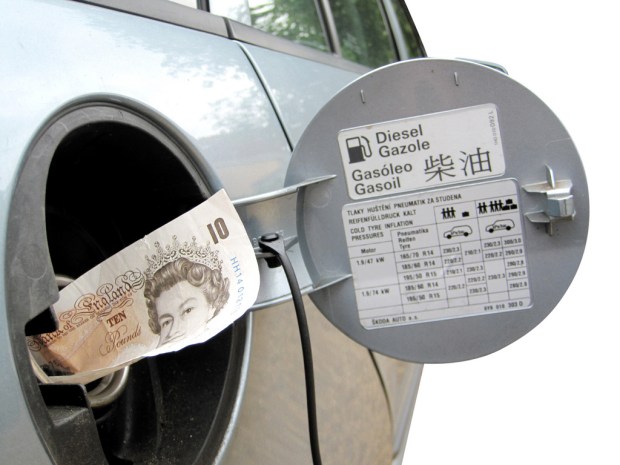
In the nature of ‘students as consumers’, imagine buying a brand new car. After you’ve traveled on your first petrol tank worth of fuel, could you say if the car was worth the price? What about after one year of driving it?

The questions seem confused. How do you know if the car is worth it? Value doesn’t conclude until the car is run into the ground, you sell it, or it’s written off. Only when you put all the factors together can you get a reasonable assessment of value.

Value for money on one tank? And the fuel costs extra! (photo by Images_of_Money)

Value for money on one tank? And the fuel costs extra! (photo by Images_of_Money)

For a degree, value is even harder to assess. No wonder there’s so much discussion around it!

The Telegraph states, “58.4 per cent felt their first year wasn’t worth the £9000”. The problem is in understanding why. The answer is based on a general feeling. Some students will be offended paying a penny for their pursuit of education, while others will sense value in the long haul, whatever the cost.

Neither are necessarily right or wrong. Limited knowledge of what’s to come in their future (and in the wider world) prevents anyone from giving an accurate account of value. Motivation drives how you feel about many things, including value. But motivation is a complicated issue. There is no easy answer.

One opinion for poor value for money in the first year is that it doesn’t count academically.

This ‘first year doesn’t count’ argument is a false trail. Fresher year counts beyond grades. If nothing else, it acts to strengthen your academic work, which should help grades in later years. A direct correlation between fees and grades is jarring. Understandable, yes, but still jarring.

Contact time is another false trail. A joint study by HEPI and Which?, reports on student experiences, including contact time and the differences between institutions, even for the same subject. But there are many reasons why contact time isn’t just about hours. And neither should that be the only factor when looking at value.

It’s easy to boil the university experience down to this: a path toward a degree.

But the reality is complicated, just like motivation. You (hopefully) end up with a degree at the end of your time, but is that the only value worth attaching to the fee? If so, what price are you willing to pay for a degree and why?

There are arguments against buying into a university experience altogether. Despite those reasons, some will still find great value in HE. My motivation is not yours. Your motivation is not anyone else’s.

Is £9k worth it each year? Can you give a reasonable answer?

A simple question of value is far from simple to answer amid all the confusion. It makes little sense to view university within the confines of market competition.

Learning Leads to Changed Perspective

We change more dramatically over time than we expect.

Look back five or ten years. How different were you back then? Probably a lot.

glasses (photo by hotblack)

Perspective changes

It’s no wonder that we look back on our past work and flinch at some of the stuff we did and said. Especially in public forum, like online, changes in opinion look more like contradictions if you’re not careful. Old blog posts or tweets where you make one argument will look strange–weak, even–when you write something new and argue the opposite thing.

But this is natural. Perspective changes.

“A major challenge for me is that, in spending a lot of time learning, my opinions grow with time. Hopefully my minor reversals and shifts in emphasis don’t irk or confuse longtime readers too much.” – Scott Young

I would be more worried if I didn’t feel challenged and if I didn’t sense any kind of development as time passed.

Plus, I like to consider other people’s perspective. Don’t live in a bubble. Explore views that aren’t your own.

For instance, I have offered advice in the past that I wouldn’t use myself, but that I knew would be useful to others. The type of information that I’ve seen others thrive off, despite it leaving me cold.

Why? Because I don’t assume that only my choices bear fruit. Especially when giving subjective advice. One size does not fit all.

That’s why, if I give two opposing pieces of advice, it could look misleading at first glance. On further reflection, the contradiction may highlight two perfectly valid options that require a choice (or exploration) on your part.

As with my previous post on planning your day, I suggested options to play with. And I regularly ask questions like, “What works best for you?” so the discussion can continue. The more we join in with offering and exploring new solutions, the greater the chance that we uncover even more treasures.

Don’t sweat the change. We all do it, though we don’t always notice it.

What has been your biggest change so far?

Are You a Planner or a Structured Procrastinator?

Doug Belshaw likes to plan. He’s even created his own daily planner.

But recently, Belshaw has been wondering if planning is required for productivity. Does everyone need to set out their day ahead to get ahead? Well, not necessarily.

Belshaw recently discovered structured procrastination and was amazed to find it was a real thing and not a joke. The plan is to get more done without a plan. Just work on what you feel like.

Such a simple idea sounds brilliant. But it’s never that simple, is it? Nevertheless, Belshaw found that high-profile people such as Arnold Schwarzenegger made use of structured procrastination to get things done.

Arnold Schwarzenegger (photo by Gage Skidmore) (CC BY-SA 2.0)

Arnold Schwarzenegger (photo by Gage Skidmore) (CC BY-SA 2.0)

Has this prompted a change of heart in Belshaw? Nope. He says, “I’ll keep my planner!”

To schedule or not to schedule? That is the question.

Or is it? I think a binary argument of schedule versus non-planning is too simplistic. A total lack of planning still requires an element of planning once the day is underway. And not everyone can dismiss timetabling completely, on a whim. Stuff happens around you. The world doesn’t pander to you, so you must respond to the needs of others. This, sometimes, requires a schedule of sorts.

One reason why I like the David Seah Emergent Task Planner is that it looks a few major tasks, extra tasks if you have time, plus emerging stuff because “Life just happens”.

The 1-3-5 Daily To-Do List is good for a basic schedule too. One big, three medium, and five small tasks on your list. That’s it. Nothing fancy. Just a basic breakdown of things to do in varying degrees of size/time/importance.

As you’d expect, there is no one-size-fits-all. Much depends on each person and their current individual circumstances. A structured plan is necessary for some activities, while it hinders others. Also, while some thrive on orchestrating every last minute to perfection (despite the realities), others don’t want to get bogged down with anything more than a basic starting point.

Structured procrastination sounds like fun. But it’s serious stuff. You have to be determined and driven to make it work effectively. Otherwise structured procrastination becomes…well, it becomes procrastination!

How do you work best? Much of the consideration boils down to the following questions:

  • Do you feel productive enough?
  • Are you satisfied with how you lead your day to day life?
  • Does this day to day activity correspond with your future plans leading to personal success?
  • Have you tried new approaches to improve your productivity, even when you feel confident that your current approach is successful?

If you have any doubt here, it might be worth taking the plunge. If you haven’t tried any other methods, can you truly be sure that your approach is best for you? You may feel efficient, but until you try alternatives, there may be a more amazing set of tactics to propel you further than you’d ever imagined.

One compromise is to only use due dates when absolutely necessary. Most of your schedule is free to do what you want, when you want. For the few matters requiring a definite time or your definite presence (either physically or emotionally!), get it booked in. Not only can you then schedule, but you can also keep the schedule to a minimum. Everything else is available to you and your whims.

What do you think? Are you a planner, a structured procrastinator, or something else entirely?