All Students

Put Your Subject Before Your Grades (and How to Do It the Right Way)

When Clearing got underway for another year, the Telegraph reported that rising tuition fees had caused a sharp increase in demand for ‘jobs-based’ degrees.

This kind of story is becoming more commonplace. Students taking up vocational degrees and job-related learning rather than studying more ‘traditional’ subjects.
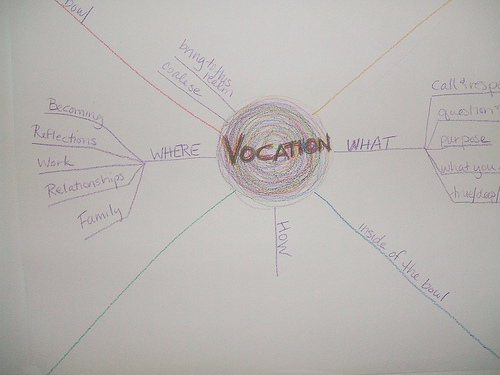
Vocation (photo by Ninth Raven)

Photo by Ninth Raven – CC BY-NC-SA 2.0

The key passage comes at the end of the article:

“But Prof Alan Smithers, director of the Centre for Education and Employment Research at Buckingham University, said the shift in applications may be ‘short-sighted’.

“‘Fees are causing students to think a lot more seriously about the part that going to university is going to play in their future lives and whether they will get a good return for their investment,’ he said.

“‘But it is a little bit short-sighted to simply concentrate on a career above all else at the age of 18. Studying a subject you love, such as the humanities or English literature, will enhance your life and could throw up future employment opportunities that you’re not yet aware of.'”

If fees and the future are making such an impact, how much does subject matter in the long run? Students risk moving away from a subject they enjoy just because it doesn’t visibly link up with a certain career.

Interests and Passions

Research from YouthSight suggests that students still pick subjects based on their interests. However, I wonder how those interests are defined now. What compromise is made when choosing a subject?

The YouthSight data also suggests that business students are far less likely to be studying due to a love for the subject. This is a concern. Why would you choose to study something you weren’t that keen on learning about?

Perhaps it’s expected of you. Perhaps you like the salary prospects. Perhaps your friends are doing it.

These aren’t reasons for choosing a degree or a subsequent career. Same for following a passion. You need to put in work that you’re not so keen on to allow the passion to come to fruition. And passion is overrated anyway. The situation is far more compicated. Don’t take my word for it, check out Cal Newport’s extensive back catalogue of posts on the subject. Here’s a selection to get you started:

Regardless of where you stand on passion, and whether or not you claim to have found yours, now could be the worst time to shy away from a course you want to do.

Fees force a rethink, but that doesn’t always mean you end up seeing things differently. Imagine having to put in some unenjoyable work for a subject you really like. Annoying, but usually manageable. Now imagine doing the unenjoyable work for a subject you were never that keen on in the first place. Double whammy. There’s no motivation to get you motivated.

And the reward in the distant future is still based on that vocational subject you’re already not that keen on. If that’s not being set up for a fall, I don’t know what is.

Do you make the choice or is the choice made for you?

A recent study of humanities graduates at Oxford between 1960 and 1989 found that degree subject was not a barrier to most careers. This study only covers Oxford (one university is hardly indicative of the entire HE sector) and doesn’t take into account almost a quarter of a century of growing student numbers since 1989. Nevertheless, the report provides a hint that what you study doesn’t need to be linked to a direct career path. Choosing History doesn’t penalise you from a wide range of jobs, for instance.

Does a more ‘traditional’ course hold less weight than it used to? Are we stuck with making a choice between a degree that will get you a job and a degree that will get you enthused?

I doubt it. Learning and discovery comes more naturally when you appreciate your course. You have room to find out what makes you tick. Studying won’t feel so forced.

In other words, you gear yourself up for a fall when you’re only on a course for what takes place after you graduate.

Your attitude matters. Although it sounds wrong, the course is more important than the grade. It sounds wrong because we generally focus on what an employer wants to see. In reality, you need to focus more on yourself. Who is this mythical employer in your mind?

Study a subject you respect and enjoy. I know that’s far too simplistic, but so is slogging through a course in the hope that it’ll be worth it for the massive wodge of cash or better prospects at the end. It’s a false trail, because you’re concentrating more on the content than your own ability.

So when I say the course is more important than the grade, it’s based on your choice and focus on developing your abilities. From my perspective, that’s all the more reason to choose a degree that you want to spend three or more years of your life poring over.

In my next post, I’ll look at ways you can focus on your career no matter what you’re studying.

6 Quick Energy Boosts When Sleep Isn’t Practical

The words ‘student’ and ‘sleep’ don’t mix well.

Too much when you shouldn’t be getting sleep and too little when you should. A recipe for disaster that’s easy to fall into.

Regular bedtime is difficult to commit to with so much going on. Even when you sleep like a baby every single night, that doesn’t always stop the tiredness setting in halfway through the day.

Fear not. There are a number of things you can do to spruce up your mental and physical energy before you pack in a full night of buh-byes.

Sleeping (photo by RelaxingMusic) CC BY-SA 2.0

Sleeping (photo by RelaxingMusic) CC BY-SA 2.0

Here are 6 ways to get yourself a power up:

1. Powernap

I love powernaps. It’s like sleep, only quicker. Somewhere between 12 and 30 minutes having a short kip, leaving you refreshed and rejuvenated. Win!

The most effective powernaps take a bit of practice. For some, it’s best to get back up after no more than 12 minutes. For others, you may need half an hour. If one thing doesn’t work, keep testing times until you find what works for you. The mistake is only trying one length of time and giving up when it doesn’t work. My optimum powernap is 18 minutes. What’s yours?

2. Meditate

Relaxation has never been so energising…

Meditation is often mistaken for requiring a total lack of thoughts. In reality, your brain doesn’t switch off. Any thoughts you have should be allowed to move on.

With that in mind, you’re not getting meditation wrong. Just sit in a calm and comfortable place, feel your breathing gently in and out, and gently focus on different areas of your body from head to toe, relaxing each area as you breathe. Don’t worry about what happens as you sit there. When you notice your mind wander, give yourself permission to let go of those thoughts. Accept their existence and do not dwell on them. Stay focused on the peace and quiet for however long you wish. From a few moments to a few hours to a few days. You don’t need to keep pushing for longer rituals. One of my most refreshing meditations this month came in at two minutes.

3. Walk / Jog

Exercise doesn’t have to be strenuous and it doesn’t always require a gym. Walking for a mile or two is enough to clear your mind of a lot of stress and it can also help energise you for the rest of the day. My favourite time to walk is in the morning, but any time is good.

4. Change of Scene

Have you ever had that feeling when you’re tired in one place, but you suddenly feel wide awake when you go somewhere else? Find a new seat, a different location, or a different environment and watch your mood lift with no further effort required. I’m still surprised at how effective this can be.

5. Take a deliberate break

No matter how much you tell yourself to keep sitting there until you complete that task, it’s not going to finish any quicker. Leave it alone and do something else. If you have enough time, stop working on it all day. If you’ve got a deadline coming right up, take a ten-minute time-out. If you don’t want to try a powernap, meditation or a walk, you could just make a drink as an excuse to get up and stop what you’re doing.

A brief pause is a good way to break up the day and stop you from feeling bogged down. Tiredness doesn’t only happen because you need sleep. Your focus may simply be drained and it’s another way you tell yourself to take off for a while. You’ll be surprised at how much better you feel after a bit of time away from a task.

6. A ritual for energy (and calm)

I love loose leaf tea. Watching the leaves brew and relaxing to a cup of green tea at once relaxes and energises my mood. You should try the same. And if green tea isn’t your thing, find your own ritual that gives you a boost in a way that you can get used to without having to break into a sweat.

There are many ways to pep yourself up naturally. You don’t have to rely on energy drinks and other hardcore stimulants.

How do you restore your energy? Go on, share some of your own tips!

A Star No Starter: Why You Are Worth More Than Your Grades

When you leave school with 7 A* grades at A-level, it’s pretty impressive.

When you fail to get a place at the University of Oxford on those grades, people start talking. That’s what happened to Alastair Herron this year.

Oxford (photo by Max-Design)

Oxford (photo by Max-Design) – CC BY-NC-ND 2.0

Despite the talking, not enough is known about the full application made. If we did have more information, would the application have fallen at a single point, or at several?

There isn’t a big story here, because Herron received offers from American universities and he has happily accepted a place at Stanford.

Whether you’re still looking for a uni place or you’ve graduated with full honours, there are some key takeaways from this news:

Keep your options open

Herron had offers from other universities that he was intent on going to. Regardless of an offer from Oxford, he had his sights set elsewhere. Interviewed on BBC Radio Belfast, Herron said, “I would never stay at Oxford with offers from America so I am not in any way disappointed”.

Whatever you do, have a number of routes open to you and prioritise. That way, you won’t flounder when one route comes crashing down. Herron took the news with a shrug. He was surprised, but he considered it Oxford’s loss. He already had other options at hand.

Grades are not the whole picture

University (and life) is about much more than exam results. Whatever you end up with, life goes on. Many things you set your sights on can still be achieved, albeit a little later and with further work. There are alternative routes in to some fields too.

When you’re put to the test, you waste your own time if you don’t put in any real effort. And when you do spend the time, don’t feel disheartened if you end up with less than straight As. Herron’s story shows that grades aren’t the whole picture.

Your situation wouldn’t necessarily be different with 100% in everything. You can’t read the future and it’s not worth playing ‘What if…?’ when you haven’t a clue how things would have turned out. Focus on here and now, not on an alternative reality.

Success doesn’t rely on one particular thing

It’s easy to fixate on a small part of the picture and building it up more than it needs. Spend enough time and effort on something and it’s not surprising that you can do great things in that area.

However, you need to demonstrate many qualities as a person. Personal traits, interests outside academia, social activities, and all sorts of elements comprise your unique makeup.

By all means boast a thousand A* A-levels, but be prepared to offer more than one sole quality.

Unless, of course, that quality is the solution to a huge problem or the answer to a long-standing question that has baffled generations of people. When you hold the key to something special, that’s great. Just be warned, this is rare. And even when you do hold the key, you may not realise it. In other words, don’t go searching for it blindly.

No regrets

When something doesn’t work out, however big or small, try not to dwell on it too much. My A-level adventure could have been much better if I had been mentored better and given more solid information, advice and guidance in certain places.

I didn’t let that bother me. For all the facepalm moments that I know could have been far better for me in hindsight, I’ve had many wonderful experiences that have taken me to places I wanted to be anyway.

If I regretted my actions and, once again, played the ‘What if…?’ game in my mind, I could have spent forever thinking I had missed my one and only chance.

There are other chances. It’s okay to kick yourself, or throw your head to the air and wish you’d spotted things sooner, but move on as soon as you can. Instead of regretting what has passed, concentrate on what could be. Seek out new ways to get to where you would like to be and use your new insights to help get you there this time.

Whatever the future holds, you can’t see it until it’s happened. And then it’s the past. Attempt to secure the best future for you, but don’t hold on to it if it doesn’t work out. Look forward, look for alternatives, and look out world…You’re on a mission!

We will never know precisely why a university turns a straight-A student down. That’s why it’s not worth focusing on.

You are worth more than your grades. You are better than that.

Make Your Work Compelling

The difference between compulsory and compelling is huge.

Compulsory sounds negative. You must do something, whether you like it or not.

That’s enough to put you off most compulsory stuff. The psychology is all wrong.

Compelling sounds great. You must do something, because you’re excited to keep going. You’d hate to stop.

Zen at work

University involves a lot of work, so it helps when you want to do it. But when you have deadlines to fulfill and the need to submit thousands of words, it’s easy to switch your attention to what’s compulsory.

Do yourself a favour and concentrate on the reasons why you’re interested in your work. The more compelling you make it, the easier you’ll find the less savoury points.

Terry Anderson sees possibility in this through self-paced learning, especially through “sophisticated social networking contexts” that let students discover each other and interact in realtime as well as through past comments and artifacts from previous students on a course.

You may not have this luxury on your degree for most, if not all of your assignments. But there are other ways to turn your attitude from plodding to probing.

Regain Your Enthusiasm

  • Start with an interesting question – What makes you tick? What would you like to know? Where do you want to explore today?
    Thinking about word counts and submission dates will only fill your mind with stress points. Bring your focus to the assignment itself, not the logistics.
  • Don’t overthink it – Once you’ve asked interesting questions, keep working on them until you start to grow tired of it. When you feel things dragging, stop right there. Pack up. Do something else. Even the most fun activities get boring when you don’t stop. So learn to let go.
  • Team up with others – Deconstruct, discuss, debate. Five minutes may be all it takes to uncover talking points that get you enthused about the task at hand. Whether or not you like to work in a group, an academic chat can get the creative juices flowing. If you’d prefer to do the actual work on your own, that’s fine. Once the urge is there, your mission is to stay in the mood to work with a spring in your step.
  • Space things out – The nearer you get to the deadlines, the more you focus on the compulsory aspect of your work. You avoid this by starting early and doing the work bit by bit. Not too much in one go, and certainly not all at once at the last minute.
  • Make it a habit – The longer you procrastinate, the more likely you’ll see the compulsory over the compelling. As well as spacing things out, as I mention above, find ways to develop habits to ease into the work. Habits can be different for everyone and is enough to be the subject of many texts, including Charles Duhigg’s recent book, The Power of Habit.
    Duhigg says that you should identify current routines for habits you would like to change. What is the cue that leads to your habit taking over? Next, choose different outcomes (it doesn’t really matter what they are) to work out what cravings are truly driving the routine. Then isolate the cue. Are you reacting to your location, the time of day, how you feel, what happened just beforehand? In time, you’ll find a pattern will emerge. Finally, have a plan. Commit to a new habit that you feel is better placed for what you want to change. From first-hand experience, Duhigg found embedding a new habit to be a challenge, but it was worth persevering.

Let the subject excite you and stop the admin from getting you down. So much of the change from compulsory to compelling is in the attitude. Set things up for an activity you don’t want to stop doing. And when you do stop, you’ll miss it.

That will make a change from never wanting to see it again, eh?