All Students

How Do You Value a Degree?

What does your degree mean to you?

Your answer will depend on where you are in life right now. A first year, a final year, a recent graduate, halfway to retirement? How you view your degree changes over time.

Another influencing factor is why you chose to study in the first place. Was it to further a chosen career, in hope that you could earn more with a degree, or was it simply a subject you had a deep interest in?

It’s no surprise that many students have at least a passing interest in better career prospects from a degree. This angle comes under question all the time.

Frank Field MP has obtained data from the Office for National Statistics, finding that more than a quarter of graduates were paid less than the hourly gross wage of £11.10 paid to non-graduates with an apprenticeship.

From one perspective, it suggests that a degree isn’t the only route to the best pay. You may even think it represents bad value.

But that’s not the full picture. Money is not the only goal people strive toward. If money was all you cared about, university may have felt a waste of time in the first place. Several years without moving explicitly toward cash? It’s a long game that you may have run out of patience over.

(photo by ashley rose) (CC BY-NC-ND 2.0)

(photo by ashley rose) (CC BY-NC-ND 2.0)

The huge focus on tuition fees leads to much discussion on value for money and subsequent returns on investment. It’s understandable.

For some, a degree is a necessary hoop to jump through before moving on to something else. However:

“The value of paper degrees lies in a common agreement to accept them as a proxy for competence and status, and that agreement is less rock solid that the higher education establishment would like to believe.” – Harvard Business Review, The Degree Is Doomed

That is the view of Michael Staton, a partner at education-focused venture capital firm, Learn Capital. Staton argues that employers will find “more efficient and holistic ways for applicants to demonstrate aptitude and skill”, which will subsequently lead to devaluation of the degree.

I don’t think this will happen across the board, but I expect some firms to find new methods of selection. Many graduate programmes already invest in their own selection processes, so their reliance on a good degree is potentially more a filter than anything else. If selection processes can be made more cheaply and without the need to filter by degree results, it will no doubt be considered as a viable option.

The world changes and things move on, but the degree is not dead. It’s not doomed any time soon. Higher education will need to change with the times, but I can’t see a game-changing revolution putting a sudden stop to HE as we know it.

So despite claims over earnings and employers, I still champion university life. I have long said that your experience shouldn’t be solely about gaining that piece of paper.

A basic attitude misses too much. It’s crucial to focus on the bigger picture to make an impact. The degree is no longer standalone; it’s one part of what shapes you. The resources and connections available at university can help you achieve so much, even when it has nothing to do with the academic side of uni life.

I’m happy people have alternative choices to university, barring some specialist and technical careers. The degree is not doomed just because aspirations can be realised in other ways.

What does your degree mean to you? When I asked at the start of this post, I said that your answer can change. Perhaps it’s changed between then and now. In a matter of moments your view can move as a result of reading a blog post, or having a conversation, or being selected for something unexpected.

University provides many moments that can open your eyes. That’s why I’m not about to throw my hands up in defeat.

And, as Tom Hay says here:

Weigh up the pros and cons and make the most of your decisions, from major choices like whether or not to go to university, to small choices like which social event to go to. You’ll have ups and downs, but we all do. Don’t dwell on how things could have been in an alternative universe.

Look forward, not behind. Seek value now.

Why Your Essay Feedback Isn’t For Your Essay At All

Alan Cann calls this one ‘a bit depressing‘.

A new study found that:

“…a replacement of manually generated feedback with automatically generated feedback improves students’ perception of the constructiveness of the provided feedback substantially (undergraduate) or significantly (postgraduate).”

I don’t know why more respondents preferred automated feedback. Could it be because students aren’t frequently told that feedback is best used in order to improve on future assignments?

How clearly are students made aware of the need for ongoing assessment? If you don’t fully appreciate the way detailed and specific feedback can help you, the auto-generated feedback may seem a great idea. Get the grade and some general advice and walk away with all the info you think you need.

(photo by jepoirrier) (CC BY-SA 2.0)

(photo by jepoirrier) (CC BY-SA 2.0)

On the face of it, an automatic report makes sense. Anything beyond that seems like a time commitment with little gain. There may seem no point poring over the details when the essay has already been submitted.

But feedback isn’t for the past, it’s for your future work. General advice and rough guidelines won’t do more than weakly nudge you in the right direction. For the best hope of improvement, you need to respond to detailed information that is tailored to your specific circumstances.

Detailed feedback may be hard to swallow when you have a lot to improve. That may also explain why some people would prefer automatically generated reports. They feel one step removed, so you almost have an excuse not to listen. It wasn’t aimed exclusively at you, so there’s wriggle room and you don’t need to take the advice so seriously.

Whatever flavour your feedback comes in, consider these points:

  • Have an open mind – You may not like to hear that you’re not perfect, but the more you put your head in the sand, the less likely you are to even get close to perfection. Make the opportunity to action problem areas rather than defend yourself.
  • Think of the future – Work out what you would have done to improve the essay and remember that so you can make a similar effort in your next piece of coursework.
  • Ask more questions – When you’re not sure what the feedback means, speak to your tutor for more information. The key is to get a detailed understanding of how you can improve, so keep searching until you have a plan on which steps to take.

Automatic feedback isn’t useless, but it needs context and it should never be the only type of feedback given. It’s not enough when the aim of higher education is to dig deep and explore the possibilities.

There are loads of things you can do with your assignments when you get them back. The grade is just one part of it. Check out these links from the TUB archives for more tips on using your essay feedback:

TUB Reboot – TheUniversityBlog in 2014

Here comes a lot more from TheUniversityBlog, or as I affectionately call it, TUB! More great stuff on the site and a newsletter too.

I spent an extended time away and had a great time. Of course, I missed all of you too. Moving away from the social pulse is strange.

It felt a bit like Doug Belshaw’s BlackOps, where he takes a month (or two) off from social networks and email. Last week I did a lot of catching up and participated in Martin Couzins’ great new course on how to be an effective digital curator. The course is a great way to get lots of people together who are interested in collecting and shaping content, so it was a good way to get back in the swing of things online.

Updates

Now we’re very much in 2014, I wanted to make a few changes. For a start, I’ve updated the site. What do you think about the new look? If you read via email or a feed, come and take a peek. I plan to increase the post numbers again, with a selection of shorter pieces alongside the lengthy posts.

But I need your input for the most relevant stuff. Do you need more exam tips? Want to sort out your work/life balance (or don’t even think it exists)? Interested in higher education in the news? Have something on your mind that you wish was covered here? Get in touch and let me know which aspects of uni life you want the lowdown on.

Newsletter

I’m also about to start a newsletter, ‘TUB Thump‘. Eagle-eyed readers will have noticed a signup link on the sidebar. Many, many thanks for those of you who have already subscribed. The first edition of the Thump will be out soon.

You want in? For exclusive content, competitions, quick tips and great links, sign up to TUB Thump here. Only the best from TUB Towers.

Let’s make 2014 shine!

(photo by Neal) (CC BY 2.0)

(photo by Neal) (CC BY 2.0)

Beauty and the Beastly Spend

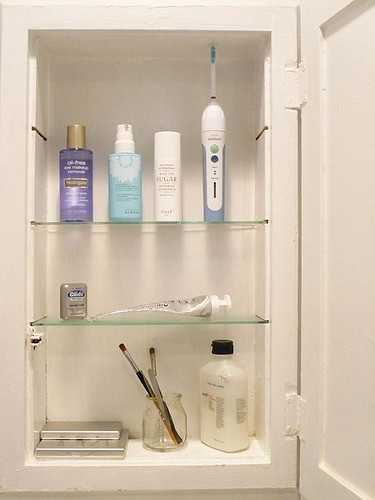
After I read how students are spending hundreds of pounds on beauty products, I quickly worked out how much I spend each year.

Lancaster students are apparently the biggest spenders, with an average of £1,109 a year going on beauty products.

(photo by sparklerawk) (CC BY-NC-ND 2.0)

Looking good. But are you a beauty super-spender? (photo by sparklerawk) (CC BY-NC-ND 2.0)

I don’t know what qualifies as a ‘beauty product’, but I’ve included soap and deodorant in my list of products. Do they count? I’d label them more ‘necessary’ than ‘beauty’.

Even if they do count, let’s just say I’m definitely not in the same league as the average students questioned in the survey. From the results, you may be horrified to meet me as ‘beauty’ appears not to be my middle name…

Because I don’t spend £1,109. Lancaster have certainly beaten me here.

I don’t spend £500.

Not even £100.

I seem to be insanely cheap. My total spend on ‘beauty’ products (including soap and deodorant, remember…) is a paltry:

Twenty-two pounds a year.

£22. That’s it.

It’s down to my eco-living attempts and a tendency to ignore products with a worrying ingredient list. Back on campus, I probably spent more like £150 a year. A very rough guess, but clearly a lot more than I do now. Still nowhere near the figures compiled in this latest survey.

Next year I’ll be spending over £30, because I have to buy a new post-shave moisturiser. How very dare I?

What’s your yearly beauty spend?