Make Time For Time: 6. Find time to create your perfect study setup

Welcome to the final part of the “Make Time For Time” series of posts.

It’s not always possible to get a lot of help from study advice.  There’s no magic answer, because everyone works differently.  Making time for time involves finding your way.  That, in itself, does take some time.  Allow yourself different trials in your quest to find the perfect study setup, otherwise you may never find what works for you.

photo by m00by

photo by m00by

Some trials to consider:

  • Place of study – Are you better off at your personal desk, at the library, in an outside space?  Location is an important factor in effective work.  Everything else may be right, but if the space doesn’t feel right, it’s hard to work well.
  • Belongings – This is an extension of your study space.  If you’re working in a field in the middle of nowhere, you won’t have much to think about.  A desk in your own room, however, is a different matter. You’ll have loads of distractions in front of you and there may be a messy desk cramping your style.  You may work wonderfully in your current location, but the stuff around you can get in the way instead, without you realising.  If you have an ‘off’ day, check the junk and distractions putting you off and get them out of your sight.
  • Time of day – Night owl or morning lark?  The time of day you do your work makes a huge difference. What works best for you?
  • Your general health – Do you have a 30 minute study session planned just before you eat dinner?  If you’re already hungry, it’s probably a bad time to start working.  Get the food out of the way before you start working the brain.  And what about exercising physically before you exercise mentally?  A quick walk can do wonders for the mind.  Just a 10 minute walk about campus, or around your local area can be enough to give you a jolt in the right direction.  You may even get some ideas on the walk.  Carry a notepad and pen…just in case!
  • Headbanger, or silent wonder? – Music helps some of us and hinders others.  Even the type of music can make a difference.  I’ve known some people who don’t like classical music who swear by it when they study.  They don’t even notice the music, but it helps them zone out.  So think about the sounds around you and use music wisely to work effectively.  Try listening to different random white/pink/brown noise if you like, or choose a soundscape with birds and rainfall, or just listen to your favourite song.  There’s bound to be something out there to get you in the mood, even if it’s total silence. Earplugs, here we come!
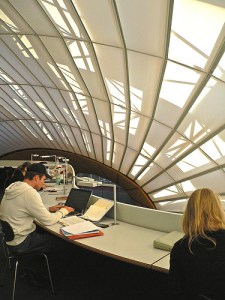
photo by svenwerk

photo by svenwerk

From this series of articles, I hope it’s clear that time is something you have a lot of control over.  It may not feel that way much of the time, but there really is a lot we can do to manage time more effectively.

Even the most brilliant planners don’t have a perfect time-management technique.  Lives change, as do priorities.  I called this series ‘Make Time For Time’, because we should never stop thinking about the time available to us.  The moment you drop your guard and think you can’t manage your time any better is the moment you’ll slip up.

In my early teens I was awful at time-management.  It was only after my A-Levels, just before I went to uni, that I realised how much better I could do.

I went from being rubbish at time-management to being okay.  Yes, just okay.  Because it’s hard to be better than okay.  I’m happy to call my time-management a strength, just so long as I’m clear to myself that the real strength is to have a constant awareness that my time can always be managed better and that I will always strive to improve.

If that sounds like your attitude towards time-management, you should be happy to call it a strength too.

Artistic Merit?

Peter Mandelson has announced a new Higher Education blueprint, Higher Ambitions.

Chalk

Among many measures, one thing Mandelson wants is greater funding and more priority given to science and technology subjects.

So…is it worth studying subjects in Arts and Humanities any more?

The Chronicle says “Just Don’t Go”.

Savvy Student says it “Isn’t Such a Bad Idea”.

What say you?

Make Time For Time: 5. Planning & Managing Time

Planning time takes a while if you’re not used to the process.  No single time-management technique suits all.  You have to feel around for what works best for you.

photo by BURИBLUE

photo by BURИBLUE

Some of us cope with the bare minimum on paper.  Just a few reminders about the coming days will do.

Some of us prefer to plan rigorously to the last minute, as far in advance as possible.

However you plan, if it works for you, it’s the right way to go.

If it’s not working, move on to a different planning technique fast!

There are all sorts of diaries on the market.  Pocket diaries, desk diaries, day to a page, week to a page, appointments diaries, blank format, lined format…the list goes on.  The choice is yours.  It doesn’t take long to work out whether a particular way of managing your time works for you.  Sure, it’s annoying when you’ve tried several different things that all result in a big fat FAIL, but the satisfaction comes further down the line.  Once you find the solution, your plans will click into place and your life will be a lot easier to manage.  The sense of relief at that eureka moment is fantastic.

What if you have nothing planned?  Some of us are lucky enough to have very little to worry about in any given week.  A couple of lectures, a seminar, a meet up, a couple of outings, but nothing you need to work around.  Plenty of free time abounds.

Free time doesn’t equal leisure time.  Free time is time not yet allocated in your schedule.  Free time is positive because it’s more time you can fill up with whatever suits you.  Even if you fill it with leisure activities and hardcore relaxation, the key is to knowingly use the time.

It’s a mistake to randomly use up free time, because it’s a waste.  You don’t automatically know how well you’re using that time.  The time disappears and you can’t even account for what you did in that time.

If you’re lucky enough to have a lot of time on your hands, start by using some of that time to fill gaps in the future.  Even if you choose to play World of Warcraft, sit down the pub on your own, or listen to music in a trance, it doesn’t matter.  Anything goes. So long as you’ve chosen to do that with your time.

The more you’re in touch with the hours available to you each day, the more you’ll fit the most important tasks into those hours. Everything is manageable.  If another important job crops up, you can change your plans without sacrificing free time as if it is ‘leisure time’.  Instead, you’ll have the detail right in front of you, ready to re-jig.  You’ll be sacrificing something, but at least you can put a proper value to it.

Busy isn’t bad.  It just gets a bad name when your time isn’t planned properly.

EduLinks: Creativity, Politics, Nutrition, Happiness & Warmth

As promised, it’s EduLinks time.  Tuck in!

EduLinkz

From NUS Westminster Update:

“53% of all English domiciled full-time undergraduate students undertook paid work at some time during the academic year-either during term-time, during the short vacations or both. For those undertaking such work, earnings over the academic year were on average £4 005 (after tax).”

World Affairs – The Universality of English

Around 6,000 languages are in use around the world today.  It has been suggested that only 600 languages will remain in use in a hundred years’ time.  The author asks whether that matters.

Procrastination [YouTube Video]

Found this video via Academic Productivity.  Hurrah!  Another way of using up more time working out how to stop procrastinating.  😉

MakeUseOf – How To Easily Make An Attractive Cover Page In MS Word 2007

Sometimes you need to provide a front page for a piece of work.  If you have some creative freedom over the front page, but don’t want to go beyond Word, this tutorial has got it…covered!  Get it?  Covered?  …I’ll get my coat.

From The Battlefield of Ideas (New Statesman)

“Politicians, perhaps anachronistically, still look to the universities for ideas. The universities brood on why it is that they are so unloved. Government and the universities are like a warring couple locked together in a loveless marriage. The answer lies in divorce. The more the universities are left alone, the more creative they will become, the better able to resume the role they once had as powerhouses of ideas. Paradoxically, if the universities wish to become more influential in government, they must first become more independent of it.”

Wise Bread – Bioavailability: How to Get More Nutrients From Your Food

You want the most out of your food, don’t you?  Taste may play a huge part in our enjoyment, but nutrition is something you probably think about.  Even if you don’t act on it much, you’ll know it’s best to eat healthily.  Don’t miss a trick; you could eek out more precious nutrients just by drinking orange juice or grinding black pepper on your food.  Wise Bread explains all.

From NUS calls for student loans chief to resign (Guardian)

“You’ve got the appalling situation which has left hundreds of thousands affected by this crisis, tens of thousands without their support, a miserable start to term and on top of that one of the most shameful spin operations from a public body I have ever seen. They have failed to communicate with the public, made broken promise after broken promise. In that context how anyone can expect us to have confidence is beyond me. It’s time for Ralph Seymour-Jackson to do honourable thing and resign – or for ministers to step in and sack him.”

RealSimple – 9 Things You Can Do to Be Happy in the Next 30 Minutes

Simple ideas, designed to give you a boost when you need it.  That is all.

BBC – Road map for universities awaited

The government has been pretty quiet on their plans for Higher Education and fees.  Mike Baker investigates what’s taking them so long.

BPS Research Digest – A warm room makes people feel socially closer

Studies have suggested that when people are warm, they bond more easily.  They actually do get a ‘warm’ feeling.  So next time you want to get cosy with friends, turn up the heat.  You never know, it may be worth remembering when you have a presentation and want the lecturer on your side…

Harvard Business – Forwarding Is the New Networking

Just don’t forward *too* much.  And don’t worry so much about sending over the funnies.

PickTheBrain – 10 Very Common Stupid Tricks That Wreck A Good Life

In a similar vein to my recent post on mistakes to beat before they beat you, here are more issues to nip in the bud.  They may well be ‘common traps’, but that’s no reason to let them cause you grief.