productivity

What’s the M Matter? – Part 1

This week, I’m starting with a two-part series.  The series is brought to you by the letter M.  Five M’s that matter today, another five tomorrow.

I’m tempted to do the whole alphabet, but we’ll see…Anyway, what matters for students?

MOTIVATION MATTERS
However taxing a task, however dull a duty, however awful an assignment…you can succeed when you’re motivated to do it.

  • Set out rewards for yourself
  • Prepare clear goals and tick them off when you’re done
  • Focus on your mental attitude and MAKE your time enjoyable
  • JUST DO IT! Dwelling on how terrible the job is just makes things worse. Procrastination feels good at first, but it doesn’t solve anything. Once a job is done, it’s done. Getting it out of the way is a great feeling, especially when most other people around you won’t have got their work out of the way!

MONEY MATTERS
When you get that wonderful money deposited into your account, do you get the urge to spend it? Do products suddenly become more easily affordable in the short term?

This might be the first time you’re used to seeing such amounts of money available to you. So instead of going mad on purchases, step back and make sure you realise where that money needs to go.

You’ve got rent, fees, books, stationery, (the occasional) drinks, food, phone bills, other utility bills (if you’re not on campus), and probably other things that you have no choice but to pay up for.

DO Budget
DON’T impulse buy
DO consider purchases carefully
DON’T think about what others are doing with their money
DON’T listen to peer pressure about what to do (and if you can’t afford a round of drinks, don’t get involved in having drinks bought for you in a round…being upfront is not a crime)

MADNESS MATTERS
For all those crazy students who never seem to stop having fun, there are students who want to knuckle down on the work and ignore all the other aspects of university life.

Having a few mad moments should add to your experience and open you up to even more happiness. If you don’t have that work/life balance due to excessive study, it’s just as bad as those people who never seem to do any work.

ME ME ME Matters
It’s okay to be selfish sometimes. Pamper yourself, consider yourself, love yourself. If you don’t love yourself, how can you love others? If you don’t care about your own interests, how can you achieve the grades and experience that is right for you?

You might think about yourself more than anyone else, but you have to go a little bit further and be happy in your own shoes. Because you’re not in anyone else’s, are you?

MUNDANE MATTERS
Excitement is a boon to student life. Always finding something different can spice things up no end. Constantly changing your focus can expose you to goodness knows how many different situations.

But deep down, we all crave routine and recognisable scenarios just as much as we want a difference.

Never neglect the mundane issues. If you don’t keep on top of these little things that happen every day/week/month, there’s a danger of losing all focus. In the end, you face a confusion of ideas that all lead to nothing.

By all means add some variety to what you do, but don’t go overboard. Just remember, the sea can drown you just as easily as it can take you on a cruise and ride the surfing waves…
Top 10 Tips for Tougher Times – on Scholastici.us

Last week, Gideon at Scholastici.us had a busy Week of Hell.  From time to time, we all have bad moments when the work doesn’t seem to end and you get surprise exams and essays sprung upon you.  In response to Gideon’s news and tips on how to cope, I was typing away a comment on the site that became a bit more detailed than I’d imagined it would.  So instead, it is now up as a guest post on Scholastici.us:

Top 10 Tips for Tougher Times – Scholastici.us

You should check Gideon’s site out if you haven’t before.  It’s full of awesome tips on your academic productivity and aimed directly at those studying.  That probably includes you if you’re reading this!

Finding Your Personal Lifeskills (or…”With Others, You Can Do-It-Yourself!”)

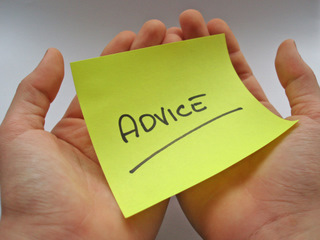
Take Advice 3 (photo by woodsy)

We’re all different. No number of friends, family, development gurus, lifehackers, personal tutors, or anyone else can tell you about YOU. It’s time to believe in yourself, listen to yourself, and let the answers present themselves. Advice is just that. It’s not an instruction or a demand. It’s some assistance that you can shape to further complement your current skills.

You’d think that would be easy, but it doesn’t present itself that way most of the time.

There are several reasons why we prefer to listen to other people:

  • It seems more authoritative if the advice comes from someone else;
  • When we look for help, we’re automatically putting our own skills and learnings on the back-burner. ‘Looking for help’ doesn’t instantly remind us to look to ourselves for any answers;
  • We’re used to being told the answers. Google, encyclopaedias, 24-hour news, teachers, parents, adverts and others all give us the ‘information’, the ‘solutions’, the ‘explanations’ (with varying degrees of success). Generally, we’ll sit back and take it in;
  • We’ve then got somebody else to blame if it doesn’t work!

We need to listen to our own ideas sometimes and now more than ever.

Sure, some ideas work well for the vast majority of people, while some require a great deal of personalisation but do work eventually. However, it is for you – and you only – to decide what is truly right and what works better than anything else.

Ask yourself what you want to achieve. Ask what you feel passionate about. Consider what you see for the future. Ponder the questions you haven’t yet answered. Look to what you love in life, whether it’s a concept, a person, a place, a job, or a way of life. Ask yourself what you really want.

When you’re given anything from a snippet of advice to a detailed book of self-help, you need to understand that only you can work out if the techniques are right for you. Of course, some systems need a bit of patience and crafting before they work, so prepare to give a little time if it’s needed. But if it works for you, you will unlock another secret.

A recent post on Make College Better highlights the kind of independent thinking you need to get the most from any advice. To follow anything blindly is somewhat missing the point and cannot properly expand upon your learning and development.

“5 Tips for Becoming a Leader in your Student Organization” is full of good advice to take you that little bit further. Nevertheless, it doesn’t force you to take a particular path. Instead, it gives you ideas that should become choices after you’ve considered the matters carefully. Check the article and then I’ll explain what I mean:

1. Find your passion – The first tip tells you to to be committed, but it doesn’t give you the answer. You, the reader, hold those answers and can take it further once the tip has helped you retrieve the information from your head.
2. Invest yourself fully in one thing, and do it well – Following on from the first tip, this next one is telling you to be careful, be committed, and be passionate. Not exactly specific advice, but crucial in getting the very best.
3. Do it for the right reasons – When you take this to the level of Higher Education as a whole, it’s up to you to see where your passions truly lie:

  • Do you want great academic success?
  • Are you at university for the social life?
  • Do you feel pushed into this uni life and would rather not be here at all?
  • Are you here because it’s what everyone else around you happened to be doing?

Attitudes change regularly. If you’re reading this, it’s likely that you’ve got quite an interest in your future at uni, even if it’s only minor at the moment. However you feel, it’s best to do things at such an angle that it’s what you really want.
4. Take on additional responsibilities – The shocking change in working attitude between A-Levels and uni degrees is too much for some people. The way of Higher Education is one in which you do much of your work outside of lectures and seminars. The onus is on you to study a great deal in different ways. It’s up to you to develop by choosing new responsibilities that are important to you.
5. Make friends at the top – I’m going slightly off the point of the Make College Better article, but you’ll see why.

Now we’re pretty good at loving ourselves most of the time. Yet when we seek out advice and assistance on something, we regularly forget to give our own thoughts the time of day. If someone else says a particular technique is right, you’re likely to believe it to the point where you feel a failure when it doesn’t work for you. If it worked for the so-called expert, you clearly must be doing something wrong. Mustn’t you?

Rubbish. If you made friends at the top (i.e. with yourself), you’d quickly realise that some practices don’t gel with you. Time to move on and find a better set of tools for yourself.

As I’ve previously mentioned, Scott H Young has a great post on 50 tricks to study better, faster and with less stress. It’s a great place to start understanding what tools work for you. Get going with these and you’ll begin to hone your own personal life skills in no time.

Uni life is an important time to find your key qualities if you haven’t started on it already. I cannot stress enough just how much you can achieve if you put YOUR mind to it.

Love (photo by raichinger)

Getting the initial work out of the way, every time.

Rubix Cube (photo by MeHere)

You can do so much more than you realise.

It doesn’t matter how skilled you might be, you have the potential to do more. How? By putting in the work at the beginning.

Whatever you want to achieve, there’s the danger that it looks so time-consuming and such a drag to be bothered with, that you never take that first step.

Well let me tell you this…the time you put in at the beginning of a project can help you save time and achieve so much more in the long run.

My post about writing essays well suggested putting in your research as soon as possible. Even if you don’t deal with the essay straight away, the initial research and notes go a large way to shaping whatever you end up writing.

This is the same with pretty much any project you care to deal with. For instance, I take in a lot of media information…websites, newspapers, magazines, and so on. To help streamline this process, I took the time to build up a convenient list of titles that I could access from the web. It may have taken about three hours to organise, but it’s saved me many multiples of that time since then. I did this:

  • Noted down all the newspapers and magazines I knew about (10 minutes)
  • Searched Google for other periodicals that I had forgotten about or was currently unaware of (45 minutes)
  • Put the two lists together and bookmarked all sites (20 minutes)
  • Checked each website to make sure they published their articles via the web…and preferably for free (55 minutes)
  • Bookmarked all relevant sites. If possible, on the direct paper/magazine page, such as The Economist’s Full Print Edition Contents, rather than The Economist’s Front Page (30 minutes)
  • Organised bookmarks into several categories, based on the frequency of the publication (i.e. daily, weekly, monthly, etc.) (20 minutes)

A few hours of initial legwork enabled me to produce a comprehensive list of titles that I could check however often the magazine updated. So once a week, I could open all the bookmarks in the ‘weekly’ folder and immerse myself in this information quickly and effortlessly.

This technique sped up the time it took to go to each site, helped me remember where I had or hadn’t yet been, gave me more scope to take the information in, and it made the task more managable.

In turning the task into something so easy to execute, my productivity increased greatly and I became happier doing the work itself, because it was so easy to do. I was able to concentrate on the main purpose, which was to read and take in new information.

You can use this technique with almost anything you like. From organising a party through to starting a new society, from setting up a website through to compiling a new diary. It doesn’t matter what you want to do, you will always fare a lot better if you comit to the beginning research and organisation.

Unfortunately, it’s this initial legwork that puts a person off from starting something great. You may be worried that there’s so much to do and there’s a never-ending list of tasks until you reach your goal. But you must develop an understanding that once the initial stage is over, it doesn’t need to be done again. Try to focus on the primary aspects of a project in isolation to your everyday tasks. Because when it’s done, it’s done!

To an extent, you are getting the bigger picture before worrying about the detail. Once you can see all the parts, you can then dig deeper than you might have previously imagined. Sometimes you need the will to start something, before you can reap the benefits. I’m not surprised that this can be immensely difficult to overcome, because of today’s ‘instant’ culture, but you’ll be a stronger person for spending your time so wisely in the opening stages of fulfilling your goals.

Just remember to think about the detail later, though. It’s no good drawing the outline and then failing to colour everything in!

Focus on your initial workings and you really can go that extra mile. Repeat ad infinitum and be ready to amaze yourself.

Rubix Cube Solved (photo by MeHere)