personal development

10 Great Ways to Push Past Uncertainty

Each and every day, at some point, I ask myself this:

“Am I sure?”

Am I sure I want to do that?  Am I sure this is the right approach?  Am I sure there’s not a better way?

It’s sensible to question your behaviour. Questioning is healthy. Too much questioning, however, is not.

photo by helgasms!

photo by helgasms!

Many of your actions involve pushing past uncertainty.  Unless it’s a routine or something you’ve already overcome, you cannot be sure.  The push past uncertainty doesn’t bring you to certain, let’s be clear.  The push brings you to a place where you can make your choices without excess fear and a clouded mind.

Here are 10 methods of reaching a clear focus:

  1. Accept that uncertainty isn’t negative. Certainty isn’t always positive. I’m sure you wouldn’t relish an event involving certain death, for instance. Uncertainty is natural, not negative.  It’s better to be uncertain than overconfident because, unlike overconfidence, you can overcome uncertainty.
  2. Stop fearing the worst. By expecting nothing, you kid yourself that even a small gain will be a good result. But reality doesn’t work out this way. Automatic fear of the worst only sets you up toward failure and reduces enthusiasm. Be prepared for all eventualities, but don’t actively expect the worst outcome.
  3. The unexpected will open the mind. Not everything should be planned. So long as it’s not dangerous, it’s good to do something on a whim once in a while.
  4. Go one step further than you usually would. When you reach uncertain territory, a small step outside your comfort zone could be enough to change your attitude. You can step even further next time!
  5. Say yes to what you like the sound of. Sounds obvious, doesn’t it? But uncertainty can make you turn down stuff you actually want to do. When you’re scared of what might happen, you shield yourself from the fun stuff too. If you wish you had the courage to do something, allow yourself the courage to say yes and do it. Dare yourself to explore the things you want.
  6. Treat the opinions of others as exactly that. People don’t care as much about your actions as you’d think. But still you panic. You are your own worst enemy. It’s easy to obsess over the way a person views what you do and it stops you in your tracks. Truth is, people usually obsess over their own actions, just like you! Ditch the concern and do what feels right for you.
  7. Research more. Literature exists on almost every conceivable topic. When the risk feels too great, read a book on the topic or watch a video about it. Find out more until you have greater conviction and understanding.
  8. Treat your situation as a set of events, not a ‘success’ or a ‘fail’. You’re not in a movie. Fear of failure is enough to get you thinking like a film. The ending will either be happy or sad and you don’t want to risk the latter becoming a reality. Of course, we’re not treated to a beginning, a middle, and an end. If you keep thinking that, you’ll keep fearing failure. There are plenty events and no script. Enjoy improvising!
  9. Visualise yourself taking action. Relax a while and paint a mental picture of a scene in which you step into uncertainty and make your move. Imagine what you would do and how you might feel. Break down those barriers. Much concern may only be due to a block on seeing a future beyond the uncertainty. Your visual image of working beyond that won’t automatically turn into reality, but it will help you to think about the situation and overcome initial blocks.
  10. Keep the rest of your life in check. With too many issues already on your plate, you’re unlikely to see the point in chasing further unpredictable outcomes. The more organised and up to date you are with day-to-day life, the less burdened you will be when coming up against uncertain times.

What uncertainties have you managed to overcome in the past?  How did you make that breakthrough?

Look Back, Look Forward: Part 4 – Life after graduation

You’ve been held in a cocoon for several years and now you’re left in limbo.  Nice, huh?

After the final exams (and parties), we shed a tear at leaving behind the place of so many great memories.  Then it’s over as quickly as it began.  You’ve got your mates, your plans, your life outside the student experience…but naturally moving on from university can be jarring.  So how do you make the transition feel seamless?

photo by las

photo by las

  • Use uni services as much as you can, while you can – It’s great that you’ve got access to a huge range of services, but it comes to an end.  Some resources are accessible to graduates, but you need to live nearby and your access will still be reduced compared to that of a student.  As for online services, don’t forget to use them while you still can.  If you’re uncertain how long you get to log on to university intranet, email and gateways, ask!
  • Don’t wait for graduation – Some institutions wait months before officially handing out your degree.  Don’t treat those months as empty ones.  A degree ceremony is a formality.  You don’t even have to wait to get your final results.  You have the opportunity to crack on RIGHT NOW.
  • Look at your life as a continuing story – You may be at the end of an era, but there’s no point in dwelling on it.  Perhaps you’re relieved to be finished and want a break.  If you chill out now, you’ll lose focus and lose chances everyone else starts grabbing up.
  • Use your network straight away and cover all ground, including academics and tutors who inspired you – You can never be too good at networking.  And it’s not just for mates and for finding jobs.  The wider you stretch out and find people with similar passions, plans, careers, ideas, and so on, the better.  If you want to improve your own game, you can’t do that on your own.  And the great thing about networking is that you can help others while you’re at it.
  • Contact your careers service – With masses of information and advice, you’d be crazy not to make as much use from your careers services while you can.  Many graduates stay local to their place of study, so your job shop may be able to help out in that way too.  Ask what your careers people have to offer.  They can probably help after you graduate too, so find out what ways you can use them to your advantage.
  • Keep your affairs up to date and organised – Now more than ever, you need to have your wits about you in order to make your moves quickly.  Don’t ignore the administrative side of life because it needs doing.  If you leave it, the work won’t go away and it’ll become more urgent the longer you let it slip.  Getting everything together and looking presentable is more difficult if you leave things until the last minute too.  Remember how it was with essay deadlines…
  • Keep moving – We’ve seen in previous posts how the end of your student experience can be an anti-climax.  Rather than feel dispirited, use the opportunity to find new ways of using the time to suit you.  Life usually trips from one series of events to another.  University may be three or more years of your life, but it’s still just another series of events that comes to an end.  Live it, love it, remember it fondly, and dive straight in to the future.

These are just a few random thoughts.  There are about a squillion ways of moving on from university positively.  The main point is this: the desire to move on and to do so positively can only come from you.  Nobody else can tell you to make that transition from one thing to another, but it’s in your best interests to do so.

University gives you the key to an open mind.  There’s no need to lock up again when you leave.

Look Back, Look Forward: Part 2 – Degrees of change

Do you remember how you felt when you started your degree?  Feels like ages ago.  Feels like yesterday.

How much do you think you’ve changed over the years?

My life went all over the place on a regular basis.  Every few weeks, it felt like I wasn’t the same person any more.  Over the course of three years, it was almost not worth looking for a comparison any more.

photo by jessica flavin

photo by jessica flavin

What a difference a degree makes

In the last post, I looked at the end of your time at uni.  Your view of the future then probably looks totally different to how you perceived it at the beginning.

Some of us start a degree with a clear idea of what the future looks like.  Changes take place along the way, but you have a purpose and you’re full of hope, so you try not to stray from that path.

On the other hand, some of us don’t have a clue about next month, let alone several years’ time.

Whatever the case, you won’t feel the same now as you did then.  Looking back helps you to look forward.  Personal changes are easier to spot.  You may have a different life attitude, your likes and dislikes may have changed dramatically, or your career ambitions may have a taken a new direction.  I’m sure you look back at some of your actions and think, “Was that *really* me back then?”

Don’t look back?

Your life is forever being shaped by past experiences.  You learn from the past, you live in the present, and you plan for the future.

Other than your degree, you have a wealth of other considerations and achievements:

  • New friends;
  • New, eye-opening experiences;
  • Extra-curricular achievements;
  • Advanced study skills;
  • A raft of transferable skills;
  • And much more…

You may hear people tell you to never look back, but understanding your past holds great value.  Everything you do transfers to the past the very moment you’ve done it.  When looking back, it’s important not to stick with the past or try to live in the past.  When aspects of your life come to an end, you have to be prepared to take the next steps, even if they are closely related to that previous chapter in your life.

I’m passionate about higher education, but I’m not trying to recreate my previous student experience.  I lived with Freshers in my final year at uni, but that wasn’t to live a lie that I was back in the first year of uni.  Still, it was good fun… 🙂

The point is, I want reasons for what I do.  The reasons don’t have to make sense to anyone else, so long as they make sense to me.

Identify your future from your past

It’s time to put everything together and see the best of your past selves in your current self. Picking all the positive vibes helps you stand strong in your coming decisions.  And as a (soon to be) graduate, these future decisions need to be strong!

  • Think of when you felt you achieved something special.  How did you get to that moment?  What were your strong points?  Can you recreate them now?  What would you do in the future to step the game up a notch?
  • Consider times you wish you’d spent more wisely.  They may not be regrets, but situations that could have been used more productively and actions that could have been handled more reliably.  Armed with what you know now, what would you have done differently and how will you be ready for similar issues in the future?
  • Take into account all the positions you took up while at uni.  Make a list of all the clubs and societies you were a part of, including what you managed within them.  Be proud of every little thing you got to be a part of and don’t be shy to explain how it’s helped shape the life you lead today.
  • Look at the elements in your life that have stayed the same over the years.  What has held strong through the good times and the bad?  Are you happy they are the same?  If not, what are you going to do RIGHT NOW to remedy the situation?  You’ve highlighted the negativity, so now is the time to take positive action and remove it.

The curtain falls, but get ready for the next act…

Your focus, once it’s been on the past, should have its sights set on the future.  You haven’t reached the end of an era, it’s just the interval.

Curtain goes back up any minute…

Monkeys and typewriters

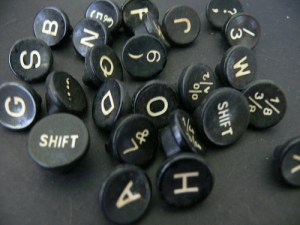
Stick loads of monkeys in a room and give them a typewriter.  Assuming they do as you say and hit away at the typewriter forever more, it’s only a matter of time before one of those monkeys will have written the works of Shakespeare.

photo by Laineys Repertoire

photo by Laineys Repertoire

Or so the theory goes.  If every attempt was a unique effort, then one day the attempts would reduce in size until you’re only left with the works of Shakespeare.  But monkeys on typewriters wouldn’t be typing with the insight that we do.  In essence, all the monkeys forever working on typing would also, feasibly, write the works of Shakespeare with many spelling mistakes and errors.  And some will get halfway through the correct text and veer off into nonsense.

Even if one monkey managed it, I don’t imagine the follow-up would win any prizes.

The monkeys and typewriters analogy doesn’t work outside of mathematics.  A lot of life is random and much of what happens is by chance.  If you’re chosen out of 10,000 contestants to win a talent contest, you don’t need to be the best performer to win.  You won’t be the worst person either.  However, a lot is down to luck, subjectivity, who’s aware of and following the contest, the amount of backing you already have, and so on.

You do need skill to achieve, but you need more than skill to achieve many goals.  There’s drive and determination to get you working each day.  There’s your attitude and a network that appreciates it.  There are many elements in play; some are in your control and some are not.

You do your best and still nothing is certain.  But it’s a start.  You’re not a monkey randomly bashing at a typewriter.  You have insight and you have a choice.

Choice plus chance equals luck.  Don’t be afraid to create your own luck!