Job / Career

Self-Motivation and Mountain Moving

Self-motivation is great. It helps you take those online courses and pass with aplomb. It gets you connecting with amazing people. It inspires you to write about your chosen profession,  your hobbies, and anything on your mind. It lets you present videos, go to talks and conferences.

Self-motivation takes you to a place where you can create stuff, argue stuff, make stuff happen.

But how often is this happening?

It’s easy to forget how useful a dose of self-motivation can be.

So it’s time to remember. Self-motivation is a big deal.

Nothing is guaranteed in life, but you have to reach out to get it.

When you don’t, nothing happens.

converse-fields

The more self-motivated you are to show up and take action, the more likely you’ll find the good stuff. And you see those people who seem to get asked to do absolutely everything? They usually got to that place by asking a lot before all this happened. It took a lot of asking to get a lot of asking back at them.

Choices and Making Things Happen

When you take action, you need to make choices.

Choices are tough. What do you give up? What do you prioritise above everything else? There are only so many hours in the day. And when you do have the time, do you worry about every last detail before committing to something?

First, consider if your actions somehow make a difference to you or someone else. What value does it have? Even if that value is personal, that’s fine.

Second, think useful, not polished. For example, when I write, I don’t edit much until later. Editing as you write is a pain and it limits your output. If your brilliant idea can only be expressed in a few bullet points for now, so be it. You’re better off making a couple of notes than not writing anything at all.

Another example is through Gary Vaynerchuk. When he gets a great idea in his head that he wants to tell the world, he doesn’t care about production values. He’ll take out his phone and, no matter where he is, he’ll shoot a quick piece and post it online. When the message is more important than a fancy presentation or high definition video, push it out.

All you need to do is flip your phone around and shoot a video. Get an idea out there, make something happen. When you’ve got something great to impart, you can move mountains. Keep communicating, keep creating, keep connecting. Don’t wait for someone–including yourself–to tell you you’re good enough, to tell you you’ve made it. That’ll never happen. And if people do tell you you’ve made it, don’t stop learning on account of that.

Don’t stop creating either. There’s always more to do.

So get out there and instead of trying to do something good, try doing something new, learning as you go. Some stuff will be grainy and useful. Some stuff will be polished and rubbish. You’ll even have perfect days and terrible days.

But that’s only if you do it. If you just play it safe and do nothing at all, there’s nothing to show and you get no further forward.

You have to make choices because you can’t do everything. But when you say you really want to do something and it’s perfectly possible to do it, why would you still not do it?

I had an email the other day from someone who wanted to write a guest post for the blog. They said they wanted to get into blogging and were looking for a way in. I asked them what their own blog was and they didn’t have one.

Let me repeat that once more…A person who really wanted to blog, but didn’t have a blog yet and were looking for a way in.

A way in to what? Just sign up and start publishing stuff!

Now, I’m pretty sure their real aim was to promote another website. But imagine if that person really did want to blog. Nothing would be stopping them so long as they had an Internet connection.

If you’re reading this, you can be writing it too.

Taking Life Seriously

As you can tell from this site, I still find university fascinating. I understand that there are other routes and that uni isn’t for everyone. But I’ve found something that speaks to me and that I want to be a part of. It may bore the socks off you, yet it works for me. I want to help students make the most of their time at university and learn about their experiences because I feel in a good position to do that. I like the academic side, the social side, the admin side. It’s a strange position to be in, but a wonderful one.

I moved away from academia after I graduated. It seemed like the only thing I could do at the time.

I was wrong. And I’ve been wrong about a lot of things throughout my life.

We’re all wrong about a lot of things.

Luckily, we get a lot right too.

One thing I was right to do was return to the world of higher education. Not only did I work to my strengths, I also worked on my weaknesses. I didn’t know enough about the administration side of academia, so I made it my business to do so. I took it seriously.

The first step of the process was self-motivation.

If I didn’t want to do this, the outcomes would be different. I wouldn’t have been asked to do many of the things I’ve done. I wouldn’t have found people wanting to consume the content I’ve produced. I wouldn’t have participated in the activities that have helped along the way.

I wouldn’t have taken this seriously.

How seriously do you take the things you’re aiming for?

I’m writing at the time of year when new university students are starting a journey toward a degree while applicants are at school or college writing personal statements so the whole process can begin again next year.

When I was writing my personal statement, I was only half-hearted about it. I wasn’t looking at the bigger picture. Nobody had explained what any of this meant and I hadn’t done enough research of my own either.

That wasn’t the best attitude to have. Yet it’s an attitude repeated time and again for far too many people, year after year.

I had a chance to turn things around and I took it. If I hadn’t, my university experience might have been pretty poor. I may not have gone to university at all.

Yet here I am, writing stuff like this, trying to help others win. Among other things, that needs a regular dose of self-motivation.

None of this is about finding your passion at an early age. Neither is it about ignoring what you believe in. At the core of this is taking what you do seriously. Even the fun stuff. Make every action count and find motivation in what you do.

This Post Is For YOU

I write this as an inspired ramble. I’m posting it here without (much) editing.

This post is for you to chew on as is. If it speaks to you, that’s awesome. Let me know what you’re inspired to do. Keep in touch. Even if it’s just a quick tweet (@universityboy) I’d love to hear what you’re doing and how you’re self-motivated.

And if you think I’m crazy, that’s fine. Do your thing and be inspired by what makes you tick. The point is to find what makes you want to wake up in the morning (or night!) and do amazing work. I’m only trying to help with that. If someone else is helping you achieve that in a completely different way, brilliant.

I’m talking to each and every student out there who gets what I’m saying and who feels like I’m helping them. If I’m not helping you, I’m comfortable with that. If I’m not helping anyone, I need to reconsider.

From where I am, I feel comfortable at the moment. So while I’m self-motivated, I can’t do it all by myself. This is a two-way process.

Thank you for that. Thanks for reading and I hope you get a spark of inspiration from this post or anything I’ve created over the years. May your own self-motivation (along with the help of others) take you to wonderful places.

Not long ago, I referred to a Dr. Seuss book, “Oh, The Places You’ll Go!“. The book’s message is that you can move mountains.

I believe you can move mountains. It’s time to get motivated. Are you ready?

Let me know what your personal mountains are and how far you’ll move them.

move mountains (Dr. Seuss image from Oh! the Places You'll Go) (photo by Curtis Gregory Perry)

“Kid, you’ll move mountains” – Dr. Seuss image from ‘Oh! the Places You’ll Go’ (photo by Curtis Gregory Perry)

9 Tips to Prepare for Jobs and Careers Long Before You Graduate

It’s never too early to think about what you’re going to do when you graduate.

Everything is a preparation. You’re not meant to wait until you finish your degree before preparing for the future. Make your time count.

You may not even be at uni yet. No matter. The longer you give yourself, the more chance you have to jump in and get comfortable.

Cat Ready (photo by kissro)

It’s all about preparation. Get ready to pounce… (photo by kissro) CC BY-NC-ND 2.0

Here are 9 things you can do early on in anticipation of what’s ahead of you when you leave university. Why wait?

1. Get involved in relevant professional associations and groups

This is easier than ever. With an Internet connection and a bit of time to search, almost everything is at your fingertips. This is a recent development and worth pursuing.

For the most important associations, do consider paying for student or basic membership. It’s worth the cost if you get some kind of recognition and if membership gives you various other benefits that you can tap into. Do your research and see what’s on offer. You may be pleasantly surprised.

2. Join LinkedIn groups, subscribe to blogs, and follow Twitter users in your field

Another recent development and easy to implement. Spend just a few minutes each week following a few key accounts and you’ll build up a great source of content in no time at all. You can then reach out, comment, and even offer advice as you go along.

As a recent Jisc article mentions, “The recruiters are there. The employers are there. So why aren’t the students?” There’s a lot going on!

3. Write, record, and video stuff

Most of us consume content, but how often do you produce it? You can make an impression even if you make something about your search from nothing. You can still impress when you publish basic information for absolute beginners. You’re making the effort and making it public. That speaks volumes.

People will value your content. We all have to begin from somewhere, so don’t worry that you’re being too simple. Your information may be exactly what someone else is looking for.

4. Show up where you’d like to show up

The more you get involved, the more you will be seen. And as your exposure increases, you’ll be offered other opportunities to increase your exposure yet more. It’s like a snowball effect.

Seek out free events, find cheap student tickets (or free press tickets if you are writing prolifically enough now!), and find what your university and local area have on offer as far ahead as possible.

5. Tap into alumni

Speak to your alumni office to find out what they have to offer. Some universities provide a lot of help and contact after you graduate, including professional development and networking opportunities.

6. Your careers service is your friend

Many students are using careers services earlier on in their degree. Gone are the days where you don’t bother thinking about it until just before final exams. Whether or not you know what jobs and careers you’re interested in, you’ll find a wealth of information and advice on offer to you. Use it!

7. Speak with your tutors (if applicable)

This works best when you want to remain involved in a field directly related to your degree subject or if they can impart specialist information. If so, your lecturers and other uni staff are a great potential source of leads and contacts. They’re a great place source for quality leads that they themselves endorse and rely upon. For that reason, plan ahead with questions and requests that aren’t easily available elsewhere. Make the contact count.

8. Keep an ear to the ground

Read the latest news in your line of work and look out for where people get their trade information from. Over time, you’ll build up loads of valuable resources that require very little effort keeping on top of. Imagine having to start from scratch only after you’ve graduated. Save yourself time and give yourself the upper hand with everything at your fingertips as early as possible.

9. Find direct links to businesses you’re interested in

By building up connections not just with people, but with companies, there is a much greater chance that you’ll be known as a matter of course. Picture making a name for yourself while you’re still at university. Forget waiting, interact with companies and individuals you love right now.

Find ways to offer value and impart your knowledge to those who would appreciate it. A small gesture that takes five minutes of your time may prove more useful than desperately seeking an internship post. You can’t compare them like for like, but the small gesture is something you can do right now. Make contact and provide value when you see the opportunity.

A few minutes out of every day is all it takes to make a huge difference. Schedule it into your day. Commit to quarter of an hour to do one small thing, write a short piece, or make contact with someone. Whatever you do, don’t expect a miracle in isolation. Keep preparing so you don’t have to play catch-up later.

A few minutes. No big deal. Preparation is best when it’s spaced out, regular, calm. Make a start today.

Put Your Subject Before Your Grades (and How to Do It the Right Way)

When Clearing got underway for another year, the Telegraph reported that rising tuition fees had caused a sharp increase in demand for ‘jobs-based’ degrees.

This kind of story is becoming more commonplace. Students taking up vocational degrees and job-related learning rather than studying more ‘traditional’ subjects.

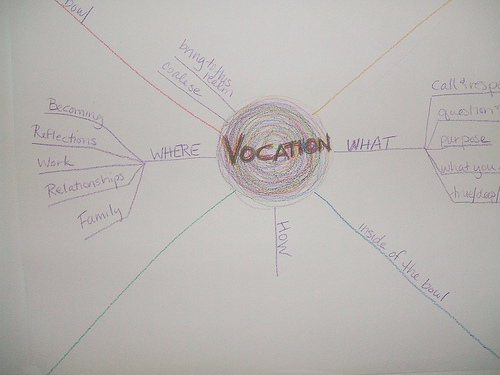
Vocation (photo by Ninth Raven)

Photo by Ninth Raven – CC BY-NC-SA 2.0

The key passage comes at the end of the article:

“But Prof Alan Smithers, director of the Centre for Education and Employment Research at Buckingham University, said the shift in applications may be ‘short-sighted’.

“‘Fees are causing students to think a lot more seriously about the part that going to university is going to play in their future lives and whether they will get a good return for their investment,’ he said.

“‘But it is a little bit short-sighted to simply concentrate on a career above all else at the age of 18. Studying a subject you love, such as the humanities or English literature, will enhance your life and could throw up future employment opportunities that you’re not yet aware of.'”

If fees and the future are making such an impact, how much does subject matter in the long run? Students risk moving away from a subject they enjoy just because it doesn’t visibly link up with a certain career.

Interests and Passions

Research from YouthSight suggests that students still pick subjects based on their interests. However, I wonder how those interests are defined now. What compromise is made when choosing a subject?

The YouthSight data also suggests that business students are far less likely to be studying due to a love for the subject. This is a concern. Why would you choose to study something you weren’t that keen on learning about?

Perhaps it’s expected of you. Perhaps you like the salary prospects. Perhaps your friends are doing it.

These aren’t reasons for choosing a degree or a subsequent career. Same for following a passion. You need to put in work that you’re not so keen on to allow the passion to come to fruition. And passion is overrated anyway. The situation is far more compicated. Don’t take my word for it, check out Cal Newport’s extensive back catalogue of posts on the subject. Here’s a selection to get you started:

Regardless of where you stand on passion, and whether or not you claim to have found yours, now could be the worst time to shy away from a course you want to do.

Fees force a rethink, but that doesn’t always mean you end up seeing things differently. Imagine having to put in some unenjoyable work for a subject you really like. Annoying, but usually manageable. Now imagine doing the unenjoyable work for a subject you were never that keen on in the first place. Double whammy. There’s no motivation to get you motivated.

And the reward in the distant future is still based on that vocational subject you’re already not that keen on. If that’s not being set up for a fall, I don’t know what is.

Do you make the choice or is the choice made for you?

A recent study of humanities graduates at Oxford between 1960 and 1989 found that degree subject was not a barrier to most careers. This study only covers Oxford (one university is hardly indicative of the entire HE sector) and doesn’t take into account almost a quarter of a century of growing student numbers since 1989. Nevertheless, the report provides a hint that what you study doesn’t need to be linked to a direct career path. Choosing History doesn’t penalise you from a wide range of jobs, for instance.

Does a more ‘traditional’ course hold less weight than it used to? Are we stuck with making a choice between a degree that will get you a job and a degree that will get you enthused?

I doubt it. Learning and discovery comes more naturally when you appreciate your course. You have room to find out what makes you tick. Studying won’t feel so forced.

In other words, you gear yourself up for a fall when you’re only on a course for what takes place after you graduate.

Your attitude matters. Although it sounds wrong, the course is more important than the grade. It sounds wrong because we generally focus on what an employer wants to see. In reality, you need to focus more on yourself. Who is this mythical employer in your mind?

Study a subject you respect and enjoy. I know that’s far too simplistic, but so is slogging through a course in the hope that it’ll be worth it for the massive wodge of cash or better prospects at the end. It’s a false trail, because you’re concentrating more on the content than your own ability.

So when I say the course is more important than the grade, it’s based on your choice and focus on developing your abilities. From my perspective, that’s all the more reason to choose a degree that you want to spend three or more years of your life poring over.

In my next post, I’ll look at ways you can focus on your career no matter what you’re studying.

When Transferable Skills…Aren’t

My last post looked at transferable skills and telling your story. But are transferable skills what they’re cracked up to be? Are they truly transferable? Are they actually skills?

When employers look for these common traits, does that mean everyone is looking for the same thing? Nope.

Can things like customer service, motivation, and self-awareness really be classed as skills? These ‘skills’ are generic, thus problematic.

Maze (photo by MarcelGermain) CC BY-NC-ND 2.0

Which direction to turn? Where is the context? (photo by MarcelGermain) CC BY-NC-ND 2.0

When it’s hard to identify your transferable skills, how they came about, and what they have helped you to achieve, does that make them less than transferable? Creative Studies lecturer, Mimi Thebo, sums it up neatly:

“So where does it all go wrong? Well, the problem with transferable skills, is that they don’t. Transfer, that is. People tend to associate a skill with the context in which it was learned. Take the Creative Writing workshop as an example. Many of the skills and abilities mentioned above are learned in workshop. But this is a very restricted setting, and students may feel these skills are uniquely valuable in this setting. Indeed, they may not be aware of the skills and attributes they have acquired.” [SOURCE] [My emphasis]

Moving from one context to another is a challenge in itself. You’re telling a different story each time. Where you place yourself in the context is just as important as considering where other people might place you. That takes more than transferring a skill.

Multiple contexts are even more confusing. Take customer service. Who is the customer? What is your aim?

I have used so-called customer service skills in so many ways over the years that I know how different each situation is. One size does not fit all. Whether it’s answering queries from household-name clients, dealing with questions from library customers, sorting out issues with students I’m responsible for, or helping an individual with a request via a phone call I wasn’t expecting, these situations require different approaches and cannot be boiled down to a single ‘customer service skill’.

While there is overlap, there is also a lot of subjectivity. We are dealing with constructs.

Skills are particular abilities and often measurable in one way or another. There is still subjectivity in skills, but not to the same extent as more generic terms. Take what I said yesterday:

“So much potential, so much choice, so many stories to tell.”

“You can highlight your strengths and transferable skills in numerous ways. You have so many stories to tell. Which stories are you telling?”

Transferable skills are ‘soft’. The stories you tell make a difference, the way those stories are interpreted by others make a difference, what people are looking for in you makes a difference…Everything makes a difference.

Therefore, nothing is directly transferable either for you or for those you are communicating with. By the same token, this highlights a problem with the term ‘skill’.

Identifying what you can do, what you have achieved, and how you are developing all require skill, but not a wholesale reliance on a particular set of criteria as if they form a bunch of boxes that can be easily ticked off, one by one.

Go back to where I quoted Prospects at the beginning of my last post:

“Every vacancy requires a unique set of competencies but some transferable skills are commonly requested”

These traits may be commonly requested, but that doesn’t mean an employer has a common view of those traits. Their view of these skills is no less unique than the set of more specific competencies they have listed.

When you don’t take this into account, you risk relying on a false understanding of ‘transferable skills’.

When you do take this into account, you are in a better place to define yourself through both using transferable skills and rejecting their existence at the very same time.

Patchwork (photo by leslie.keating) CC BY-NC-ND 2.0

Create your own patchwork (photo by leslie.keating) CC BY-NC-ND 2.0