Author: Martin

Celebrating university life in all its diversity. Helping to achieve a full, entertaining, productive, and successful experience.

Why Pointless Learning Still Has a Point

What’s the point in learning anything with no future purpose? Take juggling. Isn’t it just a waste of time when you could be learning something more relevant to your future?

Not always.

photo by Stéfan (CC BY-NC-SA 2.0)

photo by Stéfan (CC BY-NC-SA 2.0)

Lifehacker talks of a University of Oxford study from 2009 that discovered changes in the brain when learning new and complex tasks. In the case of the study, juggling.

This is positive. But hold your horses. It’s hard to come to any bold conclusion straight away:

“MRI is an indirect way to measure brain structure and so we cannot be sure exactly what is changing when these people learn.”

Nevertheless, this may be a sign of how important it is to stretch yourself. You may not want to always look for the easy option.

When you feel like you’re on a roll and you’re getting through everything easily, it feels good to work in that state of flow. We tend to enjoy flow as a productive state and gravitate toward it as much as possible.

But Cal Newport explains that flow is not as useful as the state of strain. When you’re in the flow, there’s nowhere to go. Not much challenges you.

The challenge comes when you introduce something new, difficult, and potentially risky. If you’re not used to juggling, it’s difficult, and you risk dropping a lot of stuff that you’re not meant to drop. Just to clarify, juggling involves keeping stuff up in the air…

The activity of juggling itself may provide few direct benefits for you, yet the magic comes through the indirect qualities of such ‘strain’ on the brain.

I spend more time when learning new things than when dealing with tasks and content I already have awareness of. Although it’s easier to find the state of flow because I’m enjoying and recognising what I’m doing, it isn’t challenging me in a total sense.

I have never learned to juggle. But if I ever wish to, I should jump on it.

Same goes for you. The combination of desire to learn mixed with rising to the challenge is strong. No wonder Josh Kaufman says it only takes around 20 hours to get pretty competent in something new. Forget 10,000 hours to become world class, spend less than one day total becoming good enough. It’s surprising how much you can learn this way.

Strain sounds uncomfortable. It certainly doesn’t sound preferable to flow. But under the right circumstances it’ll bring you far more satisfaction and open your mind to far more than you could imagine. Over the past year or so, I’ve spent relatively little time learning a lot about nutrition, baking, ukulele and guitar, early years learning, and the beginnings of humankind. I’ve also picked up some basics regarding steam engines, the solar system, and physics. Much of it has come about outside of anything I deliberately wanted to learn. Yet I still discovered a lot.

The strain I felt fuelled my enthusiasm further. None of it was easy, but it was multiple times easier than I would ever have imagined. A spark is all it takes. A bit of strain is just as necessary as the state of flow.

New and complex tasks sound scary and time-consuming at first. But it seems that’s the point!

Next time you’re interested in something with no apparent future purpose, it may be one of the most important things you learn.

What are you going to challenge yourself to today?

9 Tips to Prepare for Jobs and Careers Long Before You Graduate

It’s never too early to think about what you’re going to do when you graduate.

Everything is a preparation. You’re not meant to wait until you finish your degree before preparing for the future. Make your time count.

You may not even be at uni yet. No matter. The longer you give yourself, the more chance you have to jump in and get comfortable.

Cat Ready (photo by kissro)

It’s all about preparation. Get ready to pounce… (photo by kissro) CC BY-NC-ND 2.0

Here are 9 things you can do early on in anticipation of what’s ahead of you when you leave university. Why wait?

1. Get involved in relevant professional associations and groups

This is easier than ever. With an Internet connection and a bit of time to search, almost everything is at your fingertips. This is a recent development and worth pursuing.

For the most important associations, do consider paying for student or basic membership. It’s worth the cost if you get some kind of recognition and if membership gives you various other benefits that you can tap into. Do your research and see what’s on offer. You may be pleasantly surprised.

2. Join LinkedIn groups, subscribe to blogs, and follow Twitter users in your field

Another recent development and easy to implement. Spend just a few minutes each week following a few key accounts and you’ll build up a great source of content in no time at all. You can then reach out, comment, and even offer advice as you go along.

As a recent Jisc article mentions, “The recruiters are there. The employers are there. So why aren’t the students?” There’s a lot going on!

3. Write, record, and video stuff

Most of us consume content, but how often do you produce it? You can make an impression even if you make something about your search from nothing. You can still impress when you publish basic information for absolute beginners. You’re making the effort and making it public. That speaks volumes.

People will value your content. We all have to begin from somewhere, so don’t worry that you’re being too simple. Your information may be exactly what someone else is looking for.

4. Show up where you’d like to show up

The more you get involved, the more you will be seen. And as your exposure increases, you’ll be offered other opportunities to increase your exposure yet more. It’s like a snowball effect.

Seek out free events, find cheap student tickets (or free press tickets if you are writing prolifically enough now!), and find what your university and local area have on offer as far ahead as possible.

5. Tap into alumni

Speak to your alumni office to find out what they have to offer. Some universities provide a lot of help and contact after you graduate, including professional development and networking opportunities.

6. Your careers service is your friend

Many students are using careers services earlier on in their degree. Gone are the days where you don’t bother thinking about it until just before final exams. Whether or not you know what jobs and careers you’re interested in, you’ll find a wealth of information and advice on offer to you. Use it!

7. Speak with your tutors (if applicable)

This works best when you want to remain involved in a field directly related to your degree subject or if they can impart specialist information. If so, your lecturers and other uni staff are a great potential source of leads and contacts. They’re a great place source for quality leads that they themselves endorse and rely upon. For that reason, plan ahead with questions and requests that aren’t easily available elsewhere. Make the contact count.

8. Keep an ear to the ground

Read the latest news in your line of work and look out for where people get their trade information from. Over time, you’ll build up loads of valuable resources that require very little effort keeping on top of. Imagine having to start from scratch only after you’ve graduated. Save yourself time and give yourself the upper hand with everything at your fingertips as early as possible.

9. Find direct links to businesses you’re interested in

By building up connections not just with people, but with companies, there is a much greater chance that you’ll be known as a matter of course. Picture making a name for yourself while you’re still at university. Forget waiting, interact with companies and individuals you love right now.

Find ways to offer value and impart your knowledge to those who would appreciate it. A small gesture that takes five minutes of your time may prove more useful than desperately seeking an internship post. You can’t compare them like for like, but the small gesture is something you can do right now. Make contact and provide value when you see the opportunity.

A few minutes out of every day is all it takes to make a huge difference. Schedule it into your day. Commit to quarter of an hour to do one small thing, write a short piece, or make contact with someone. Whatever you do, don’t expect a miracle in isolation. Keep preparing so you don’t have to play catch-up later.

A few minutes. No big deal. Preparation is best when it’s spaced out, regular, calm. Make a start today.

Put Your Subject Before Your Grades (and How to Do It the Right Way)

When Clearing got underway for another year, the Telegraph reported that rising tuition fees had caused a sharp increase in demand for ‘jobs-based’ degrees.

This kind of story is becoming more commonplace. Students taking up vocational degrees and job-related learning rather than studying more ‘traditional’ subjects.

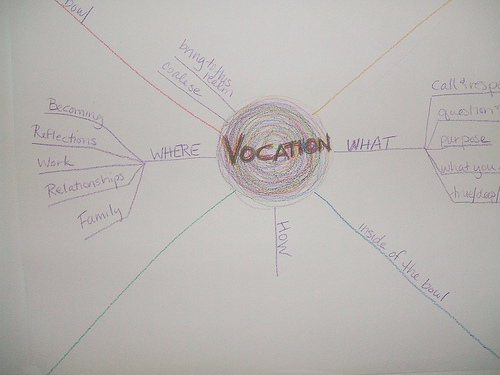
Vocation (photo by Ninth Raven)

Photo by Ninth Raven – CC BY-NC-SA 2.0

The key passage comes at the end of the article:

“But Prof Alan Smithers, director of the Centre for Education and Employment Research at Buckingham University, said the shift in applications may be ‘short-sighted’.

“‘Fees are causing students to think a lot more seriously about the part that going to university is going to play in their future lives and whether they will get a good return for their investment,’ he said.

“‘But it is a little bit short-sighted to simply concentrate on a career above all else at the age of 18. Studying a subject you love, such as the humanities or English literature, will enhance your life and could throw up future employment opportunities that you’re not yet aware of.'”

If fees and the future are making such an impact, how much does subject matter in the long run? Students risk moving away from a subject they enjoy just because it doesn’t visibly link up with a certain career.

Interests and Passions

Research from YouthSight suggests that students still pick subjects based on their interests. However, I wonder how those interests are defined now. What compromise is made when choosing a subject?

The YouthSight data also suggests that business students are far less likely to be studying due to a love for the subject. This is a concern. Why would you choose to study something you weren’t that keen on learning about?

Perhaps it’s expected of you. Perhaps you like the salary prospects. Perhaps your friends are doing it.

These aren’t reasons for choosing a degree or a subsequent career. Same for following a passion. You need to put in work that you’re not so keen on to allow the passion to come to fruition. And passion is overrated anyway. The situation is far more compicated. Don’t take my word for it, check out Cal Newport’s extensive back catalogue of posts on the subject. Here’s a selection to get you started:

Regardless of where you stand on passion, and whether or not you claim to have found yours, now could be the worst time to shy away from a course you want to do.

Fees force a rethink, but that doesn’t always mean you end up seeing things differently. Imagine having to put in some unenjoyable work for a subject you really like. Annoying, but usually manageable. Now imagine doing the unenjoyable work for a subject you were never that keen on in the first place. Double whammy. There’s no motivation to get you motivated.

And the reward in the distant future is still based on that vocational subject you’re already not that keen on. If that’s not being set up for a fall, I don’t know what is.

Do you make the choice or is the choice made for you?

A recent study of humanities graduates at Oxford between 1960 and 1989 found that degree subject was not a barrier to most careers. This study only covers Oxford (one university is hardly indicative of the entire HE sector) and doesn’t take into account almost a quarter of a century of growing student numbers since 1989. Nevertheless, the report provides a hint that what you study doesn’t need to be linked to a direct career path. Choosing History doesn’t penalise you from a wide range of jobs, for instance.

Does a more ‘traditional’ course hold less weight than it used to? Are we stuck with making a choice between a degree that will get you a job and a degree that will get you enthused?

I doubt it. Learning and discovery comes more naturally when you appreciate your course. You have room to find out what makes you tick. Studying won’t feel so forced.

In other words, you gear yourself up for a fall when you’re only on a course for what takes place after you graduate.

Your attitude matters. Although it sounds wrong, the course is more important than the grade. It sounds wrong because we generally focus on what an employer wants to see. In reality, you need to focus more on yourself. Who is this mythical employer in your mind?

Study a subject you respect and enjoy. I know that’s far too simplistic, but so is slogging through a course in the hope that it’ll be worth it for the massive wodge of cash or better prospects at the end. It’s a false trail, because you’re concentrating more on the content than your own ability.

So when I say the course is more important than the grade, it’s based on your choice and focus on developing your abilities. From my perspective, that’s all the more reason to choose a degree that you want to spend three or more years of your life poring over.

In my next post, I’ll look at ways you can focus on your career no matter what you’re studying.

6 Quick Energy Boosts When Sleep Isn’t Practical

The words ‘student’ and ‘sleep’ don’t mix well.

Too much when you shouldn’t be getting sleep and too little when you should. A recipe for disaster that’s easy to fall into.

Regular bedtime is difficult to commit to with so much going on. Even when you sleep like a baby every single night, that doesn’t always stop the tiredness setting in halfway through the day.

Fear not. There are a number of things you can do to spruce up your mental and physical energy before you pack in a full night of buh-byes.

Sleeping (photo by RelaxingMusic) CC BY-SA 2.0

Sleeping (photo by RelaxingMusic) CC BY-SA 2.0

Here are 6 ways to get yourself a power up:

1. Powernap

I love powernaps. It’s like sleep, only quicker. Somewhere between 12 and 30 minutes having a short kip, leaving you refreshed and rejuvenated. Win!

The most effective powernaps take a bit of practice. For some, it’s best to get back up after no more than 12 minutes. For others, you may need half an hour. If one thing doesn’t work, keep testing times until you find what works for you. The mistake is only trying one length of time and giving up when it doesn’t work. My optimum powernap is 18 minutes. What’s yours?

2. Meditate

Relaxation has never been so energising…

Meditation is often mistaken for requiring a total lack of thoughts. In reality, your brain doesn’t switch off. Any thoughts you have should be allowed to move on.

With that in mind, you’re not getting meditation wrong. Just sit in a calm and comfortable place, feel your breathing gently in and out, and gently focus on different areas of your body from head to toe, relaxing each area as you breathe. Don’t worry about what happens as you sit there. When you notice your mind wander, give yourself permission to let go of those thoughts. Accept their existence and do not dwell on them. Stay focused on the peace and quiet for however long you wish. From a few moments to a few hours to a few days. You don’t need to keep pushing for longer rituals. One of my most refreshing meditations this month came in at two minutes.

3. Walk / Jog

Exercise doesn’t have to be strenuous and it doesn’t always require a gym. Walking for a mile or two is enough to clear your mind of a lot of stress and it can also help energise you for the rest of the day. My favourite time to walk is in the morning, but any time is good.

4. Change of Scene

Have you ever had that feeling when you’re tired in one place, but you suddenly feel wide awake when you go somewhere else? Find a new seat, a different location, or a different environment and watch your mood lift with no further effort required. I’m still surprised at how effective this can be.

5. Take a deliberate break

No matter how much you tell yourself to keep sitting there until you complete that task, it’s not going to finish any quicker. Leave it alone and do something else. If you have enough time, stop working on it all day. If you’ve got a deadline coming right up, take a ten-minute time-out. If you don’t want to try a powernap, meditation or a walk, you could just make a drink as an excuse to get up and stop what you’re doing.

A brief pause is a good way to break up the day and stop you from feeling bogged down. Tiredness doesn’t only happen because you need sleep. Your focus may simply be drained and it’s another way you tell yourself to take off for a while. You’ll be surprised at how much better you feel after a bit of time away from a task.

6. A ritual for energy (and calm)

I love loose leaf tea. Watching the leaves brew and relaxing to a cup of green tea at once relaxes and energises my mood. You should try the same. And if green tea isn’t your thing, find your own ritual that gives you a boost in a way that you can get used to without having to break into a sweat.

There are many ways to pep yourself up naturally. You don’t have to rely on energy drinks and other hardcore stimulants.

How do you restore your energy? Go on, share some of your own tips!