Writing

“Writer’s Block” – The uninvited break

“I don’t believe in writers block particularly. I think you can feel you’re getting writer’s block and then you call it writer’s block and you’re in trouble. So I refuse to call it writer’s block. I call it ‘time for tea’ instead.”
[Graham Coxon, via morjames]

You’d be forgiven for thinking that “writer’s block” is some sort of disease, given the amount of coverage and advice it gets.

photo by amypalko

photo by amypalko

Faced with a 2,000 word essay, your words need to be important, hard-hitting, scholarly, impressive…

You want those words to be right, so you don’t write any old stuff.  You ponder the possibilities and dismiss most ideas as non-starters.  After hours of doing this, you’re no closer to completing the essay.

Thinking too much about the right words can stop you in your tracks.  You’re allowed to write whatever you want while nobody is looking.  The nonsense you start producing now won’t be the final essay you hand in for marking.

So write nonsense.  Talk rubbish.  Get words down on the page and see where it takes you.

James Dunn recently mentioned writer’s block “coming in waves, as inspiration wavers, usually through little mental stimulation or nothing of note occurring”.  James isn’t alone.  It’s hard to be inspired all the time.

Thursday Bram makes this point, saying that she can pump out 500 words in 30 minutes with no problem, but that doesn’t mean an eight-hour day of writing should produce 8,000 words.  She has managed this feat and even written a 12,000 word e-book in a day:

“But every time I’ve made a push at writing so many words, I’m absolutely useless for two or even three days afterward. There are certainly elements of exhaustion: writing that much leaves me feeling physically wrung out and like I just hiked up a mountain. I may not have run a marathon, but I’ve definitely exerted myself.

“The other reason that I need so much recovery time is that I feel like I’ve burned up whatever it is that lets me put together sentences in a generally pleasing fashion. My writing simply sucks after one of my all-day writing sessions.” [Thursday Bram]

Some people find it a struggle to even begin, let alone pumping out 500 words in 30 minutes.  It’s not burn-up, because the match hasn’t even been lit.

As writer’s block is psychological, there is no solution to fit all shapes and sizes.  Blocks can manifest themselves in many ways, such as:

  • General tiredness
  • Personal problems
  • Burn out
  • Lacking inspiration
  • Seeking perfection ‘out of the box’
  • Pressure to produce something ‘better than last time’
  • Uncertain what is required
  • Not enough research to provide much discussion
  • Distractions
  • Lacking belief in your own ability and/or comparing yourself to others

Just look at famous writers and artists.  Nobody is immune from writer’s block, no matter how talented they may be at their craft.

If you’re truly stuck, try writing random words.  Write a shopping list and then write about writing the shopping list.  Write about why you can’t write.  Type out a paragraph from a book and look at the words on the screen.  The screen isn’t blank any more…is that less intimidating?  Increase the font size on screen and let the text take up more space.  Use handwriting instead of the keyboard, and vice versa.  Try something…anything different.

If you really don’t want to suffer from writer’s block, don’t accept the break exists.  On the flipside, do accept that you need a break sometimes.  I don’t want to hear that you’ve gone bonkers…
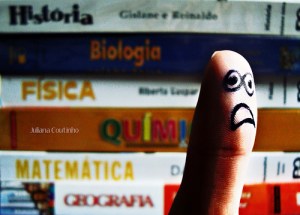
Can exams ever be fun?

Imagine a hobby you’ve loved for years.  Think how much time you’ve spent mastering the subject and getting to know so much about it.

Chances are, you’d have no problem explaining concepts, discussing what’s important to you, and debating best practice or proper technique.  You may even enjoy it.

But now imagine you have to answer questions about your hobby in an examination setting.  You’ve got three hours to answer questions on the subject.

photo by Juliana Coutinho

photo by Juliana Coutinho

Faced with something that you know well, it’s still possible to fold under the pressure of strict exam conditions.  It’s enough to strike fear in the hearts of the most confident minds.

That’s surely how it is for those people competing for fellowships at All Souls College, Oxford.

While the All Souls exams aren’t based on hobbies, a lot is based on general concepts or open questions and statements.  Far from being restricted, candidates are given a spring board from which they can jump off in whatever way they wish.

Questions include:

  • Is it immoral to buy a £10,000 handbag?
  • “I don’t care if anyone reads my books; I write for myself,” said the author of a half-dozen published novels. Is there anything wrong with this statement as a theory of art?
  • Why do Jane Austen’s novels continue to be so popular?
  • Can any public and political institutions be trusted to reform themselves?
  • Does celebrity entail a loss of dignity?
  • Is the desire for posthumous fame irrational?
  • Can a painting change the world?
  • Can (and should) Europe maintain its relatively high standard of living as compared with emerging economies?
  • Can you love someone if you don’t respect them?

These questions are taken from a 2008 paper, as printed in the Guardian.  Candidates had to answer three questions from a list of thirty-four.  Yes, 3 our of 34 questions.  There was a lot to choose from.  Something for everyone!

When I look at the questions on offer, I have vast, philosophical answers for them all.  I start drafting answers in my head and start having a lot of fun with what’s been asked.

All Souls College has just scrapped the most open and daunting paper.  Every year, candidates were given a card with a single word on it.  It could have been “Morality”, “Harmony”, or “Water”.  One random word to write about for three hours within a scholarly essay.

Again, when I read about this exam offering, I almost squealed with glee at the possible answers I could have given.

Okay, perhaps my enthusiasm can go a bit far… 🙂

Still, the idea of having such free reign feels like something to celebrate.  It’s part of what makes academic study worthwhile.

When I tweeted about the demise of the one-word exam, I wasn’t the only person to feel a pang of sadness.  Kate Maltby called the news “a real shame” and said it “always sounded fun”.  Krishna Omkar said, “That is a great shame about All Souls, it was the one paper I enjoyed”.

Krishna makes a good point about enjoying the exam.  It’s easy to forget that while an exam may be held under timed conditions and (usually) without the help of books and notes to guide you, the purpose of an exam is to discuss or examine what you have already studied and explored.  There are not meant to be trick questions.

“The examiner is not concerned to expose the bottomless pits of ignorance in the student’s mind (however much he may suspect them to be there).  He is interested rather in the little hills of erudition which also diversify the scenery of an otherwise even plain.  In this he relies in the last resort upon the student to help him.  The student can help best not by endeavouring to conceal the pits but by drawing attention with a measure of pardonable pride to the presence of the little hills.” – C. A. Mace [The Psychology of Study]

The beauty of such open ended questions and invitations to discuss something is that you’re free to add your own questions and even to question what is being questioned to an extent.

Exam essays do not have a specific right and wrong.  There is no single correct answer.  You must attempt to answer the question and show that you grasp the relevant concepts, but you have the power to make it your own answer.

When you’re sat in the exam hall, whatever the subject is and however prepared you think you are, ignore the stuff you’ve forgotten and set aside any worry that you’re ignorant of important information.  Work on what you do know and build upon what you have learned.  You’re there to create a wonderful scene with your ‘little hills of erudition’.  You may just turn some molehills into mountains.

Print Versus Screen: Information Pros and Cons

The way we read has changed dramatically in recent years.

Reading text off a screen – whether for cost, convenience, online content, collaborative reasons, or otherwise – is normal.  We read from computer monitors, handheld devices, TV screens, you name it.  What used to be in a textbook or magazine is now held on a PDF, through an online subscription, or from an RSS feed.

The change in format brings with it a change in reading methods.

You may not realise it, but what you see on screen can be altered in so many ways.  For example, Twitter users don’t have to read user updates via the site.  They can read from a standalone software client, such as TweetDeck.  They can use an alternative website, such as Brizzly.  The relationship with the text changes each time.  The question is, how much can the relationship change?

Whether it’s 140 characters of text or an entire ebook, you don’t know how others are consuming information compared to you.  What you see is what you get.

But what do you see?  How are you getting it?

With books, you had less choice.  Yes, there are hardback and paperback versions.  Yes, the layout of a new edition of a textbook can radically change.  Yes, a scribbled-in-the-margin copy of a book can suddenly look very different to a brand new copy of the same book.  But most of the time your view on paper isn’t going to be radically different to another person’s view.  What you make of the text, of course, is a different matter.

Moving to the screen, it’s impossible to tell all the different ways a text can be consumed.  Even a relatively standard PDF of a book can be resized, reshaped, and made to scroll in different ways.  The customisable nature of the texts should help you concentrate on the writing itself, but I’m sure it doesn’t work as simply as that.

There’s no right and wrong, but there are advantages and disadvantages to whatever method of reading you employ.  Here are some:

SCREEN ADVANTAGES

  • Easy to annotate.
  • Customisable.
  • Cuttings, screenshots and quotations are easily taken.
  • Can be read in many different setups.  Even printed out on paper, if you must.
  • Even non-customisable text can be customised for easier reading with the right tools.
  • Often have access to links and further discussion.
  • Can easily look up terms and definitions with a quick copy and paste.

SCREEN DISADVANTAGES

  • Not reading in isolation.  Disturbances away from text and other on-screen interruptions.
  • You’re more likely to scan the information, rather than fully immerse yourself in important detail.
  • Suits most in small doses and quick hits.  On screen reading doesn’t work for many as an extended exercise.
  • Not portable…unless you have an ebook reader and compatible file.
  • We’ve become used to reaching for the keyboard and Google for finding something out.  The Web is our dictionary, thesaurus, encyclopedia, textbook, and more.  Yet the answer may be in a reference book right next to you…

PRINT ADVANTAGES

  • In print, we’re naturally faster readers.  Reading from a monitor slows reading speed down. [Could we end up evolving as electronic text becomes the norm…?]
  • Much easier to focus on a physical text.  No *direct* distractions.
  • Portable.  Sometimes heavy, but still portable!
  • Easy to flick through and scan.
  • Quick access to contents, index, glossary, and any important pages.
  • Physical bookmarks stand out and take you straight there.

PRINT DISADVANTAGES

  • Not easy to search.
  • More difficult to make notes.  Either deface a book, make a formal note (when it isn’t always convenient), or buy expensive post-its/bookmark tabs.

We can’t live without physical books OR electronic text.  Both are required for effective study.  The same can be said for our own writing.  Do you take electronic notes, or use good old handwriting?  As HackCollege explains, there are pros and cons to both methods.

But are we beginning to treat books with less importance?  Once you get used to so much online reading, returning to a book can be a strange experience.  You end up reading as if you’re browsing at times.  Your eyes wander without focus and you look for the bottom line, that important take home point…even in fiction!  Through fear of wasting time, we’re losing touch with the detail.

How do you prefer the written word…virtual or physical?

[Update: On March 21, @jamesclay published a podcast “Do you like books or do you like reading?” which gives more information on the pros and cons of e-readers like Amazon’s Kindle, Sony’s Reader and Apple’s iPad. Well worth a listen.]

Simplicity: One Notebook Per Project

Some ideas are so simple, but delightful.

Thanks to Ben Terrett over at Noisy Decent Graphics, I’m going to try out the ridiculously basic and wonderful One Notebook Per Project idea that he’s been successfully trialling since the start of this year.

I’ve used separate project folders, kept idea notebooks, and written study journals, but I’ve not tried a single notebook for each project I’m working on.

Given my liking for elaborate notebooks and gorgeous Moleskines, I can’t understand why I didn’t think to do this before.

I’m off to get some more notebooks!