personal development

Making your own decision should be a DIY job.

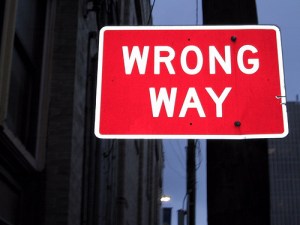
Just because ‘everyone else does it’ doesn’t mean you should join in.  It may be ‘everyone’ around you drinking heavily and partying regularly, it may be ‘everyone’ procrastinating on purpose, it may be ‘everyone’ moaning about the state of the course without actively trying to change things.

Whatever you see ‘everyone’ doing, don’t be afraid to make your own decision.  If you want to do something else, do something else.  When it doesn’t affect anyone but yourself, make the choice your own.

photo by andrewatla

photo by andrewatla

Shunning the popular choice may be difficult and uncomfortable.  Doubly so if your decision means giving up something you enjoy or challenging yourself to work harder.  Remember, the popular choice doesn’t automatically make it the best choice.

It’s fine to forego the odd social outing or event.  Even entirely respectable activities can be dropped in favour of enhanced focus, or a calmer lifestyle.  Do you really need to be an active member of 7 societies, volunteering for 2 causes, and keeping down a part-time job, all while trying to stay on top of study?

Grasping what is truly important is harder than it seems.  No wonder we look to ‘everyone’ for some sort of approval.

The decisions we make are never simple, because we — consciously or unconsciously — weigh up a number of issues that shouldn’t matter to us, yet do.  It’s common to live in fear of disappointing another person, causing unintentional embarrassment or offence, and even destroying solid relationships that you’ve built up.

In other words, you don’t want to get things wrong.

But everyone gets stuff wrong all the time.  The greatest people to have lived have done some incredibly dumb stuff too.  And I’m sure they’d be first to admit it, even if they weren’t first to explain the acts in detail!

Don’t be scared of doing dumb things.  You’ll only end up doing nothing at all.  As crazy as the world seems, there are two major reasons why people cross the line:

  1. They cross the line intentionally. They weren’t scared of doing a dumb thing;
  2. Your version of ‘crossing the line’ is their ‘normal’. They didn’t even consider it a dumb thing.

The line is not fixed.  The line is an illusion.

No matter what you do, someone will think you’re going too far and someone else will think you’re not going far enough.  You need to be happy that you’re making the right decisions for you, not for other people.  You still need to think your actions through; it’s how other people may feel that should be given less weighting.  If your decision doesn’t directly affect other people, make it a do-it-yourself job all the way.

How have you moved away from an otherwise popular situation?  Have you taken a different attitude and found it worked to your advantage?
Will You Be a Fantastic Failure or Awesome Underachiever?

Is it better to ‘underachieve’ or to ‘fail’?

The Harvard Business Review Blog recently talked about the best type of failure to learn from.  The article states: “The essential insight is that partial failures are far more valuable than total breakdowns.”

photo by KungPaoCajun

photo by KungPaoCajun

So is failure too much to learn anything?

Apparently an element of success is necessary to allow greater success to follow.  Therefore, underperformance is preferable to complete failure.

In my mind, the words ‘failure’ and ‘underachiever’ are too subjective to differentiate.  The HBR piece even admits, “underperformance is a form of failure”.

This being the case, how prepared should we be to fail?  If we can’t answer that, how do we know how far to go before we’ve failed too much to learn anything from?

Stefan of Study Successful (who I mentioned just recently on here), told me that it’s important to fail:

“That is the way you will learn things! Underperform will take a lot of time to actually learn something…Failure will be a slap in the face, forces you to learn faster. How do you notice underperformance?”

Stefan explores the matter further at his blog.

As I see it, failure can be a slap, but only if you’re prepared to accept it.  The same can be said for underperformance.  If you’re in denial, you won’t let anything slap you down.  You must accept the fact that problems don’t just belong to other people.

Once you start the process of identifying personal weaknesses and admitting shortcomings, you’re in a better position to start learning from all sorts of failure.  In terms of the HBR piece, they were discussing the state of physical buildings.  While they make pertinent points, the situation isn’t as simple for our subjective and chaotic minds.  Physical forces are certainly unpredictable, but in completely different ways to the brain.

By the nature of who we are, we all make mistakes every day.  You can’t stop making them, but you can look at how to make sense of those mistakes, how to recognise mistakes, and how far you’re willing to accept your own mistakes in order to change.

The subjectiveness of failure brings up all sorts of opinions and ideas:

  • Seth Godin – “If you spend your days avoiding failure by doing not much worth criticizing, you’ll never have a shot at success.”
  • Daniel H. Pink – “Most people are more frightened of failure than of mediocrity. It should be the reverse.”
  • David Rogers – “Definitions of failure effectively put it as the opposite of success, being unsuccessful. However, failure is a far more emotive word.”
  • Ririan – “All it takes is for you to have the courage to fail once in a while.”
  • Michael J. Formica – “…we all possess the potential to rise from the ashes of our own defeat, if we can get out of our own way long enough to see what lessons that defeat has wrought.”

How do you learn from your mistakes?  What level of failure are you best at working with?  And would you rather develop after underachieving or totally failing?

You or ‘everyone else’?

Just because “everyone else does it” doesn’t mean you should join in.

It may be ‘everyone‘ around you drinking heavily and partying regularly, it may be ‘everyone‘ procrastinating on purpose, it may be ‘everyone‘ moaning about the state of the course without actively trying to change things.  Whatever you see ‘everyone‘ doing, don’t be afraid to make your own decision and do something else.  Your different attitude probably won’t be noticed.

photo by AndYaDontStop

photo by AndYaDontStop

Shunning the popular choice may be difficult and uncomfortable.  Doubly so if your decision means giving up something you enjoy or challenging yourself to work harder.  So long as you don’t give up anything important, it’s fine to forego the odd social outing or escapade.  You may even be indulging in too many entirely respectable activities.  Do you really need to be an active member of 7 societies, volunteer for 2 causes, keep down a part-time job, and try to stay on top of study?

While you shouldn’t feel obliged to defend your decisions, there will be the odd time when someone does question your actions.  Usually it doesn’t take more than thanking a person for their advice and quickly moving away from the conversation.  On the (very) rare occasion you face greater questioning, stay strong and don’t be afraid to point out why you’ve chosen a particular direction.  If you aren’t getting anywhere, if you feel uncomfortable talking about it, or if you don’t want to justify your actions to someone else, politely explain that you don’t want to discuss it further and (if necessary) physically move away from the situation.

Peer pressure has many faces.  A small percentage is uncalled for and something you don’t need from so-called ‘mates’.  Fortunately, much of it is friendly and of little consequence.  That’s why you probably have nothing to fear when you choose not to do what everybody else is doing.

It feels so much easier to let others make decisions for you.  If it goes wrong, you’ve got someone else to blame.  The truth is that when you make your own decisions, you begin to feel more in touch with what you truly want and need.  Don’t fear that you’ll become arrogant.  You should still listen to others, engage in debate, and appreciate that you’re not always right.  With that, the confidence in your decisions does help you grow stronger, getting you to think more clearly and independently before making commitments.

How have you moved away from an otherwise popular situation?  Have you taken a different attitude and found it worked to your advantage?

What will you do today?

What will you do today?  What will you do to shine?  What will you do to innovate?  What will you do to bring you closer to whatever it is you want?

I don’t know what you want, but I know a lot of things are within reach.  They’re just hiding most of the time.  Makes the game interesting…

My personal aim on this blog is to encourage all of you to take control of what’s at your disposal and use it well.  No need to hurt others, no need to become a workaholic, no need to be unethical.

But no matter how hard I try to help and no matter how many people get to view this website, only a handful of people are ever going to take it all the way.  It doesn’t matter how many people offer their advice to help others make a difference, only a small number will give their all and create their own pile of win.

Are you one of that small number?  Are you an innovator?

Why do only a relative few manage to shine?  Some possibilities:

  • Other aspects of life (big and small) get in the way;
  • Not everyone develops (or recognises) a true passion for anything;
  • There seems too much initial work to be bothered;
  • Fear of failure / Not prepared to take a risk;
  • You want to succeed, but give up when gratification doesn’t come quickly.

People give all sorts of reasons why they haven’t managed to go the whole way.  Some are good reasons and some are just excuses.  I bet they all feel like good reasons at the time.

Uni gives you access to so many resources that it’s crazy.  No matter how small your institution is, you can enjoy a wealth of goodness without moving off campus.

And with so many digital tools at our disposal, you’re able to push your own brand without having to ask for anyone else’s permission.  You have the power to stretch out wherever you want.  The Internet and mobile technology isn’t just for reading what people are doing, discussing last night, building a farm or joining the mafia!

“Let yourself experience life with your eyes and heart and mind wide open.”
Robbin – Brains On Fire

I’m not suggesting that all you need to do to succeed is to believe in what’s possible and keep trying again and again (and again) until you’ve won.  It’s not that simple and it’s not practical.

But that doesn’t mean you should give up and not bother at all.  Many successful entrepreneurs succeed amid many of their failures.  They won’t dwell on the failures.  In fact, the failures will soon be forgotten except for:

  • The knowledge that they’re a step closer to finding another success;
  • The lessons they’ve learned that will hold them in better stead for their next venture.

Nothing is guaranteed and nothing is certain, but the only way you can find out what’s possible is to start doing stuff. Do it now!  Sure, you shouldn’t just run off without due caution and with no plan whatsoever, but you do need to begin somewhere.

After all, you’ll never find the perfect circumstances to suit your personal situation.  You’re in a better position where you are than if you wait until you’re somewhere else.

You’ve got more chances than you probably think.  But you’ve got to take them.  Don’t waste it away.  I missed plenty opportunities simply because I didn’t know better.  It’s a mistake I try not to repeat on a regular basis.  It happens sometimes, but I’d rather slip up occasionally and get back up than sit on my bum and do nothing at all.

What will you do today?