EduLinks

EduLinks – Software, Psychology & loads of videos

It’s that time again. Enjoy the linkage!
Memorize Now / Pauker

Flash cards are great for learning specifics, such as words, brief concepts, equations, and so on.  If you want to break free from physical flash cards, here are two electronic variants.  Memorize Now is an online flash card service, while Pauker is downloadable for when you don’t want to rely on Internet connections.

Datamation – 65 Open Source Downloads That Could Change Your Life

A great set of free, open source tools with all manner of uses.  Software to suit all.  Well worth bookmarking.

Staring (Emory University)

A video that looks at our relationship with staring; being stared at and staring at others.  A short piece that’s interesting enough to keep you looking.

Study Hacks – Beyond Passion: The Science of Loving What You Do

Below is just a small section of a great post. I encourage you to read the whole piece:

Research reveals that autonomy, competence, and relatedness are the key to loving what you do. So how do you get them? There are different answers to this question, but the strategy that I keep emphasizing on Study Hacks has two clear steps:

  1. Master a skill that is rare and valuable.
  2. Cash in the career capital this generates for the right rewards.

The world doesn’t owe you happiness. Your boss has no reason to let you choose your own projects, or spend one week out of every four writing a novel at your beach house. These rewards are valuable. To earn them, you must accumulate your own career capital by mastering a skill that’s equally rare and valuable.

It’s important, however, that you cash in this capital, once accumulated, for the right rewards. The word “right,” in this context, is defined by the traits of SDT. In other words, once you have something valuable to offer, use it to gain as much autonomy, competence, and relatedness as you can possibly cram into your life.

Freestyle Mind – How to deal with Criticism in Writing

A huge post that’ll help you tackle your coursework feedback head-on.  No longer will you fear the feedback and ignore your not-so-successful attempts at writing essays.  The problem pieces may be the most useful items of work you write!

New Scientist – When your brain gets the joke

Are you having a laugh? Humour turns out to be both complex and essential.

From Scientific American – Mixed Impressions: How We Judge Others on Multiple Levels

“All over the world, it turns out, people judge others on two main qualities: warmth (whether they are friendly and well intentioned) and competence (whether they have the ability to deliver on those intentions)”

PsyBlog – 10 Social Psychology Studies: Why Smart People Do Dumb or Irrational Things

Why rewards aren’t automatically a good thing, why we tend not to share vital information, how body language really does help, how situation trumps personality in determining behaviour, and many other wonderful insights into the mind.

MakeUseOf – Top 12 Sites To Watch Videos That Are Better Than YouTube

The title says it all.  We’re used to firing up YouTube for a video fix, whether it’s for a laugh or in order to learn.  But there are many video sites offering even more content.  Okay, so it’s yet more linkage to procrastinate to…perhaps I should have kept this to myself, eh? Nah!

Jane’s Learning Pick – 25 places to find instructional videos

Even more places to find videos. This time, with an instructional angle. Some overlap to the previous link, but another worthy resource.

TVGorge.com

My final video link, honest! How about a site that lets you stream US shows to other countries?  I’m guessing the legitimacy of the site is questionable, given that shows on US streaming sites won’t stream outside the US for a reason.  Yet here we are with all shows available to stream…Still, while the site’s up, it’ll help you catch up on episodes of your favourite shows.

Zen Habits – 12 Classic Zen Habits Posts You Might Not Have Read

Now you’ve watched billions of videos and marvelled at all that psychological wonder, I’ll leave you to pursue a journey toward peace, calm, less stress, and a steady flow of gentle relaxation.  Sound good?
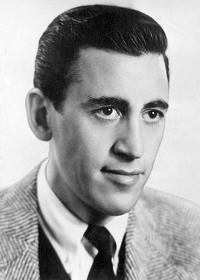
J. D. Salinger Reader

Last night, I heard the sad news that author J. D. Salinger died, aged 91.  Many of you will have studied his 1951 book, The Catcher in the Rye, at school.  I’m sure the book will still be used in the curriculum for many years to come.

Here is a selection of obituaries and articles that have been published in the last few hours:

New York Times Obituary

New York Times ArtsBeat – Readers respond

Bloomberg Obituary

Huffington Post – J.D. Salinger Quotes: Best Sayings From ‘Catcher In The Rye’ Author

Britannica Blog – J.D. Salinger, R.I.P.

BBC Obituary

BBC – Reader memories

USA Today Obituary

Social Media Today – Reflections on J.D. Salinger…Goddard College, Franny and Zoey and what an artist really is…

Answers.com – Online encylopedia articles on J. D. Salinger.

Upstart Crow – R.I.P. J.D. Salinger

FT.com Obituary

Times Online Obituary

Guardian:

Telegraph Obituary

Independent Obituary

Washington Post Obituary

Time Magazine Obituary

Sp!ked – Why Salinger still speaks to us

EduLinks: Mistakes, Scepticism, Emotions & Privacy

Welcome to another set of EduLinks.  If this isn’t enough, I provide many more (completely different) links via Twitter. You should follow me if you want a more regular dose of linking goodness.

Neuromarketing – Some Learn From Mistakes, Others Don’t

Study isn’t just about chasing grades.  You need to be knowledge-hungry before you can truly learn from mistakes and ride high.

Lifehack – College 401: Tips for Advanced Students

For those ‘knowledge-hungry’ people out there, Dustin Wax advises how to focus in depth on your work.  He suggests you reuse research so you can be more efficient AND create solid links that should help you retain more knowledge anyway.  Other gems include writing as if you’re getting published and subscribing to e-mail lists, forums, and other services in your field.

Mediactive – Becoming an Active User: Principles

Do you trust what you read?  Should you be more sceptical?  What techniques do the media use to communicate?  Dan Gillmor treats us to a draft of a chapter from his forthcoming book.  A lengthy, yet important piece.

New Scientist – Five emotions you never knew you had

Psychologists say the 6 big emotions are joy, sadness, anger, fear, surprise, and disgust.  However, New Scientist suggests 5 other emotions that should be promoted for a new generation: Elevation, Interest, Gratitude, Pride, and Confusion.

New Scientist – The dangers of a high-information diet

More New Scientist goodness:

“The human craving for information makes censorship a particularly problematic response to any perceived information hazard, and openness is often the preferred option. As swine flu started to spread last year, for example, governments and bodies such as the World Health Organization were quick to make the public aware of the risks. Bitter experience has taught us the dangers of allowing the suspicion to take hold that the authorities are withholding information. People’s appetite for facts goes into overdrive and it gets easier for false notions to gain credence. ‘This happened in the UK with the MMR vaccine,’ says Ian Pearson, a futurologist at the Futurizon consultancy in Switzerland. ‘The government created a situation where one lone scientist was able to cause mass panic, which has resulted in many kids catching measles – and, of course, a few have died.'”

MakeUseOf – Regain Control of Your Facebook Privacy

Inside Facebook – How to Protect Your Privacy With Facebook’s New Privacy Settings in 17 Easy Steps

With Facebook’s recent update on privacy settings, it’s important you know exactly who can see what on your profile.  Many people still don’t know what’s going on, but the three links above should give you all the information you need to keep your profile in exactly the state you want it.

As for “17 Easy Steps”, that number of steps could be seen as sarcasm.  Should it take that many steps to ensure your privacy is the way you want it?  Either way, I suggest you don’t leave it long before you go over those 17 steps!

Open Culture – A site with so much educational goodness, your head may explode.

I’ve linked time and again to great resources over at Open Culture.  Here are three recent links that you should bookmark and devour when you get the chance.

  • Free Online Courses – Whatever your subject, there is probably a wealth of free courses available online from all sorts of prestigious unis that you can get a lot of goodness from.  With notes, audio, videos, and iTunes links, the choice is almost overwhelming!
  • Learn a New Language in the New Year – A huge set of resources for learning 37 different languages.
  • Modern Physics: A Complete Introduction – I don’t know about Physics, but I want to find time to learn with this set of lectures from Stanford.  The amount of free learning available over t’Interwebs pleasantly astounds me.

Reduce Carbon Emissions by 10% in 2010

Now for my final ‘retrospective’ post. A bit on my energy consumption.

As you may have noticed, I display a graphic showing that TheUniversityBlog is a 10:10 website.

I have pledged to cut my carbon emissions by at least 10% in 2010.

The 10:10 campaign kicked off earlier in 2009 and I have considered my energy usage even more seriously since then.

By way of comparison, I thought I’d share how much I roughly reduced my footprint in 2009, compared with 2008.

Using the Guardian’s Quick Carbon Calculator, I found I had the following carbon footprints:

In 2008: 16.5 tonnes CO2e
In 2009: 12.89 tonnes CO2e

The reduction came about mainly by the following:

  • Less regular intake from takeaway meals;
  • More locally sourced produce;
  • Fewer newspaper, magazine and book purchases;
  • Eating less meat (my other half is a veggie, so it’s been pretty simple…without help, some meat-eaters won’t be spurred on so easily to cut down!);
  • Using less car fuel;
  • Having more shopping delivered to me, rather than driving to shops all the time.

This is a healthy reduction in carbon emissions, which pleases me greatly. My footprint has reduced by more than 20% based on the rough calculations.

This is not an in-depth analysis of my footprint, but it is good for getting a gauge of how I have started changing.  And the changes haven’t exactly made my life more difficult.

As for 2010, I still intend to find ways to cut my footprint. The 2010 UK target is 14 tonnes CO2e, while the UK average is currently 15.4. I may be happy to find that 12.89 is much lower than the 2010 target, but it’s still far too high.  The 2050 target for the UK is just 3 tonnes CO2e.

I’ve got a lot of work to do before reaching such a low number. We all do.  As a starting point, here are some articles from The Guardian about environment-conscious fashion and food:

Shop your closet – How to look stylish without buying new clothes
Can I give up buying clothes for a year?

How to green your eating habits

And here are a few ideas to help you reduce emissions even further. I’m sure you’ve heard most of them before, but they’re worth remembering and actioning:

  • Unplug devices when you’re not using them (such as TVs, chargers, etc);
  • Don’t wash so often! (Many of us wash more often than we actually need to…do you dare shower less?);
  • Turn down the brightness of your TV and/or computer’s monitor;
  • Turn off the tap when brushing teeth;
  • Close doors to keep warm air in;
  • Turn off lights when you leave a room and only use the lighting you actually need;
  • Most of us enjoy a cuppa, but only boil the amount of water you need, rather than filling the kettle to the top;
  • Wash your clothes (or get your parents to wash your clothes…) at 30 degrees centigrade, rather than 40 degrees or higher;
  • If you’re in your own property and can control the heating, reach for a thicker jumper before you reach for the thermostat.

There are loads of little tips like these.  What tips do you have?

Making easy changes can make a difference. As pointed out in The Guardian by Andrew Simms, “The under-appreciated discipline of behavioural economics confirms that our actions are more influential than we often like to thin.”

Whether or not you believe the global warming arguments, where’s the harm in trying to reduce the amount of energy you use?  If nothing else, it should help you save money. And you know how important it is to keep as much money in *your* bank account than someone else’s!