Time Management

Make Time For Time: 6. Find time to create your perfect study setup

Welcome to the final part of the “Make Time For Time” series of posts.

It’s not always possible to get a lot of help from study advice.  There’s no magic answer, because everyone works differently.  Making time for time involves finding your way.  That, in itself, does take some time.  Allow yourself different trials in your quest to find the perfect study setup, otherwise you may never find what works for you.

photo by m00by

photo by m00by

Some trials to consider:

  • Place of study – Are you better off at your personal desk, at the library, in an outside space?  Location is an important factor in effective work.  Everything else may be right, but if the space doesn’t feel right, it’s hard to work well.
  • Belongings – This is an extension of your study space.  If you’re working in a field in the middle of nowhere, you won’t have much to think about.  A desk in your own room, however, is a different matter. You’ll have loads of distractions in front of you and there may be a messy desk cramping your style.  You may work wonderfully in your current location, but the stuff around you can get in the way instead, without you realising.  If you have an ‘off’ day, check the junk and distractions putting you off and get them out of your sight.
  • Time of day – Night owl or morning lark?  The time of day you do your work makes a huge difference. What works best for you?
  • Your general health – Do you have a 30 minute study session planned just before you eat dinner?  If you’re already hungry, it’s probably a bad time to start working.  Get the food out of the way before you start working the brain.  And what about exercising physically before you exercise mentally?  A quick walk can do wonders for the mind.  Just a 10 minute walk about campus, or around your local area can be enough to give you a jolt in the right direction.  You may even get some ideas on the walk.  Carry a notepad and pen…just in case!
  • Headbanger, or silent wonder? – Music helps some of us and hinders others.  Even the type of music can make a difference.  I’ve known some people who don’t like classical music who swear by it when they study.  They don’t even notice the music, but it helps them zone out.  So think about the sounds around you and use music wisely to work effectively.  Try listening to different random white/pink/brown noise if you like, or choose a soundscape with birds and rainfall, or just listen to your favourite song.  There’s bound to be something out there to get you in the mood, even if it’s total silence. Earplugs, here we come!
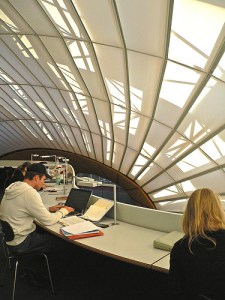
photo by svenwerk

photo by svenwerk

From this series of articles, I hope it’s clear that time is something you have a lot of control over.  It may not feel that way much of the time, but there really is a lot we can do to manage time more effectively.

Even the most brilliant planners don’t have a perfect time-management technique.  Lives change, as do priorities.  I called this series ‘Make Time For Time’, because we should never stop thinking about the time available to us.  The moment you drop your guard and think you can’t manage your time any better is the moment you’ll slip up.

In my early teens I was awful at time-management.  It was only after my A-Levels, just before I went to uni, that I realised how much better I could do.

I went from being rubbish at time-management to being okay.  Yes, just okay.  Because it’s hard to be better than okay.  I’m happy to call my time-management a strength, just so long as I’m clear to myself that the real strength is to have a constant awareness that my time can always be managed better and that I will always strive to improve.

If that sounds like your attitude towards time-management, you should be happy to call it a strength too.


Make Time For Time: 5. Planning & Managing Time

Planning time takes a while if you’re not used to the process.  No single time-management technique suits all.  You have to feel around for what works best for you.

photo by BURИBLUE

photo by BURИBLUE

Some of us cope with the bare minimum on paper.  Just a few reminders about the coming days will do.

Some of us prefer to plan rigorously to the last minute, as far in advance as possible.

However you plan, if it works for you, it’s the right way to go.

If it’s not working, move on to a different planning technique fast!

There are all sorts of diaries on the market.  Pocket diaries, desk diaries, day to a page, week to a page, appointments diaries, blank format, lined format…the list goes on.  The choice is yours.  It doesn’t take long to work out whether a particular way of managing your time works for you.  Sure, it’s annoying when you’ve tried several different things that all result in a big fat FAIL, but the satisfaction comes further down the line.  Once you find the solution, your plans will click into place and your life will be a lot easier to manage.  The sense of relief at that eureka moment is fantastic.

What if you have nothing planned?  Some of us are lucky enough to have very little to worry about in any given week.  A couple of lectures, a seminar, a meet up, a couple of outings, but nothing you need to work around.  Plenty of free time abounds.

Free time doesn’t equal leisure time.  Free time is time not yet allocated in your schedule.  Free time is positive because it’s more time you can fill up with whatever suits you.  Even if you fill it with leisure activities and hardcore relaxation, the key is to knowingly use the time.

It’s a mistake to randomly use up free time, because it’s a waste.  You don’t automatically know how well you’re using that time.  The time disappears and you can’t even account for what you did in that time.

If you’re lucky enough to have a lot of time on your hands, start by using some of that time to fill gaps in the future.  Even if you choose to play World of Warcraft, sit down the pub on your own, or listen to music in a trance, it doesn’t matter.  Anything goes. So long as you’ve chosen to do that with your time.

The more you’re in touch with the hours available to you each day, the more you’ll fit the most important tasks into those hours. Everything is manageable.  If another important job crops up, you can change your plans without sacrificing free time as if it is ‘leisure time’.  Instead, you’ll have the detail right in front of you, ready to re-jig.  You’ll be sacrificing something, but at least you can put a proper value to it.

Busy isn’t bad.  It just gets a bad name when your time isn’t planned properly.

Make Time For Time: 4. Technology and Time

I don’t care if your new phone is meant to save you time.  I don’t care if some brilliant software claims to cut down on your admin.  I don’t care if the latest wonder-tool of the Web World takes seconds to do what used to take hours.

With new technological advances, we seem to gain time in order to lose it somewhere else.

photo by miss_rouge

photo by miss_rouge

A lot of the problem lies in the way we perceive these tools.  Mobile phones can now do almost anything.  But we end up doing new things on the phone, rather than use it on the things you already know.  The same goes for services like Facebook.  It’s easier and quicker than ever to stay in touch with people you know, sending them messages and keeping abreast of what everyone is up to.  But we end up spending hours on the site, chatting with people we’re practically sat next to, or playing one of the many games and time-wasting activities on Facebook Apps.

Technology does not free up time.  It can help, but it doesn’t go further than that.  The only thing that can truly free up your time is yourself.

Use the wonders of new technology to streamline your projects.  Don’t be tempted by the other million services that’ll snatch your time back again. It’s difficult not to get sucked in at first, but the more you look out for time wasters, the more the process should become second nature to you.

Move away from technology while you make solid plans.  Cal Newport suggests the following balance:

  • High-tech and highly-structured solutions are best for capture
  • Low-tech and loosely-structured solutions are best for planning

Cal mentions, “A blank sheet of notebook paper…can outperform even the fanciest scheduling system, so long as the work to be scheduled is held somewhere safe.”

Keep track of what’s important and what’s just a laugh. We’re all meant to have fun, but we’re not meant to have fun at the expense of everything else (including other fun!).  It’s easy to get hooked on stuff and, far from having fun, you’re spending all your time on something because you can’t drag yourself away from it.

Don’t do new things just because everyone else seems to be doing them. Peer pressure doesn’t just come through new technologies.  You may just be caught up watching TV shows like X Factor or Strictly Come Dancing because everyone else is apparently watching and enjoying.  If that’s the only thing you’re enjoying, fine.  But our lives quickly get plagued by a range of ‘can’t miss’ and ‘can’t stop’ events.  Before long, there’s no more time to spare and something’s gotta give.

Limit the number of passive activities you choose to enjoy.  With the Internet, cheap gadgets, easy connectivity and an always-on attitude, I hope it’s obvious why too many passive activities equal danger.

The take home points are these: Streamline; focus on the plan rather than the technology; be cautious and aware; don’t get bogged down by everything that comes your way.

Time is precious.  Don’t let gadgets grind it down to nothing!

photo by Leeks

photo by Leeks

Make Time For Time: 3. Single-tasker or task-juggler?

This is the third part of my “Make Time For Time” series.

Multitasking is a curious beast.  Just because you’re texting someone while listening to music while the TV is on while you’re chatting to a mate on Facebook while checking the football news, doesn’t mean you’re actually multitasking.

Doing several things at the same time like this is called task-switching.  You aren’t actually doing several things at once, but you have chosen to dilute your focus and switch between several tasks.

photo by visualpanic

photo by visualpanic

Yes, you can stick on the radio and do the washing up at the same time.  Yes, you can chat to someone on your mobile and walk to campus at the same time.  But your focus is still being diluted.  As soon as you put more complex tasks into the mix, your focus dilutes even further.  Why do you think it’s so dangerous to text and drive?  You can’t process the information properly at the same time.  You’re switching from one thing to another which, in the example of texting and driving, is downright dangerous.

So let’s go back to the less life-threatening example of multitasking in the comfort of your room.  If one of the tasks is to write your essay and another involves the Internet, you may not be concentrating enough on the essay to bring out your best work.

Fear not! You don’t need to stop living life until you finish your coursework.  Instead, you can put a working structure to your task-switching.

Concentrated bursts of time directly focused on a single task may be all you need to work more productively.  Just 20 or 30 minutes (or more if you can bare it…) focused solely on a particular task gives you time to knuckle down and remove other distractions from your mind.  Instead of mistakenly thinking you’re doing several things at once, you’re carefully managing your time in small bites.

photo by theilr

photo by theilr

To do this most effectively, find an area without distraction so you definitely keep other tasks out of the way.  That includes switching off devices and programs that you’re not using for the task.

You may argue that you work best when other stuff is going on around you.  Perhaps you’ve tried to focus on separate issues in the past, with no success.

Well, if you must keep working as a hardcore task-switcher, by all means go for it.  If it seems to be a strength of yours, I’ll suggest this one thing…Do give yourself plenty time before the deadline, in case you encounter unexpected problems along the way.  Don’t panic because time’s run out; give yourself time to later on the more difficult elements of your work.  No plan is foolproof, so always give yourself a way out of danger, even if you do prefer task-switching.

Task switching is sometimes necessary, however you work.  In a situation where you can’t get any further with a particular task without waiting, feel free to move on to another task while you wait.  This type of switching is an exercise in prioritising and managing your time effectively.  Working through different tasks this way may involve what looks like juggling, but it’s more akin to plate spinning.  You still need to work carefully to make sure everything is under control, but you handle the tasks independently, rather than in a single movement.

Anyway, enough of juggling and spinning plates.  The main point to take home is not to dilute your time by working on too many things at once.  A linear approach to tasks may sound weak, but it’s a stronger method than you think.

Which are you…a single-tasker or a task-juggler?  What’s the greatest number of different things you’ve juggled at the same time?

In the next part of this series, I look at the effect technology has on our time.